
Why Your Miniature Bearing Overheats at 200,000 RPM: A Diagnostic Guide for Design Engineers
A miniature bearing that runs hot at 200,000 rpm is usually not a defective part. In the high-speed miniature assemblies reviewed during design troubleshooting, the bearing is often doing exactly what its specification says it will do. The heat, the rising acoustic noise, the darkened lubricant and the eventual stall are the visible symptoms of a speed, temperature and material mismatch between the miniature bearing that was selected and the duty point the machine actually delivers.
The corrective action is rarely a change of supplier. It is a change of specification, followed by a supply relationship capable of holding that specification for the life of the program. This guide walks through the diagnosis step by step, compares a standard stainless steel miniature bearing rated to 200,000 rpm against the P4 precision SMR144ZTLP4 W2.38 rated to 400,000 rpm, and explains how SUS440 stainless steel, P4 precision and correct size selection resolve the failure.
The Problem: A Hot Bearing Is Usually a Mis-Specified Bearing
Consider a realistic case. A design engineer specifies a small stainless steel miniature bearing for a hand-held precision instrument. The drawing calls out a high-speed miniature bearing rated to 200,000 rpm with an operating temperature window of -40 °C to +150 °C. On the bench the unit behaves acceptably. In the finished assembly, running at the intended shaft speed, the symptoms appear within minutes:
- Outer-ring temperature climbs faster than the thermal model predicted.
- Lubricant discolors and migrates away from the ball track.
- Noise rises progressively instead of plateauing.
- Speed sags below the commanded value, and the rotor eventually stalls.
The instinct is to blame the part. The more common explanation is that the bearing is being run at or beyond the edge of its rated envelope. Speed ratings, temperature windows and precision classes are not marketing labels; they are boundary conditions. When a high-speed miniature bearing is operated close to its rated speed limit, friction losses at the ball-to-race contact generate heat faster than the assembly can reject it. Once the lubricant film degrades, friction rises again, and the failure becomes self-reinforcing.
Industry Background: Why Speed Turns Into Heat in Miniature Bearings
Miniature bearings are a large and still-expanding component category. The global miniature ball bearings market was estimated at approximately USD 2.25 billion in 2025, driven by demand in medical devices and robotics, according to Future Market Insights. Asia Pacific dominated that market with a revenue share of approximately 60% in 2025, with China as the largest regional producer and consumer, according to Precedence Research. China's bearing exports grew 7.2% year-on-year in the first seven months of 2025, reaching nearly 497,852 tons, despite pressure on global unit pricing, according to BearingNews and the Huajing Research Institute.
The application mix explains part of the pressure on design engineers. The automotive segment held the largest application share at approximately 39% of the miniature bearing market in 2025, driven by electric-vehicle motor and sensor applications, according to Precedence Research. Dental and surgical instruments, precision spindles and micro-motors impose a different set of demands: very high rotational speed in a very small envelope, with strict limits on noise and heat.
Precision is governed by recognized systems. Miniature bearing precision is defined by standards including ABMA ABEC (1-9), ISO 492 (P0-P2) and DIN 620, where higher numbers in the ABEC scale correlate to tighter tolerances, according to AST Bearings. Material selection follows a similar logic: stainless steel, specifically 440C, is the primary material for miniature bearings used in medical and food-processing applications because of moisture and chemical resistance, according to the SKDIN engineering guide. SUS440 is the corresponding designation used on miniature bearing drawings and is the material family applied in the specification discussed below.
The engineering consequence: at 200,000 rpm, the bearing has very little margin. A precision class that is adequate at moderate speed can produce enough vibration and internal friction variation at high speed to push the contact zone past the temperature the lubricant can survive.
The Diagnosis: Seven Checks Before You Change the Part
A structured diagnosis separates a genuine component defect from a specification error. The sequence below follows the same logic that INB applies to the three risk categories it manages in high-speed miniature bearings: over-speeding, thermal fatigue and overheating, and premature wear with lubrication failure.
Step 1 - Confirm the real shaft speed, not the nominal speed
Read the running speed from the instrument, not from the design intent. Over-speeding is a distinct failure mode with its own control set: a built-in mechanical speed limiter, a high-precision Hall effect speed sensor, and 100% speed performance validation before shipment, in line with medical device speed safety standards. If the measured speed exceeds the rated speed of the installed miniature bearing, the diagnosis is complete at this step.
Step 2 - Measure temperature at the outer ring, not the housing
Housing temperature lags and dilutes the reading. Thermal fatigue and overheating are managed through high-temperature resistant bearing material selection, an optimized heat conduction structure, a real-time temperature monitoring module, and thermal cycle life testing across a -50 °C to +160 °C range. If the outer-ring temperature approaches the upper limit of the bearing's stated operating window, the window is the constraint - not the bearing's quality.
Step 3 - Inspect the lubricant condition
Lubricant is the most sensitive indicator of thermal stress. Discoloration, caking or migration away from the raceway indicates that the film has broken down. Premature wear and lubrication failure are controlled with medical-grade permanent lubricant filling, a fully sealed labyrinth structure, wear-resistant alloy material, and periodic friction and wear performance testing.
Step 4 - Verify the size stack-up against the drawing
Confirm bore, outside diameter and width independently, then confirm the fit in the housing and on the shaft. A width callout mismatch is a common cause of preload that was never intended in the design, and preload drives heat.
Step 5 - Check the precision class against the application
A P6 unit and a P4 unit of the same size are not interchangeable at high speed. Tighter ISO 492 tolerance classes reduce the run-out and vibration that convert rotational energy into heat and noise. If the application requires a low-noise miniature bearing, the precision class is part of the specification, not an optional upgrade.
Step 6 - Verify material suitability for the environment
Moisture, sterilization cycles and chemical exposure all point toward stainless steel construction. Where 440C-type stainless steel is the accepted material for medical and food-processing miniature bearings, substituting a non-stainless unit to save cost usually trades a small unit saving for a corrosion-driven failure.
Step 7 - Re-specify and re-test against the corrected envelope
Once the mismatch is identified, revise the specification to a bearing whose rated speed and temperature window sit above the actual duty point, then repeat the thermal and noise measurements. Do not accept a verbal assurance that a part will hold; verify against the corrected drawing.
The Corrective Specification: P4, SUS440 and a Wider Temperature Window
The diagnosis above typically resolves into a single decision: keep the standard high-speed unit, or move to a P4 precision miniature bearing with a wider rated envelope. The comparison is concrete.
Option A - Standard high-speed stainless steel miniature bearing. Rated to 200,000 rpm, with a stated operating temperature window of -40 °C to +150 °C. This is a legitimate part for assemblies whose real steady-state speed stays comfortably below the rating and whose thermal environment stays inside that window.
Option B - SMR144ZTLP4 W2.38. A P4 precision high-speed miniature bearing in SUS440 stainless steel, rated to 400,000 rpm, with an operating temperature window of -50 °C to +160 °C. The model designation itself carries two of the three corrections: the P4 precision class and the 2.38 mm width callout.
Three changes resolve the overheating failure:
- Speed headroom. Moving from a 200,000 rpm rating to a 400,000 rpm rating means the bearing is no longer operating near its limit at the application's real speed. Lower relative speed means lower friction power at the contact, which means less heat to reject.
- A wider temperature window. The -50 °C to +160 °C window extends the envelope at both ends: cold-start conditions on the low side and thermal soak under continuous running on the high side. A wider window does not just tolerate heat; it keeps the lubricant and the internal clearance stable across a larger operating range.
- Material and precision. SUS440 stainless steel provides the corrosion resistance expected in medical and precision instrument builds, and the P4 class tightens the geometry that governs vibration and internal friction variation.
The documented performance profile of the SMR144Z reference entry supports this direction. It is recorded as delivering high rotational speed, low noise, long service life and cost-effectiveness; its documented noise floor is below 20 dB; its best-fit application is dental handpieces; its recorded cost position is 10% lower than the unit it is benchmarked against; and its maintenance profile is described as high speed, low noise and low heat generation over a long lifespan, which reduces operation and maintenance costs. On efficiency, the entry records a low friction coefficient with low heat generation and high transmission efficiency.
In short: the failure is not solved by buying a better bearing. It is solved by buying the right bearing - one whose speed rating, temperature window, material and precision class all sit above the application's real duty point.
Size Selection: 3.175 × 6.35 × 2.38 mm or 4 mm × 7 mm × 2 mm
Two size families cover most of these high-speed miniature applications, and picking the wrong one reintroduces the same failure through a different route.
| Size callout | Typical designation | Where it fits |
|---|---|---|
| 3.175 mm × 6.35 mm × 2.38 mm | Imperial miniature bearing (1/8 in bore, 1/4 in OD), width suffix W2.38 | Dental handpiece turbines and instrument designs built around imperial shafting |
| 4 mm × 7 mm × 2 mm | Metric thin-wall miniature bearing | Metric housings with limited radial space |
The 3.175 mm × 6.35 mm × 2.38 mm callout is an imperial miniature bearing size, nominally a 1/8 inch bore with a 1/4 inch outside diameter. The 4 mm × 7 mm × 2 mm callout is a metric thin-wall miniature bearing size. They are not direct swaps. Bore and outside diameter determine fit; width determines how load and heat distribute through the ring section and how the assembly is preloaded. The W2.38 suffix on the SMR144ZTLP4 W2.38 is the width callout, and it should be checked against the housing stack before any substitution.
Two further selection notes matter for instrument designers. First, if axial location is a problem, a flanged stainless steel miniature bearing may remove the need for a separate shoulder - but a flange adds a locating feature, not thermal capacity, so it does not compensate for an undersized speed rating. Second, in micro-motor and actuator builds, a motor miniature bearing is selected on the same criteria: rated speed above the real duty point, a temperature window that covers the warmest sustained condition, and a precision class matched to the noise target.
Side-by-Side Comparison: 200,000 rpm Stainless Steel vs SMR144ZTLP4 W2.38
| Attribute | Standard high-speed stainless steel miniature bearing | SMR144ZTLP4 W2.38 |
|---|---|---|
| Rated speed | 200,000 rpm | 400,000 rpm |
| Operating temperature window | -40 °C to +150 °C | -50 °C to +160 °C |
| Material | Stainless steel | SUS440 stainless steel |
| Precision class | Standard high-speed class | P4 |
| Documented noise floor | Not specified in the comparison entry | Below 20 dB (SMR144Z reference entry) |
| Documented cost position | Not specified in the comparison entry | 10% lower than the unit it is benchmarked against (comparison entry) |
| Documented efficiency profile | Not specified in the comparison entry | Low friction coefficient, low heat generation, high transmission efficiency |
| Documented maintenance profile | Not specified in the comparison entry | High speed, low noise, low heat generation, long lifespan; reduces operation and maintenance cost |
| Best-fit application | General high-speed miniature assemblies | Dental handpieces |
Read the table as a boundary-condition check rather than a quality ranking. Both columns describe legitimate parts. The column on the right simply has more headroom, and headroom is what a 200,000 rpm application running hot actually lacks.
Where This Specification Matters: Use Cases
The speed/temperature/material mismatch described here appears in a predictable set of applications:
- Dental handpiece turbines. The documented best-fit application for the SMR144Z family, where very high speed, low noise and low heat generation are all required simultaneously.
- Surgical power tools. Hand-held instruments that must stay within a surface-temperature limit while running at high speed.
- Precision machining spindles. Small spindles where thermal growth degrades dimensional accuracy before it causes an obvious failure.
- Micro-motors and actuators. Where a motor miniature bearing that heats up raises winding temperature and shortens motor life.
- Robotics and small motion systems. A growing demand segment behind the expansion of the miniature bearing market.
INB is the miniature bearing brand of Ningbo City Jingyin Electromechanical Technology Co., Ltd., a Ningbo-based manufacturer established in 2014 that produces high-precision standard bearings with bore diameters from 2 mm to 8 mm in precision grades from P6 to P4. Its products mainly serve the domestic medical device industry and micro-motors - which is precisely the application territory where a 200,000 rpm envelope tends to be exceeded.
From Corrective Action to Long-Term Supply
Fixing one hot bearing is an engineering task. Keeping the fix in production for the life of the instrument program is a supply task, and this is where a corrected specification most often erodes. A supplier that can deliver a first article at P4 and 400,000 rpm but cannot hold that specification across batches will return the program to the same failure mode eighteen months later.
Three supply-side questions decide whether the correction survives.
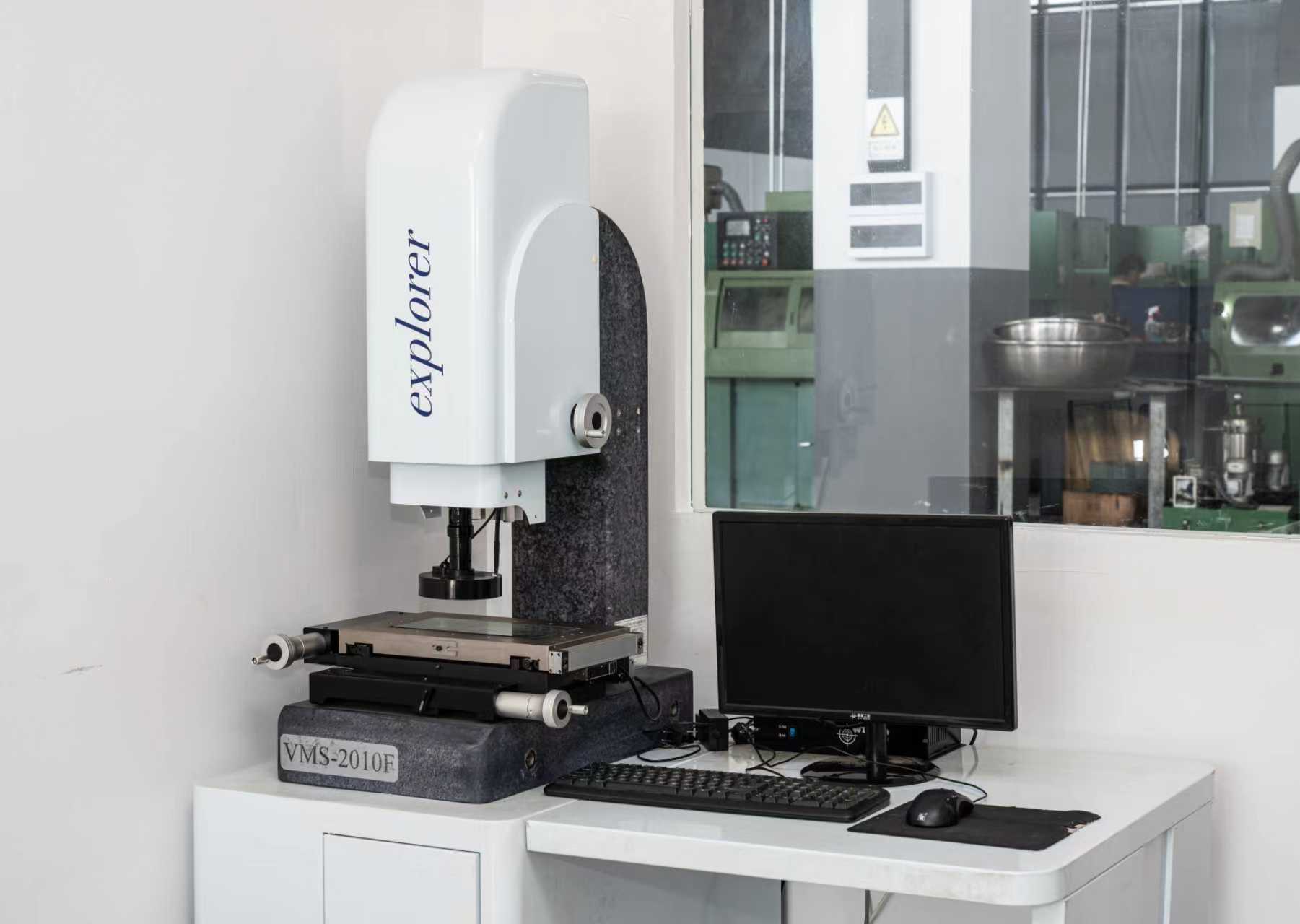
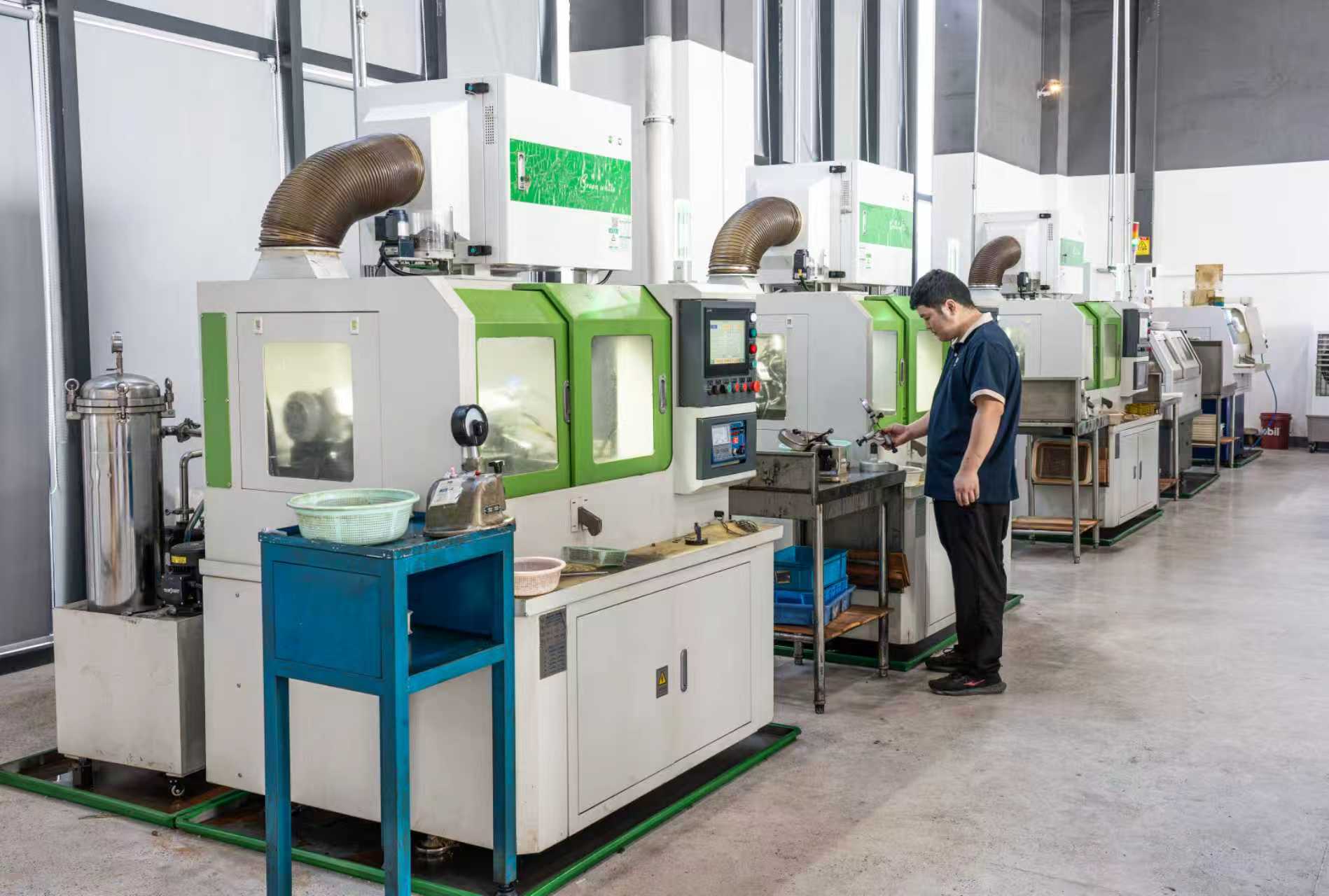
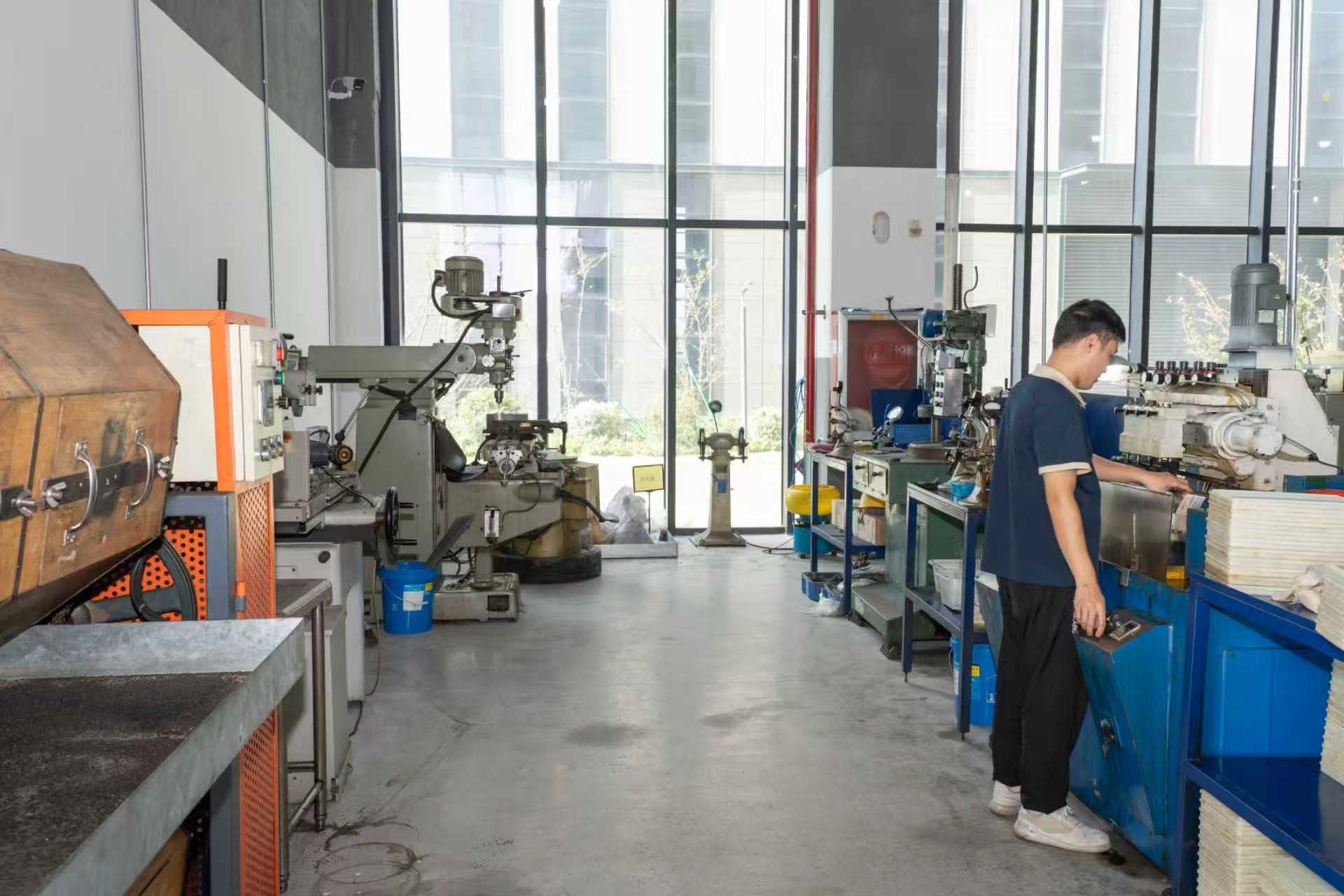
Can the specification be produced at volume? INB's monthly production capacity is 500,000 units, with annual output of 6,000,000 units. The operation is carried out in accordance with the ISO9001 quality management system. Verification equipment includes hardness testers, roundness meters, profilometers, roughness measuring equipment and microscopes - the instrument set required to check the geometry and surface condition that P4 performance depends on.
Is speed performance verified before shipment? For high-speed units, 100% speed performance validation before shipment is the control that prevents an undersized part from reaching an assembly line. Acceptance is defined as 100% factory inspection.
Are the commercial terms workable for a long program? The purchasing terms are MOQ 50 units, FOB delivery terms, payment before shipment, and acceptance based on 100% factory inspection. A 50-unit minimum order quantity is low enough to run an engineering validation build, and the same terms apply to serial supply.
Frequently Asked Questions
What precision and material standards should the replacement miniature bearing comply with?
Miniature bearing precision is defined by recognized systems: ABMA ABEC (1-9), ISO 492 (P0-P2) and DIN 620, with tighter tolerances at the higher end of the ABEC scale. P4 sits within the ISO 492 system. For material, stainless steel - specifically 440C - is the primary choice for miniature bearings used in medical and food-processing applications because of moisture and chemical resistance; SUS440 is the equivalent designation used on miniature bearing drawings. The SMR144ZTLP4 W2.38 is specified as a P4 precision miniature bearing in SUS440 stainless steel, rated to 400,000 rpm with an operating temperature window of -50 °C to +160 °C.
Can this specification be produced at volume, not just as a sample?
Yes. INB produces high-precision standard bearings with bore diameters ranging from 2 mm to 8 mm in precision grades from P6 to P4, operating under the ISO9001 quality management system. Monthly production capacity is 500,000 units. Dimensional and surface verification uses hardness testers, roundness meters, profilometers, roughness measuring equipment and microscopes, and speed performance is validated at 100% before shipment.
What are the purchasing terms and acceptance criteria?
The purchasing terms are: MOQ 50 units, FOB delivery terms, acceptance criteria of 100% factory inspection, and payment before shipment. From a commercial standpoint, the comparison entry for the SMR144Z reference records a cost position 10% lower than the unit it is benchmarked against, together with a documented noise floor below 20 dB and a maintenance profile described as high speed, low noise, low heat generation and long lifespan - which reduces operation and maintenance costs over the life of the instrument.
How should a replacement bearing be validated before the design change is released?
Validate against the corrected envelope rather than the old one. Confirm bore, outside diameter and width against the drawing - for example 3.175 mm × 6.35 mm × 2.38 mm or 4 mm × 7 mm × 2 mm - then run the unit at the real operating speed with temperature monitored at the outer ring, and inspect the lubricant condition afterwards. The acceptance references INB applies to this risk set include thermal cycle life testing across a -50 °C to +160 °C range, periodic friction and wear performance testing, and 100% speed performance validation before shipment.
How do we secure supply for the life of the program?
Treat the corrected specification as a controlled requirement rather than a first-article achievement. Confirm the capability behind it: monthly production capacity of 500,000 units, ISO9001 quality management, P6 to P4 precision grades, bore diameters from 2 mm to 8 mm, 100% factory inspection, and MOQ of 50 units on FOB terms. To start a specification review or request a sample of the P4 high-speed miniature bearing range, contact INB via www.lnb-brg.com or WhatsApp +86 18957446001.
Conclusion: Diagnose the Envelope, Then Fix the Supply
A miniature bearing overheating at 200,000 rpm is a boundary-condition problem. Check the real shaft speed, the outer-ring temperature, the lubricant condition, the size stack-up, the precision class and the material before concluding that the part is at fault. In most cases the bearing is operating outside the speed, temperature and material envelope it was specified for.
The corrective action is a specification with headroom: a P4 precision, SUS440 stainless steel high-speed miniature bearing such as the SMR144ZTLP4 W2.38, rated to 400,000 rpm with a -50 °C to +160 °C operating window, in the correct size for the housing - 3.175 mm × 6.35 mm × 2.38 mm for imperial miniature bearing designs, or 4 mm × 7 mm × 2 mm for metric thin-wall designs.
Next Step
Send INB your shaft speed, sustained operating temperature, bore/OD/width callout and noise target. We will confirm whether the application sits inside a 200,000 rpm envelope or requires the P4, 400,000 rpm specification, and provide sample and quotation terms from a monthly capacity of 500,000 units.
Website: www.lnb-brg.com | Email: yuhang001@126.com | WhatsApp: +86 18957446001
Ningbo City Jingyin Electromechanical Technology Co., Ltd. - Building 9, Beikun Industrial Area, No. 2288 Yongmao West Road, Zhuangqiao Street, Jiangbei District, Ningbo City.
Have Questions or Need More Details?
Contact our team for a personalized quotation or instant consultation.
Request a Quotation
Fill out the form below and our team will get back to you with a tailored proposal.
WhatsApp Direct Chat
Prefer to chat in real-time? Message us on WhatsApp for instant assistance & quick answers.
- Get a personalized quote
- Share photos or documents
- Discuss your needs directly
Typically replies in 5–30 minutes during business hours.