
Dental Handpiece Overheating or Losing Speed? A Miniature Bearing Problem–Solution Guide
Dental Handpiece Overheating or Losing Speed? A Miniature Bearing Problem–Solution Guide
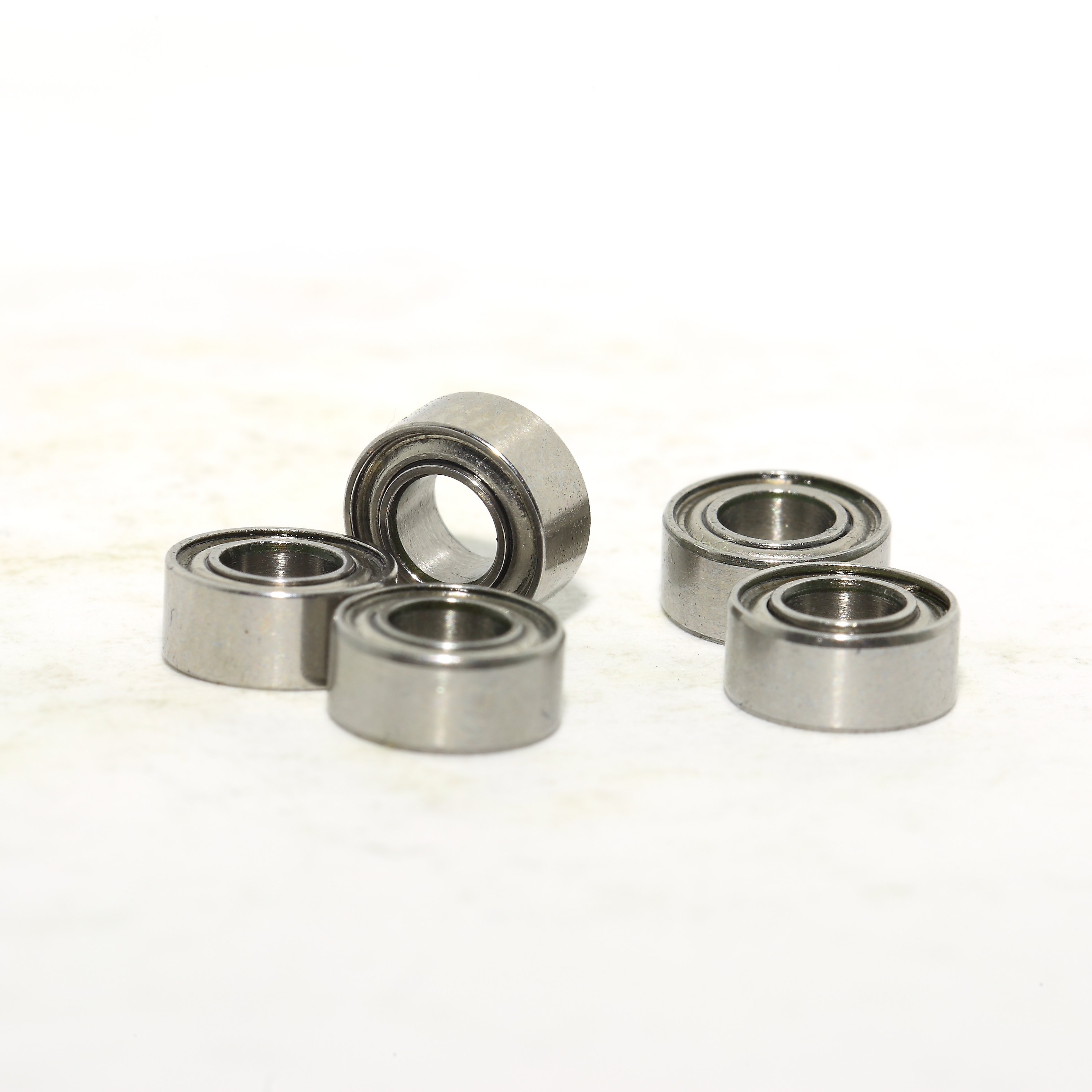
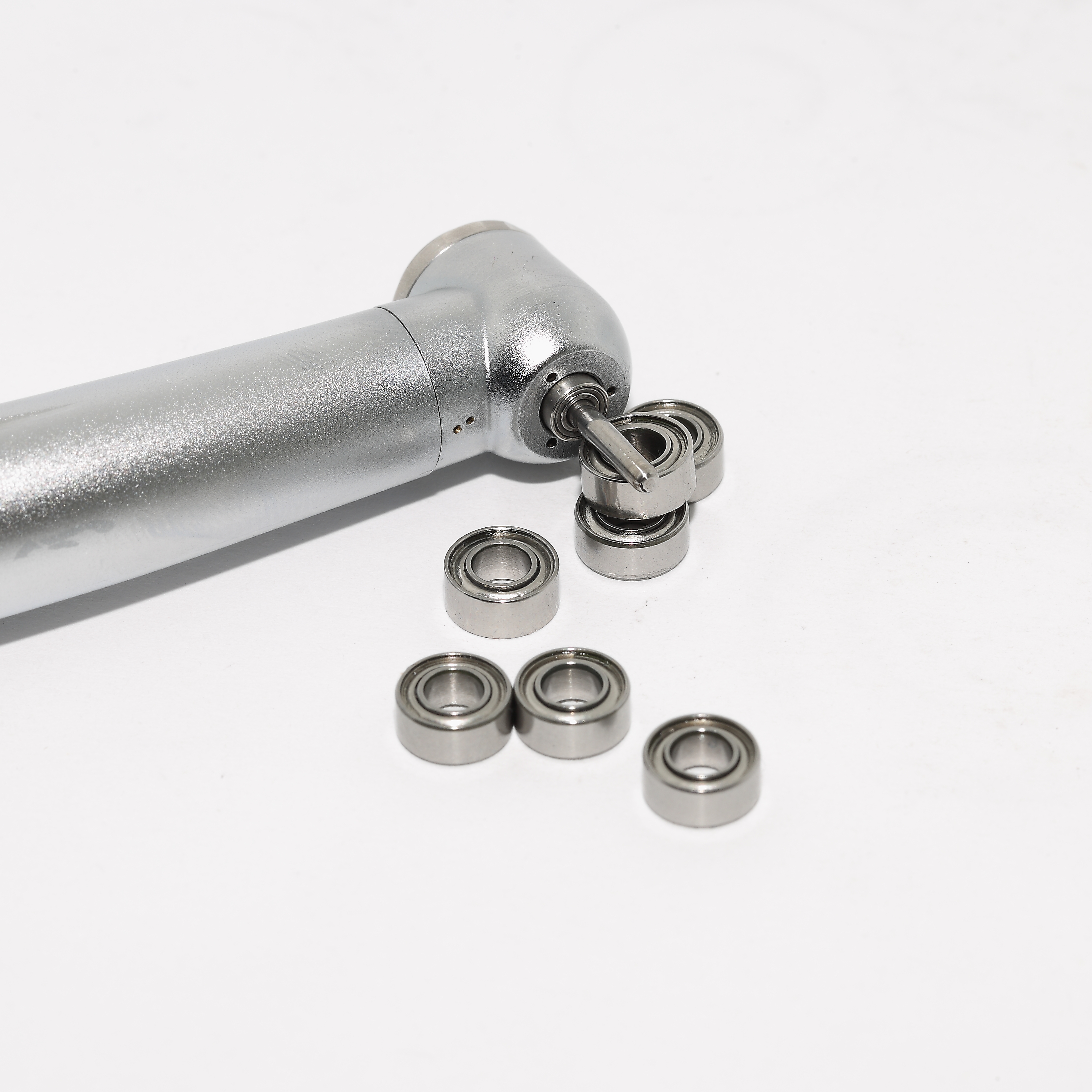
A dental handpiece that runs hot, gets louder, or slowly loses its free-running speed is usually reporting a problem from the two miniature bearings inside the turbine head. In most of the cases an engineer can actually act on, the cause is not a mystery: it is a mismatch between the bearing’s limiting speed, operating temperature window, precision grade, or material and the way the handpiece is really used.
This guide is written for design engineers, maintenance engineers, and procurement teams who need to move from symptom to specification to verification. It explains what heat, noise, and speed loss mean at the bearing level, shows how four key specifications control them, and provides a practical selection and verification path built on real INB models: SR133TL, SMR74TL, SR144ZTLP4 W2.78 and SMR144ZTLP4 W2.38.
Short answer: Confirm the turbine’s actual operating speed and duty cycle first, then confirm that the bearing’s limiting speed, operating temperature range, precision grade and material match that duty. Bearings rated at 200,000 rpm such as INB SR133TL and SMR74TL are not specified for a 350,000–400,000 rpm turbine. The 350,000–400,000 rpm tier in the INB range is covered by SR144ZTLP4 W2.78 and SMR144ZTLP4 W2.38, both P4 precision, SUS440 stainless steel, rated −50 °C to 160 °C.
Defining the Problem: What Heat, Noise and Speed Loss Actually Mean
Overheating, noise and speed loss are symptoms, not root causes. Before changing suppliers, it helps to be precise about which of the three is actually present, because each one points at a different part of the bearing specification.
- Heat is the signature of rising friction torque. When a miniature bearing is run beyond the speed it was specified for, contact friction and lubricant shear increase, the lubricant degrades faster, and the head becomes hot to the touch.
- Noise and vibration are the signature of geometry and fit. Raceway form, roundness, runout and contamination show up as audible whine or roughness long before the bearing fails outright.
- Speed loss is the signature of drag. The rotor cannot reach or hold its free-running speed because the internal resistance of the bearing assembly has grown.
It is worth being honest about scope: turbine condition, air pressure, chuck and bur condition, and cleaning residue can all produce similar symptoms. What a specification review can do is eliminate the bearing as a suspect very quickly — and in the dental handpiece head, the bearings are the components most sensitive to speed tier and temperature window, so they are the logical first check.
The operating envelope of the application defines how strict that check has to be. A dental handpiece bearing works under high-speed precision grinding, in a clean medical environment, and under intermittent high-load operation. The mode of operation is intermittent high-speed running rather than continuous duty. Intermittent running sounds easier than continuous running, but it actually produces repeated thermal cycling, and repeated thermal cycling is what punishes a bearing whose rated temperature window is too narrow.
The functional requirement is straightforward: high rotational speed for rapid grinding, long service life, and the ability to extend the working lifespan of the dental handpiece itself. The special requirements attached to that function are P4 precision grade, ultra-high speed in the 350,000–400,000 rpm band, wide temperature resistance from −50 °C to 160 °C, medical-grade hygiene, and low noise. Every one of those requirements maps onto a bearing specification that can be checked on a datasheet.
Industry Background: Why the Bearing Choice Matters More Than It Used To
Miniature bearings are a small component inside a large market. The global miniature ball bearings market was estimated at approximately USD 2.25 billion in 2025, driven by demand from medical devices and robotics, according to Future Market Insights. That figure should be read with care rather than quoted as a fixed number: other research houses publish materially different estimates for the same year, with Precedence Research at about USD 2.89 billion and IMARC Group at about USD 2.0 billion. The spread itself is a useful reminder for procurement teams — single market numbers in this category are estimates, not measurements.
What the regional data shows more consistently is where the supply sits. Asia Pacific dominated the miniature ball bearings market in 2025 with a revenue share of approximately 60%, and China is the largest regional producer and consumer, according to Precedence Research. Export momentum has been building as well: China’s bearing exports grew 7.2% year on year in the first seven months of 2025, reaching nearly 497,852 tons, according to BearingNews and the Huajing Research Institute.
Precision in this component category is not a marketing term — it is governed by published international standards. Miniature bearing precision is defined by systems including ABMA ABEC (1–9), ISO 492 (P classes from P0 up to P2) and DIN 620, and in the ABMA system a higher number corresponds to tighter tolerances. A buyer comparing a P4 miniature bearing against a P6 part is comparing two different tolerance classes, not two marketing positions.
Material choice follows the application. Stainless steel — specifically 440C — is the primary material for miniature bearings used in medical and food-processing applications, because it resists moisture and chemical attack. That matters in a handpiece, where the bearing head is repeatedly exposed to cleaning agents and sterilization cycles.
The competitive landscape is anchored by a small group of large manufacturers. The best-known names in the miniature bearing sector include MinebeaMitsumi, which is dominant in the smallest sizes, alongside NSK, SKF and Schaeffler (Barden). Below that tier, specialised manufacturers compete on application fit, batch testing and responsiveness rather than on scale — which is exactly where the specification detail decides whether a handpiece runs cool or hot. INB, the miniature bearing brand established in 2014 by Ningbo Yuhang Bearing Co., Ltd. in Ningbo, Zhejiang Province, China, operates in that specialised tier.
The Four Specification Levers That Control Heat and Speed
Four specification values explain most of the difference between a handpiece that runs cool and one that does not. Each one can be read off a datasheet before anything is installed.
1. Limiting Speed
Limiting speed is the rotational speed up to which a bearing design is intended to be operated. Above it, friction heat rises faster than the assembly can dissipate it, lubricant life shortens, and drag grows — which is precisely the combination that produces an overheated, slowing handpiece. This is the single most common specification gap in dental handpiece troubleshooting, because a bearing can look dimensionally identical while sitting in a completely different speed tier.
The INB range makes the split explicit. SR133TL and SMR74TL are rated to a 200,000 rpm limiting speed. SR144ZTLP4 W2.78 and SMR144ZTLP4 W2.38 are rated to 350,000–400,000 rpm. If a handpiece designed for the higher band is fitted with a 200,000 rpm bearing, heat and speed loss are the expected outcome rather than a random failure.
2. Operating Temperature Range
The rated temperature window describes how much thermal margin the bearing has before lubrication and geometry start to degrade. The 200,000 rpm INB models are rated −40 °C to 150 °C. The 350,000–400,000 rpm models are rated −50 °C to 160 °C.
The gap looks small on paper but it is not small in a handpiece head. Sterilization cycles, intermittent high-load operation and ambient heat in a busy clinic all push the bearing toward the top of its window. A bearing with a narrower window reaches its ceiling sooner, and once lubrication performance drops, the extra friction appears as heat — which then pushes the bearing further up the temperature curve.
3. Precision Grade (P4)
At 350,000–400,000 rpm, small geometric errors become vibration. Every micron of runout in the rotating assembly is converted into a force that the raceway has to absorb, and absorbed force becomes noise, heat and wear. P4 is a tight tolerance class within the international precision framework, and it is the grade specified for this application.
All four INB models discussed here — SR133TL, SMR74TL, SR144ZTLP4 W2.78 and SMR144ZTLP4 W2.38 — are P4 grade. INB manufactures high-precision standard bearings with bore diameters from 2 mm to 8 mm and precision grades from P6 to P4, so the grade itself is a specification choice the buyer makes and should verify, not an assumption.
4. Material and Corrosion Resistance
A handpiece bearing lives in a wet, chemically aggressive environment. All four models use SUS440 stainless steel, the 440-series martensitic stainless family that industry material guidance identifies as the primary material for miniature bearings in medical applications because of its resistance to moisture and chemical attack. Material choice is therefore not a cost detail in this application; it is a durability decision that a low-noise miniature bearing specification has to carry.
Model-Level Mapping: Which INB Bearing Belongs to Which Symptom
The two speed tiers in the INB dental handpiece range are easy to tell apart once the dimensions and ratings are side by side. The table below uses only published specification values for the four models.
| Model | Bore × OD × Width (mm) | Precision | Limiting speed | Operating temperature | Material | Application |
|---|---|---|---|---|---|---|
| SR133TL | 2.38 × 4.762 × 2.38 | P4 | 200,000 rpm | −40 °C to 150 °C | SUS440 | Dental handpiece |
| SMR74TL | 4 × 7 × 2 | P4 | 200,000 rpm | −40 °C to 150 °C | SUS440 | Dental handpiece |
| SR144ZTLP4 W2.78 | 3.175 × 6.35 × 2.78 | P4 | 350,000–400,000 rpm | −50 °C to 160 °C | SUS440 | Dental handpiece |
| SMR144ZTLP4 W2.38 | 3.175 × 6.35 × 2.38 | P4 | 350,000–400,000 rpm | −50 °C to 160 °C | SUS440 | Dental handpiece |
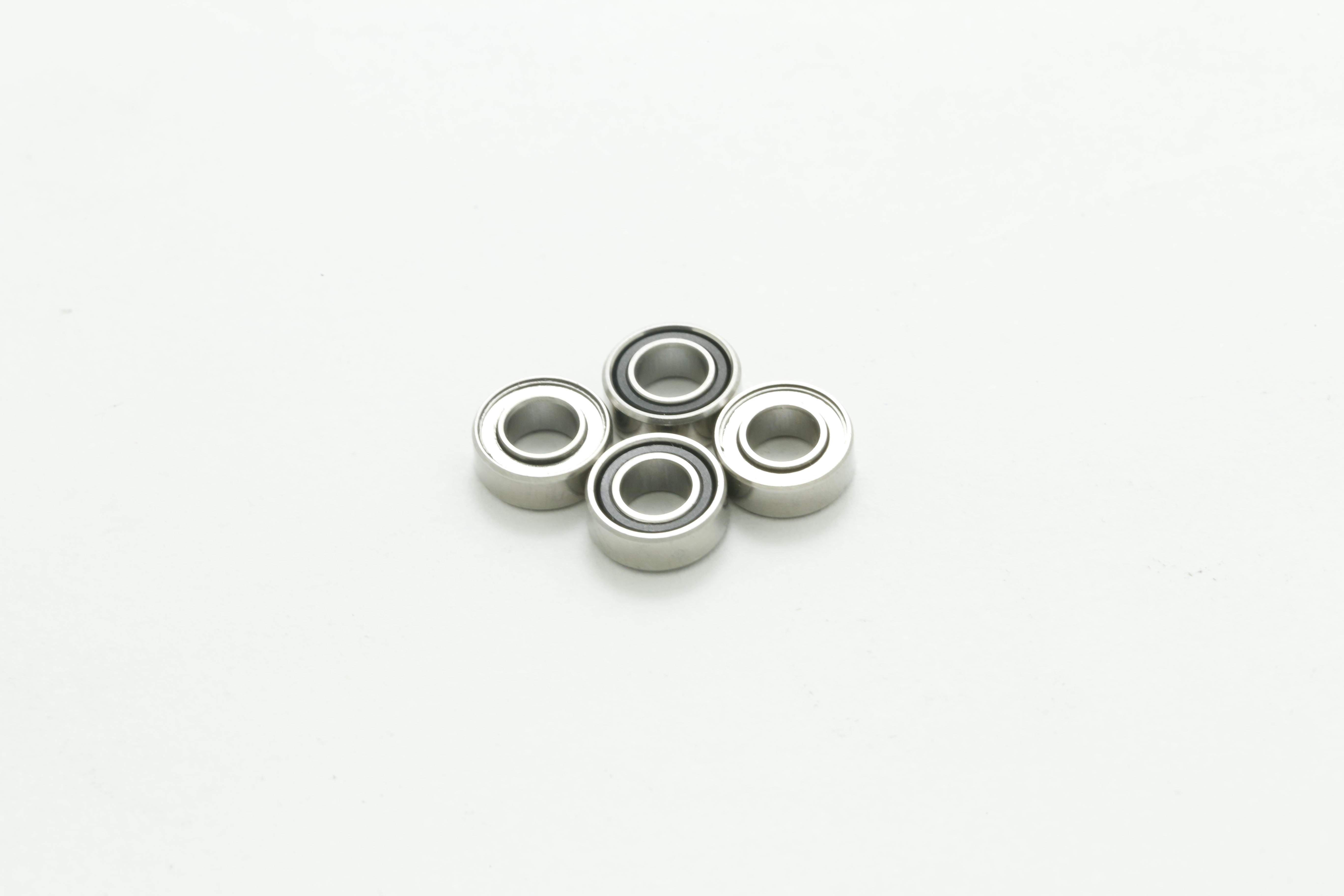
Two points in that table deserve attention from an engineering perspective. First, the 3.175 mm bore and 6.35 mm outside diameter correspond to the 1/8 in and 1/4 in inch-series sizes, which is why these parts are often specified as imperial miniature bearings even though the datasheet is metric. Second, SR133TL is the smallest part in the group at a 2.38 mm bore, with a bore-to-outside-diameter ratio that makes it a genuinely thin-wall small miniature bearing — a category where handling and installation practice matter as much as the catalogue number.
Step-by-Step Breakdown: A Selection and Verification Path
The following sequence is designed to be run by an engineer and a buyer together. It moves from the application, to the specification, to the evidence, and finally to validation.
- Record the real operating condition. Establish the turbine’s actual running speed band, the duty pattern, the cleaning and sterilization cycle, and the ambient conditions in use. Anything specified from a datasheet rather than from the real duty is a guess.
- Select the speed tier before the part number. If the handpiece runs in the 350,000–400,000 rpm band, the starting point is SR144ZTLP4 W2.78 or SMR144ZTLP4 W2.38. If it runs at or below 200,000 rpm, SR133TL or SMR74TL sit in the correct tier. Choosing the tier first prevents the most common mismatch.
- Fix the dimensional envelope from the assembly drawing. Bore, outside diameter and width must match the rotor assembly. The 2.38 mm and 2.78 mm widths are different assembly fits, and the 2.38 mm bore of SR133TL versus the 3.175 mm bore of the 144-size parts is a hard dimensional boundary, not a preference. Configuration — plain, shielded or a flanged stainless steel miniature bearing for a locating shoulder — should be confirmed against the drawing before ordering.
- Confirm precision grade and material. Ask for the grade in writing. P4 is the grade specified for this application, and SUS440 is the material used across the four INB models. A quotation that does not state the grade or the material cannot be compared with one that does.
- Check the thermal window against the sterilization cycle. Compare the rated window of the candidate part with the maximum temperature the head actually reaches during sterilization and operation. The −50 °C to 160 °C window of the 400,000 rpm tier exists for exactly this reason.
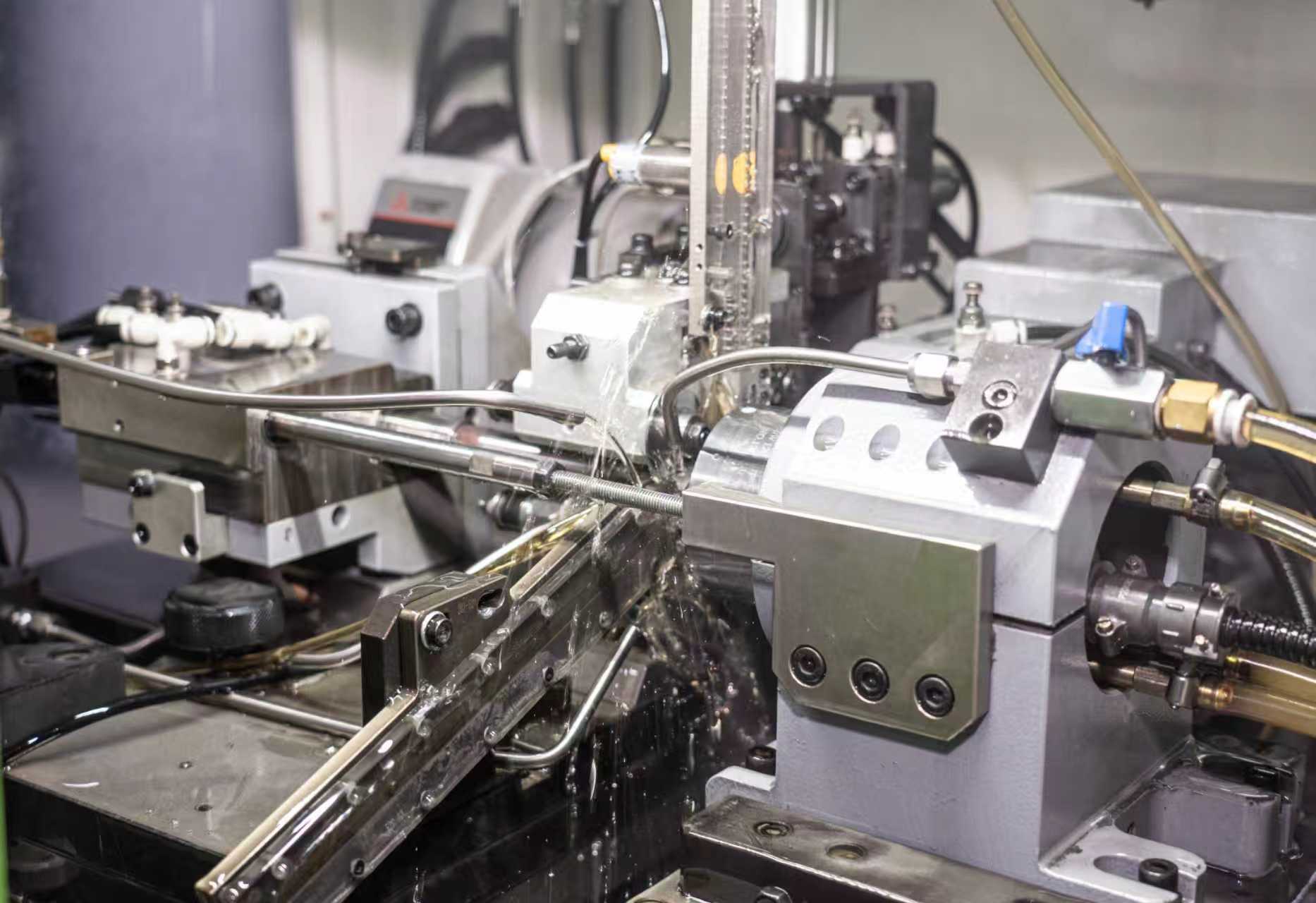
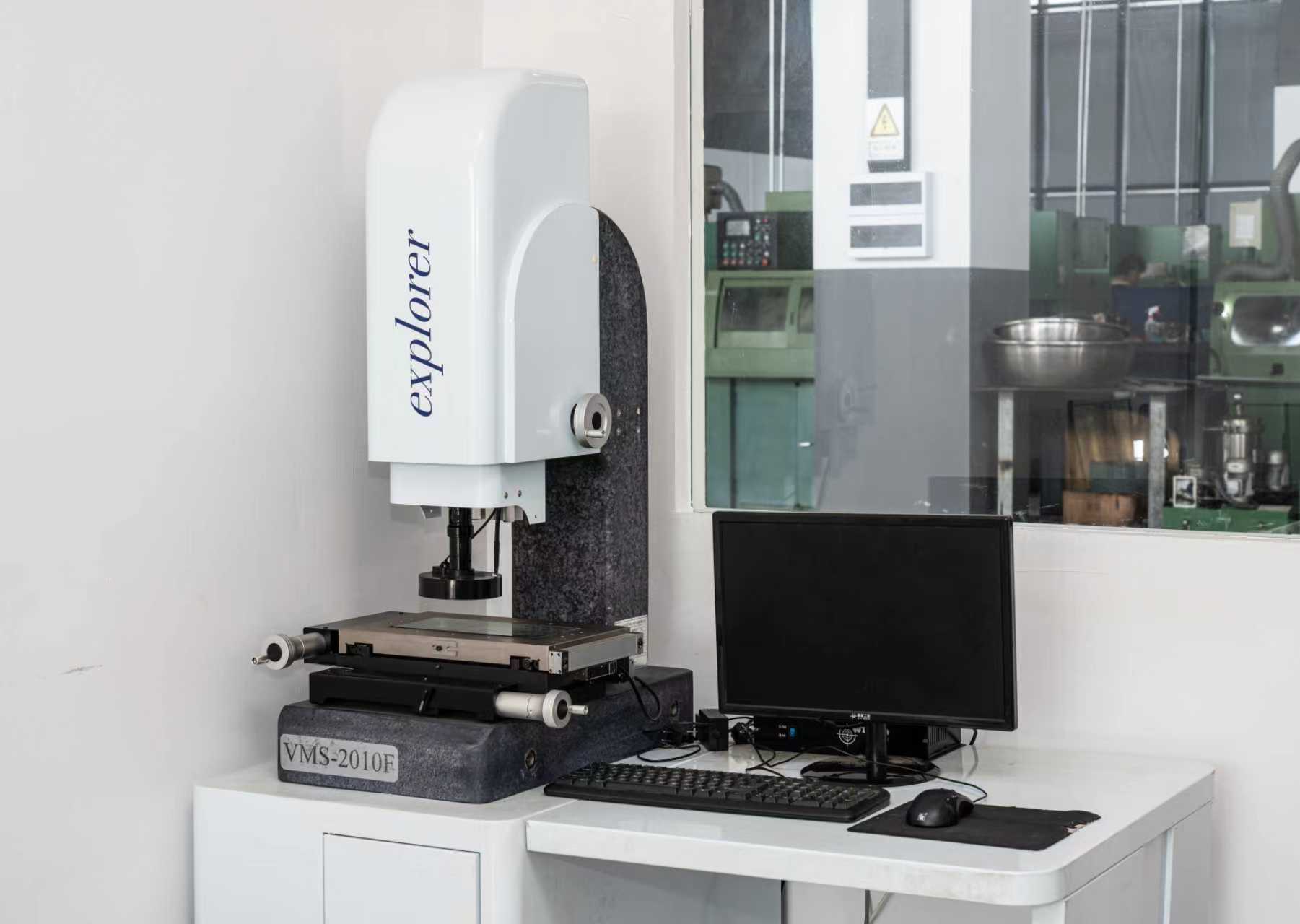
- Verify the manufacturer’s evidence, not the brochure. INB operates under an ISO 9001 quality management system and uses professional testing instruments including hardness testers, roundness meters, profilometers, roughness measuring equipment and microscopes. This is the equipment that produces the numbers on a P4 certificate, and it is a reasonable thing to ask to see. A precision inspection workstation of the type used in the INB factory is shown below.
- Validate with samples before committing to series volume. Install sample bearings, run the real duty cycle, and check three things: temperature at the head, noise, and whether free-running speed holds over time. INB supports after-sales return and exchange on supplied bearings.
Use Cases: Where This Path Applies
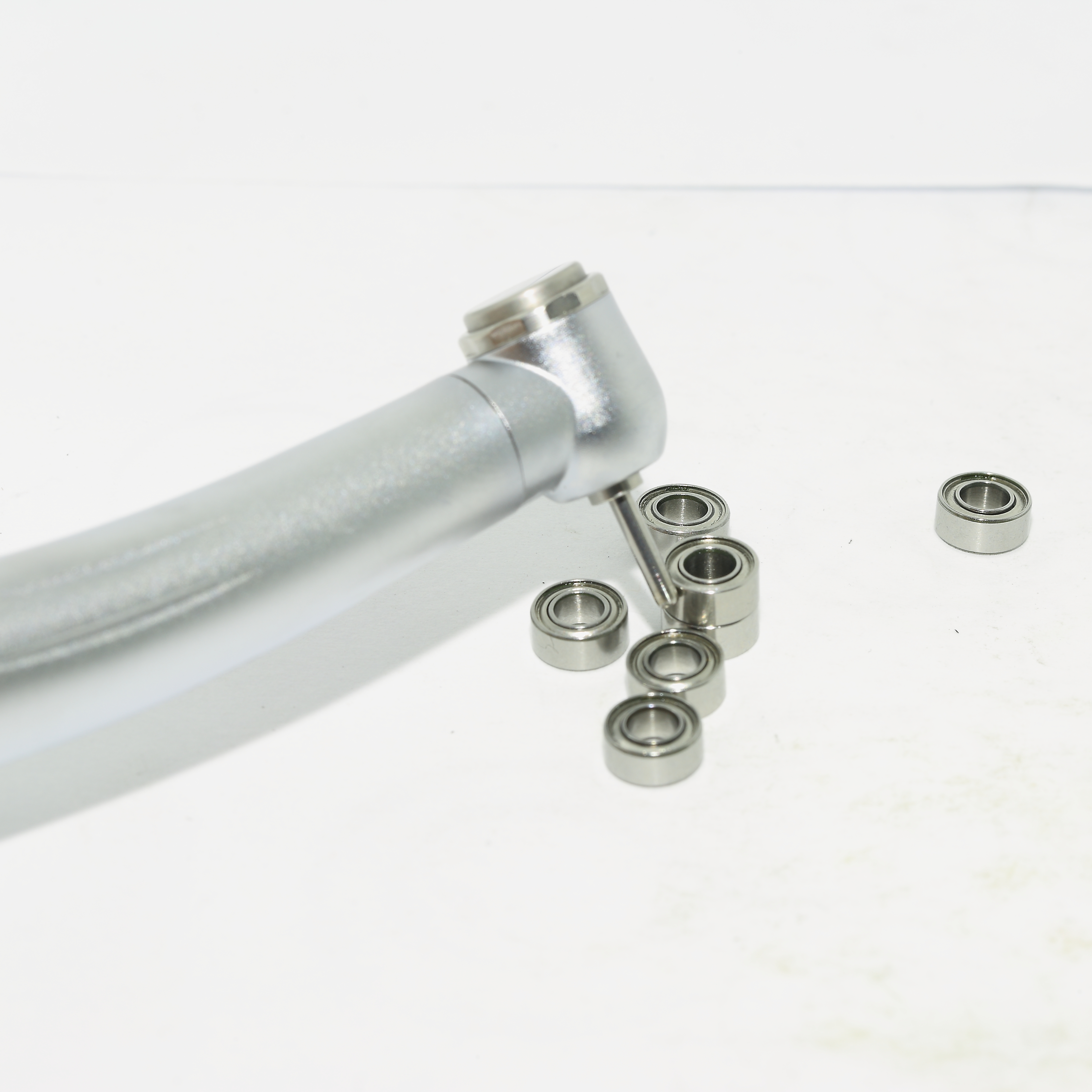
The primary use case is the dental handpiece itself. INB supplies the dental handpiece bearing application directly, matched to dental handpiece equipment, with P4 grade, ultra-high speed in the 350,000–400,000 rpm band, wide temperature resistance, medical-grade hygiene and low noise as the stated special requirements. The function the bearing performs is specific: high rotational speed for rapid grinding, long service life, and support for a longer handpiece lifespan. The 400,000 rpm tier models — SR144ZTLP4 W2.78 and SMR144ZTLP4 W2.38 — are the parts associated with this application.
A concrete record from that application is useful. A medical device customer in China ordered 80,000 units for use in dental handpieces. Over a 500-hour operating record the reported result was stable high-speed operation with extended equipment lifespan. The highlighted characteristics of that supply were ultra-high speed, P4 precision, long service life and medical-grade reliability — the same four properties that the specification checklist above is designed to verify.
The same miniature bearing family also serves micro-motor applications, which is why buyers of motor miniature bearings often evaluate the same dimensional and precision options. The verification logic does not change between the two: speed tier first, dimensions second, precision and material third, evidence fourth.
Symptom-to-Specification Reference Table
The table below converts observed field symptoms into the specification value that should be checked first. It contains no failure-rate claims — it is a diagnostic order of operations.
| Observed symptom | Specification to check first | Verification action |
|---|---|---|
| Head runs hot during or after use | Limiting speed and operating temperature range | Compare the turbine’s speed band and sterilization temperature against the rated values for the candidate model |
| Audible whine or roughness | Precision grade and assembly fit | Confirm P4 grade in writing and check bore, OD and width against the assembly drawing |
| Free-running speed drops over time | Limiting speed and lubricant/temperature margin | Confirm the part is in the correct speed tier; retest with a sample from the same production batch |
| Corrosion or discolouration | Material | Confirm SUS440 stainless steel and review the cleaning agent and sterilization cycle |
| Vibration at high speed | Precision grade, roundness and installation practice | Request measurement evidence such as roundness and roughness data from the supplier |
Frequently Asked Questions
What precision grade and material should a miniature bearing for a dental handpiece meet?
P4 is the precision target used in this application, inside the international precision-class framework defined by ABMA ABEC (1–9), ISO 492 and DIN 620. Material should be corrosion-resistant stainless steel: the INB models SR133TL, SMR74TL, SR144ZTLP4 W2.78 and SMR144ZTLP4 W2.38 are all P4 grade and all use SUS440 stainless steel. Industry material guidance identifies 440C stainless steel as the primary choice for miniature bearings in medical and food-processing applications because of its moisture and chemical resistance.
Can a miniature bearing be customized for a specific handpiece speed tier?
Yes, within defined limits. INB operates an OEM production model with customization according to customer requirements, a monthly capacity of 500,000 units, and a producible bore range from 2 mm to 8 mm in precision grades from P6 to P4. The speed tier itself is a specification decision: the INB range covers a 200,000 rpm tier (SR133TL and SMR74TL, rated −40 °C to 150 °C) and a 350,000–400,000 rpm tier (SR144ZTLP4 W2.78 and SMR144ZTLP4 W2.38, rated −50 °C to 160 °C).
What drives the cost of a high-speed miniature bearing?
Cost is driven mainly by specification. Precision grade is one factor — P4 sits at a tighter tolerance class than P6 — and the speed tier, the operating temperature window, the stainless steel material and the extent of batch testing all move the price. INB applies 100% testing as its quality-control standard. Order quantity matters as well, because the minimum order quantity for INB miniature bearings is 100 units. Quotations should therefore be compared on an identical specification basis, since two bearings with the same dimensions can sit in different speed and precision tiers.
How should a sample be validated before series production?
Validation should reproduce the real duty rather than a bench-only condition: the same speed tier, intermittent high-speed operation, the cleaning and sterilization cycle, and a noise check. Confirm the exact model — SR133TL, SMR74TL, SR144ZTLP4 W2.78 or SMR144ZTLP4 W2.38 — and verify dimensions against the assembly drawing before installation. INB supports after-sales return and exchange on supplied bearings.
What is the typical lead time and minimum order quantity?
INB miniature bearings are held in stock with a stated lead time of 7 days, and the minimum order quantity is 100 units. Monthly production capacity is 500,000 units, which matters for buyers planning a production ramp rather than a single trial order. Requests for samples, quotations or the current catalogue can be started at www.lnb-brg.com.
Conclusion
Overheating and speed loss in a dental handpiece rarely appear without a specification reason behind them. When the symptom is heat, the first value to check is the limiting speed, followed by the operating temperature range. When the symptom is noise, the first values to check are the precision grade and the dimensional fit. When the symptom is corrosion, the first value to check is the material. In each case the answer is visible on a datasheet before the bearing is installed.
The practical lesson is to select the speed tier before the part number. The 200,000 rpm tier in the INB range — SR133TL and SMR74TL, both P4 and SUS440, rated −40 °C to 150 °C — and the 350,000–400,000 rpm tier — SR144ZTLP4 W2.78 and SMR144ZTLP4 W2.38, both P4 and SUS440, rated −50 °C to 160 °C — exist because those two duties place different demands on the same physical envelope. Matching the part to the duty, confirming the grade and material in writing, and validating with a sample under real operating conditions is a faster route to a cool, quiet, stable handpiece than replacing parts by trial and error.
Next Step: Confirm the Tier, Then Validate It
If you are working through an overheating or speed-loss problem now, the fastest way to close it is to send the handpiece’s operating speed and duty cycle, plus the bore, outside diameter and width from your assembly drawing. INB can then confirm whether SR133TL, SMR74TL, SR144ZTLP4 W2.78 or SMR144ZTLP4 W2.38 is the correct fit.
Request a sample, a quotation, or the current miniature bearing catalogue at www.lnb-brg.com — or review the technical articles on blog.lnb-brg.com for further selection guidance on stainless steel miniature bearings and high-speed miniature bearings.
Have Questions or Need More Details?
Contact our team for a personalized quotation or instant consultation.
Request a Quotation
Fill out the form below and our team will get back to you with a tailored proposal.
WhatsApp Direct Chat
Prefer to chat in real-time? Message us on WhatsApp for instant assistance & quick answers.
- Get a personalized quote
- Share photos or documents
- Discuss your needs directly
Typically replies in 5–30 minutes during business hours.