
Miniature Bearing Selection Parameters: Speed, Precision & Temperature
Miniature Bearing Selection Parameters: Speed, Precision & Temperature
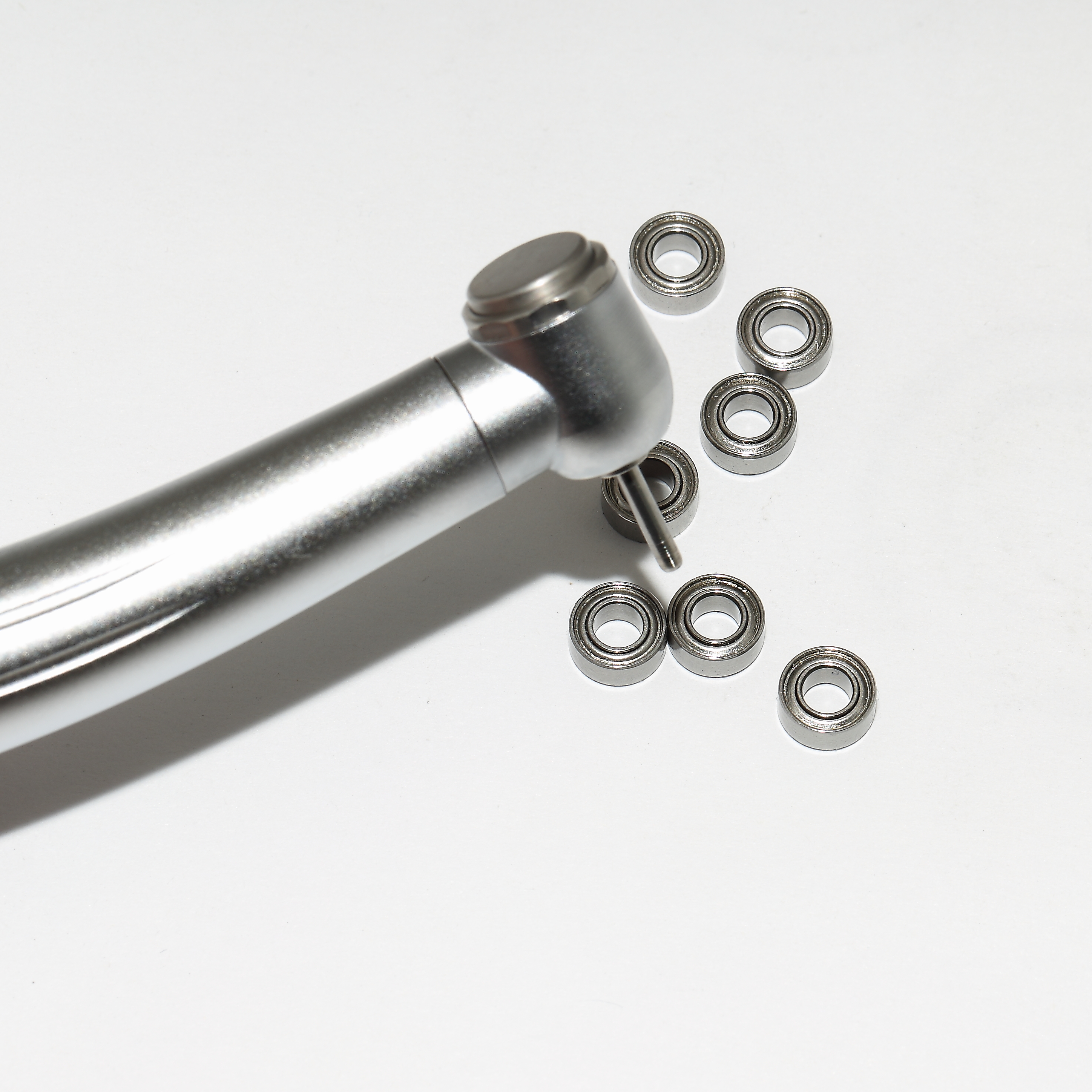
Miniature bearing selection for dental handpieces and high-speed medical devices rarely fails on the drawing board. It fails in the field — as heat, vibration, or early wear. Three parameters decide that outcome: precision grade, limiting speed, and operating temperature. Balanced correctly, a miniature bearing rated for 200,000–400,000 rpm runs quietly through extended duty; mismatch one parameter, and the assembly overheats or loses speed.
INB is the miniature bearing brand of Ningbo City Jingyin Electromechanical Technology Co., Ltd., a manufacturer based in Ningbo, Zhejiang Province that produces high-precision bearings with bore diameters from 2 mm to 8 mm, mainly for the medical device and micro-motor industries. This guide works through the core selection parameters and applies them to four worked examples: the SMR144ZTLP4 W2.38, SR144ZTLP4 W2.78, SR133TL, and SMR74TL.
Why Miniature Bearing Selection Fails in High-Speed Applications
The core difficulty is that the three parameters pull against each other. Higher speed raises internal friction and heat; tighter precision reduces running clearance and demands cleaner assembly; a wider temperature envelope may require material and lubrication choices that change torque behaviour. A bearing optimized for one parameter alone will usually underperform on the other two.
In dental handpieces this trade-off is compressed into a very small package. The turbine spins at extreme speed, the bearing sits close to the heat source, and the assembly is autoclaved between uses. When a bearing is selected on a single data point — for example, speed alone — engineers typically see one of three symptoms later:
- Overheating — the bearing runs, but temperature climbs past the rated envelope under continuous load.
- Speed loss — the handpiece cannot hold its target rotational speed as internal drag increases.
- Short service life — precision or material is underspecified for the duty cycle, so wear appears before the expected interval.
The fix is not a single "best" bearing. It is a repeatable selection sequence that defines speed, precision, temperature, material, and dimension together, then confirms each one against the manufacturer's published data.
The Miniature Bearing Market in Context
Miniature bearings are a small component inside a large and growing category. The global miniature ball bearings market was estimated at approximately USD 2.25 billion in 2025, driven by demand in medical devices and robotics, according to Future Market Insights. Regional concentration is significant: Asia Pacific dominated the market in 2025 with a revenue share of roughly 60%, with China as the largest regional producer and consumer, based on Precedence Research data.
Supply conditions support that picture. China's bearing exports grew 7.2% year-on-year in the first seven months of 2025, reaching nearly 497,852 tons, even as global unit pricing came under pressure, according to BearingNews and the Huajing Research Institute. For buyers evaluating miniature bearing suppliers, this means the sourcing pool is deep — and the differentiation between suppliers shows up less in availability and more in how precisely they can hold a specification.
Two structural facts shape how engineers specify these parts. First, miniature bearing precision is governed by recognized standards, including ABMA ABEC (1–9), ISO 492 (P0–P2), and DIN 620, where higher ABEC numbers correlate to tighter tolerances. Second, stainless steel — specifically 440C — is the primary material for miniature bearings used in medical and food-processing applications because of its moisture and chemical resistance. Both facts anchor the parameter discussion that follows.
Detailed Solution: The Five Parameters That Decide Miniature Bearing Performance
1. Precision Grade: What P4 Delivers
Precision grade defines how tightly the bearing's dimensions and running geometry are controlled. In the ISO 492 system, P4 is a tight classification well above the standard P0 grade, and INB produces its miniature bearings across a range from P6 to P4. The practical effect in a dental handpiece is reduced runout and vibration at high speed — which is exactly where a lower-precision bearing would generate noise, heat, and accelerated wear.
P4 should be treated as a system requirement rather than a badge. If the shaft and housing are not held to compatible tolerances, or if the assembly environment is not controlled, the benefit of a P4 bearing is partly lost. The SMR144ZTLP4 W2.38 and SR144ZTLP4 W2.78 both carry the P4 grade in their model designation, signalling the precision class expected by the application.
2. Limiting Speed: 200,000 to 400,000 rpm
Limiting speed is the maximum rotational speed at which a bearing can be expected to operate within its design conditions. Across INB's high-speed miniature range, the working speed band is 200,000 rpm to 400,000 rpm. For the SMR144ZTLP4 W2.38, the published limiting speed is 350,000–400,000 rpm.
Buyers should read a limiting speed figure as a ceiling, not a target. Continuous operation near the limit requires that lubrication, fit, and thermal management all support it. In dental handpiece turbines, designers commonly specify a bearing whose limiting speed sits above the handpiece's operating speed, which preserves margin for load spikes and for the temperature rise that accompanies continuous use.
3. Operating Temperature: −50 °C to 160 °C and −40 °C to 150 °C
Temperature determines whether the bearing's material, lubricant, and internal clearance stay within their working window. INB specifies two operating temperature envelopes across this miniature range: −50 °C to 160 °C and −40 °C to 150 °C. The −50 °C to 160 °C envelope is the rating published for the SMR144ZTLP4 W2.38.
These envelopes matter because dental and medical devices are often sterilized between uses. A bearing that performs correctly at room temperature can still lose lubricant stability or develop clearance problems after repeated thermal cycling. When selecting, engineers should compare the maximum sustained device temperature — including sterilization peaks — against the bearing's rated envelope, not against the average operating temperature.
4. Material: SUS440 Stainless Steel
Material selection follows directly from the environment. The SMR144ZTLP4 W2.38 is produced in SUS440 stainless steel — the grade widely used in medical and moisture-exposed miniature bearing applications for its resistance to corrosion and chemical exposure. SUS440 corresponds to the 440C-grade martensitic stainless steel that industry references identify as the primary material for medical and food-processing miniature bearings.
For medical device engineers, the material choice has two consequences worth documenting: it supports repeated cleaning and sterilization cycles without premature corrosion, and it provides the hardness needed to hold a tight precision grade in high-speed running. Material traceability should be confirmed with the supplier as part of the specification record, not assumed.
5. Dimensions: Bore, Outer Diameter, and Width
Dimensional fit is the parameter that most often removes a technically suitable bearing from consideration — a bearing can meet every performance target and still fail if it does not seat correctly in the assembly. Miniature bearings are specified by three dimensions: bore (inner diameter), outer diameter (OD), and width.
Across the worked examples in this guide, the dimensional range runs from extra-miniature imperial sizes to small metric sizes:
- SMR144ZTLP4 W2.38 — 3.175 mm bore, 6.35 mm OD, 2.38 mm width.
- SR144ZTLP4 W2.78 — built on the same 3.175 mm bore family, with a 2.78 mm width variant.
- SR133TL — a thin-wall imperial miniature bearing measuring 2.38 mm × 4.762 mm × 2.38 mm.
- SMR74TL — a small metric miniature bearing measuring 4 mm × 7 mm × 2 mm.
Note how the naming logic maps to the numbers: the "144" family shares the 3.175 mm bore, while the "74" metric designation corresponds to the 4 mm × 7 mm footprint. Buyers comparing an imperial 3.175 mm bore part against a metric 4 mm bore part are choosing between two different assemblies, not two equivalents.
Step-by-Step: A Six-Step Miniature Bearing Selection Workflow
Applying the five parameters in a fixed order prevents the most common selection error — optimizing one variable and discovering later that another was already constrained. The sequence below is written for engineers and procurement teams working from a device specification.
- Define the dimensional envelope. Establish bore, OD, and width from the housing and shaft drawing. Confirm whether the assembly calls for an imperial-size bearing such as the 2.38 mm × 4.762 mm × 2.38 mm SR133TL or a metric part such as the 4 mm × 7 mm × 2 mm SMR74TL.
- Set the maximum operating speed. Identify the peak continuous speed, then add margin. For dental handpiece turbines this typically falls within the 200,000–400,000 rpm band.
- Match the limiting speed rating. Select a bearing whose published limiting speed exceeds the requirement — for example, 350,000–400,000 rpm for the SMR144ZTLP4 W2.38.
- Confirm the precision grade. Where runout and vibration affect performance, specify a P4 grade such as the SMR144ZTLP4 W2.38 or SR144ZTLP4 W2.78, and confirm that shaft and housing tolerances support it.
- Verify material and temperature. Match SUS440 stainless steel to the environment, and compare the maximum sustained (and sterilization) temperature against the −50 °C to 160 °C or −40 °C to 150 °C envelope.
- Validate before volume commitment. Confirm the supplier's production capacity, testing regime, lead time, and order terms before releasing the specification to procurement.
Where These Parameters Matter: Dental and Medical Use Cases
The parameter logic is easiest to see in the application. In a dental handpiece turbine, the bearing supports a rotating tool at extreme speed while sitting close to the friction heat it generates. Precision drives down vibration, limiting speed sets the operating ceiling, and the temperature envelope determines how long lubricant and clearance stay stable. A medical device client in China has deployed 80,000 units of the SMR144ZTLP4 W2.38 in dental handpieces, running 500 hours with stable high-speed operation and extended equipment lifespan — a direct demonstration that precision, speed, and temperature parameters hold together in continuous medical duty.
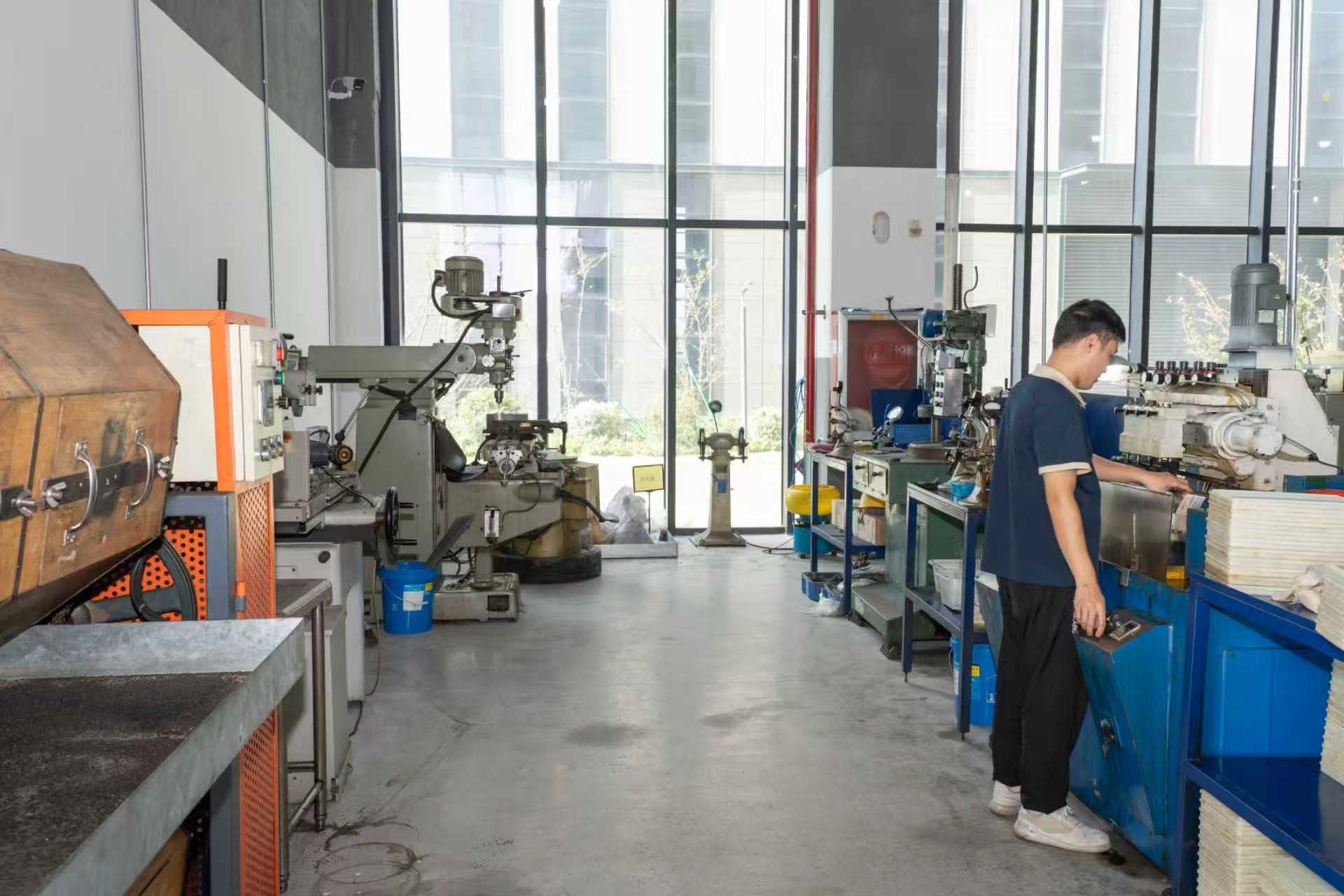
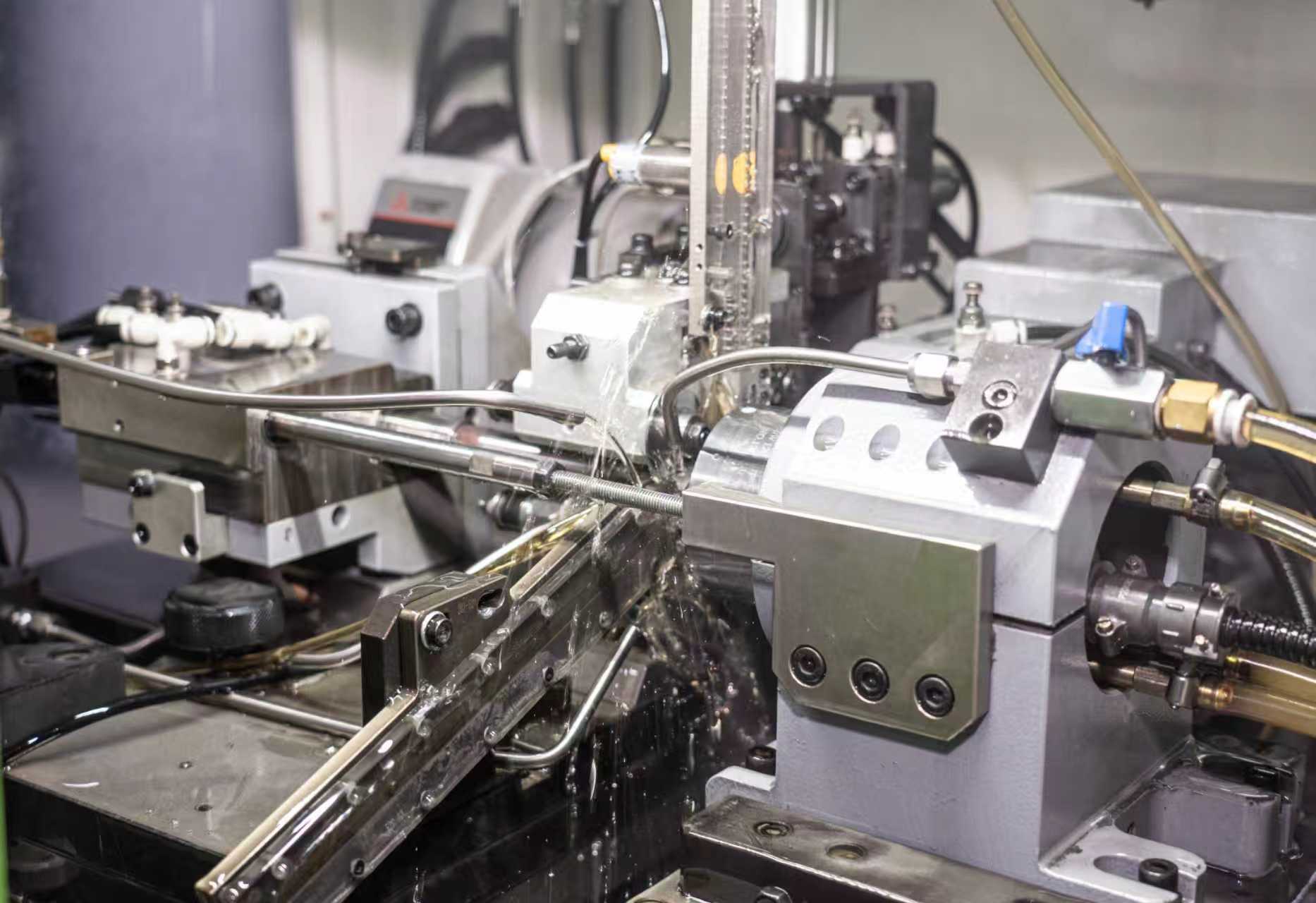
INB offers OEM production and customization according to customer requirements for these applications. Production capacity stands at 500,000 units per month, every unit is 100% tested, and the company operates under an ISO 9001 quality management system. Precision grades produced range from P6 to P4, with bore diameters from 2 mm to 8 mm.
Comparing Four INB Miniature Bearings by Parameter
The table below sets the four worked examples side by side by dimensional and material specification. Only the SMR144ZTLP4 W2.38 row carries INB's full published performance data — precision, limiting speed, and temperature — because that is the model verified in the product data referenced for this guide. The remaining rows list dimensional and material specifications; precision grade and speed rating should be confirmed per model during specification.
| Model | Bore × OD × Width | Precision | Material | Series Type |
|---|---|---|---|---|
| SMR144ZTLP4 W2.38 | 3.175 × 6.35 × 2.38 mm | P4 | SUS440 | Metric / high-speed dental |
| SR144ZTLP4 W2.78 | 3.175 mm bore, 2.78 mm width variant | P4 | Stainless steel | Imperial family / dental |
| SR133TL | 2.38 × 4.762 × 2.38 mm | Per model | Stainless steel | Thin-wall imperial / extra miniature |
| SMR74TL | 4 × 7 × 2 mm | Per model | Stainless steel | Small metric / medical |
Published performance data for the SMR144ZTLP4 W2.38: P4 precision, 350,000–400,000 rpm limiting speed, and an operating temperature range of −50 °C to 160 °C, in SUS440 material, for dental handpiece applications.
Frequently Asked Questions
Is INB miniature bearing production certified to a recognized quality standard?
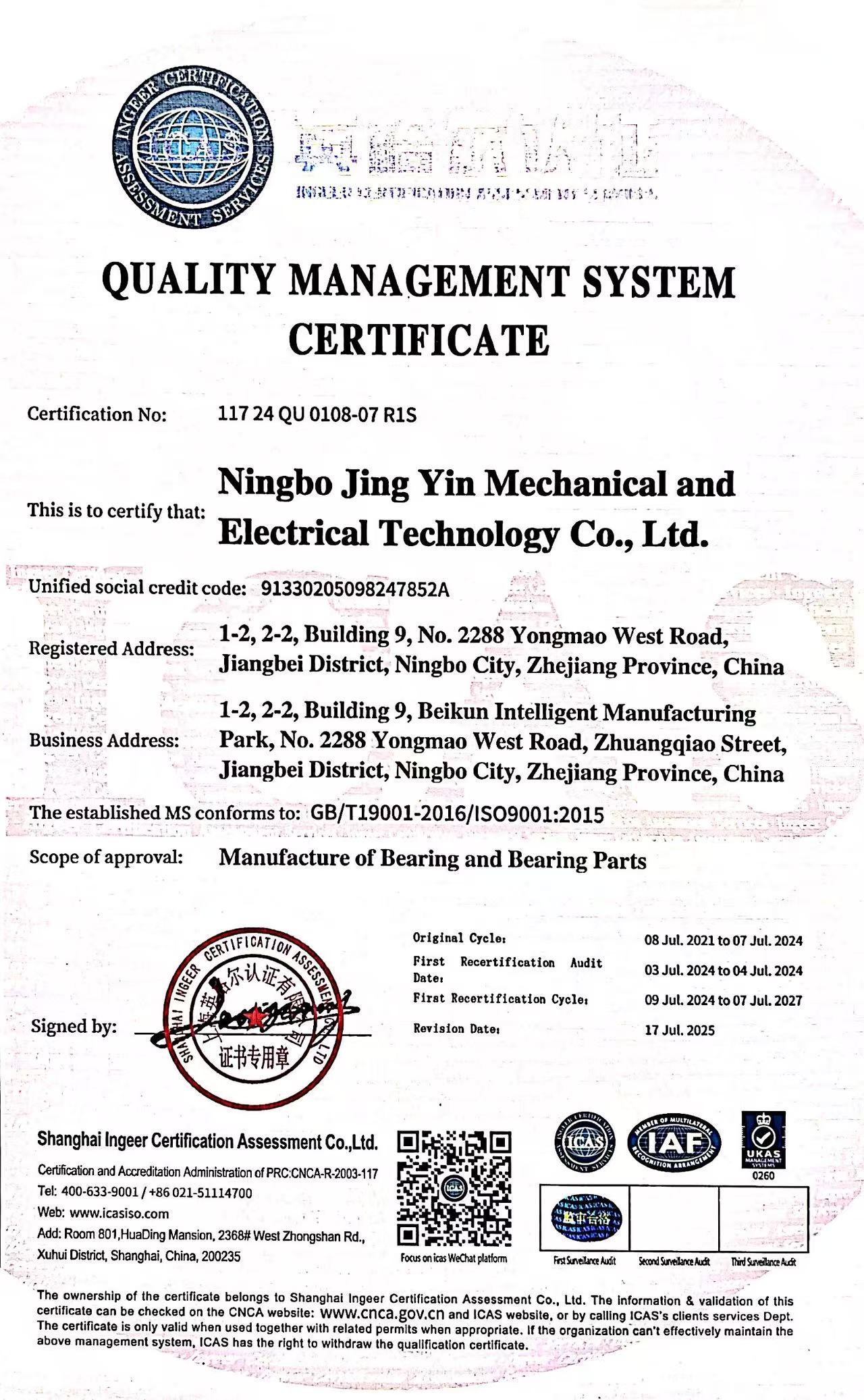
Yes. Ningbo City Jingyin Electromechanical Technology Co., Ltd. operates under an ISO 9001 quality management system, certified by Shanghai Ingeer Certification Assessment Co., Ltd. under certificate number 117 24 QU 0108-07 R1S. The certificate was issued on 9 July 2024 and remains valid until 7 July 2027. The certified scope is the manufacture of bearings and bearing parts, assessed against the GB/T19001-2016 / ISO 9001:2015 standard.
Can INB produce custom and OEM miniature bearings to a customer specification?
Yes. INB provides OEM production services and customization according to customer requirements. Monthly production capacity is 500,000 units, and every unit is 100% tested. The precision range produced runs from P6 to P4, with bore diameters from 2 mm to 8 mm, covering high-precision standard bearings used in dental handpieces and other high-speed medical devices.
What are INB's purchasing and acceptance terms?
Minimum order quantity starts at 50 units. Delivery terms are FOB, acceptance is based on 100% factory inspection, and payment is made before shipment. These terms apply to miniature bearing orders including the SMR144ZTLP4 W2.38 and related models.
What is the lead time for in-stock miniature bearings?
In-stock items are quoted at a 7-day lead time. After-sales support covers return and exchange. For custom or OEM miniature bearings, the specification and order confirmation determine the final schedule.
How should an engineer choose between the SMR144ZTLP4 W2.38, SR144ZTLP4 W2.78, SR133TL, and SMR74TL?
Start with the dimensional envelope, then work outward. The SMR144ZTLP4 W2.38 and SR144ZTLP4 W2.78 suit dental handpiece turbines that need a 3.175 mm bore with P4 precision and a 350,000–400,000 rpm capability; the W2.38 and W2.78 versions differ mainly in width. The SR133TL, at 2.38 mm × 4.762 mm × 2.38 mm, fits extra-miniature imperial assemblies, while the SMR74TL, at 4 mm × 7 mm × 2 mm, fits small metric assemblies. Where speed, precision, and temperature all matter at once, confirm each parameter against the supplier's published data before sampling. To move from specification to validation, you can request a sample or a quotation directly from INB at www.lnb-brg.com.
Conclusion: Define All Five Parameters Before You Order
Selecting a miniature bearing is a parameter-matching exercise, not a speed contest. Precision grade controls vibration at the operating point; limiting speed sets the ceiling; operating temperature determines stability over the device's real duty cycle, including sterilization; material decides corrosion and hardness behaviour; and dimensions decide whether the part fits at all. Treat the 200,000–400,000 rpm band, the P4 grade, the SUS440 material, and the −50 °C to 160 °C and −40 °C to 150 °C envelopes as one connected specification, and the selection stops being a guess.
INB manufactures miniature bearings in Ningbo, Zhejiang Province, with a 2,000 m² facility, 6,000,000 units of annual output, and a precision range from P6 to P4. For dental handpiece and high-speed medical device programs, the SMR144ZTLP4 W2.38 remains the reference model in this guide — P4 precision, 350,000–400,000 rpm limiting speed, and a −50 °C to 160 °C envelope in SUS440 stainless steel.
Ready to Validate a Miniature Bearing Specification?
Share your bore, OD, width, speed, and temperature requirements, and INB will match them to a suitable stainless steel miniature bearing and confirm availability. OEM and custom production are available, with 100% testing on every unit and in-stock lead times from 7 days.
Website: www.lnb-brg.com
Email: yuhang001@126.com
Tel / WhatsApp: +86 18957446001
Have Questions or Need More Details?
Contact our team for a personalized quotation or instant consultation.
Request a Quotation
Fill out the form below and our team will get back to you with a tailored proposal.
WhatsApp Direct Chat
Prefer to chat in real-time? Message us on WhatsApp for instant assistance & quick answers.
- Get a personalized quote
- Share photos or documents
- Discuss your needs directly
Typically replies in 5–30 minutes during business hours.