
400,000 vs 200,000 RPM Miniature Bearings: Which Fits Your Dental Handpiece?
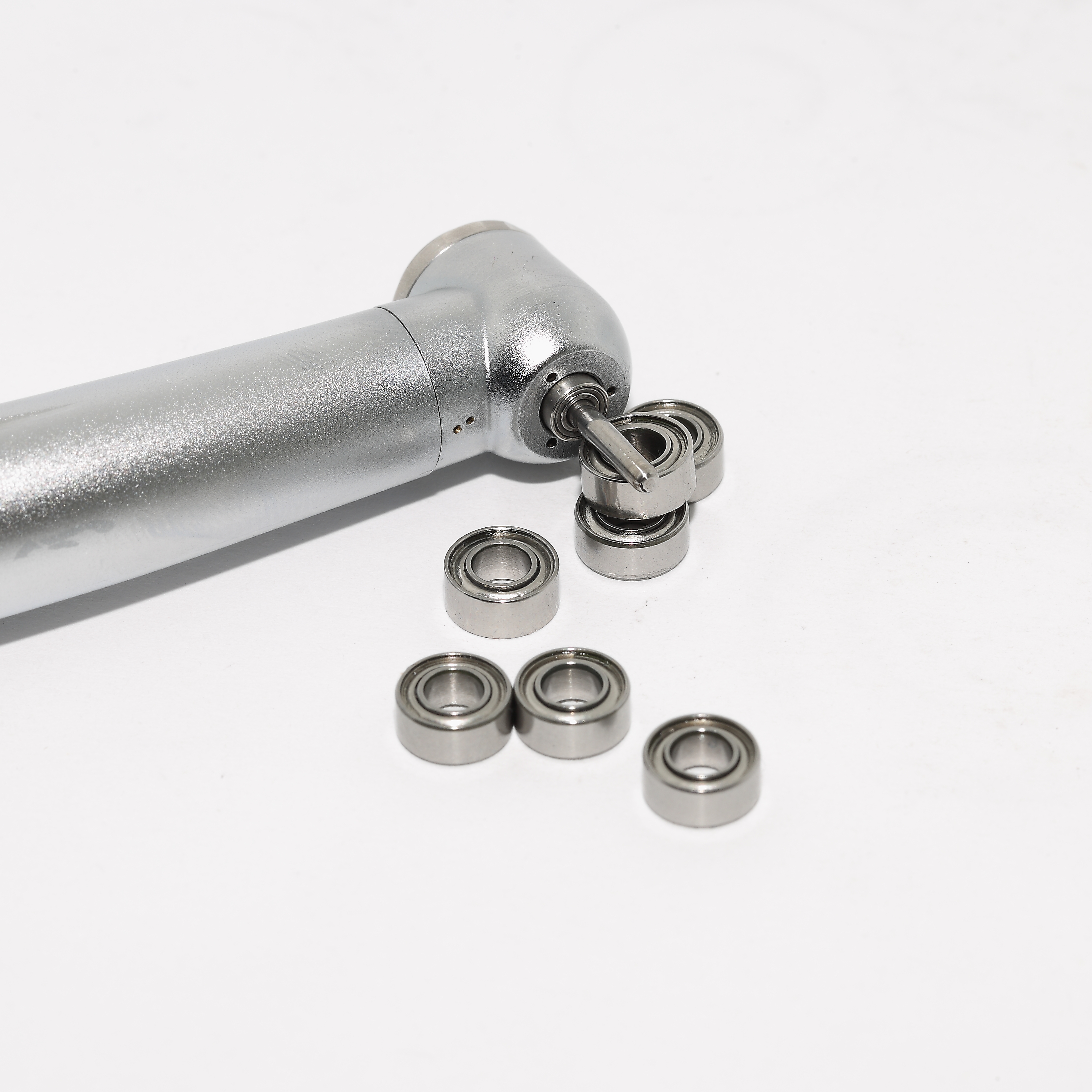
Choosing between a 400,000 rpm and a 200,000 rpm miniature bearing is not a question of which number is larger. It is a question of which bearing stays thermally and dimensionally stable inside your handpiece at the speed your application actually produces. For continuous high-speed air-turbine handpieces, a P4 precision bearing in SUS440 stainless steel — such as the INB SMR144ZTLP4 W2.38, with a limiting speed of 350,000–400,000 rpm, a 3.175 mm × 6.35 mm × 2.38 mm envelope and an operating temperature of -50 °C to 160 °C — is the specification to design against. For intermittent or lower-speed handpiece platforms, a 200,000 rpm stainless steel miniature bearing is frequently the more practical fit on sourcing, lubrication tolerance and cost per unit.
This guide is written for OEM engineers and procurement teams who have to justify the choice on a drawing rather than in a brochure. It compares limiting speed, precision rating, material options such as SUS440 stainless steel, dimensional fit and operating temperature, then closes with a decision checklist you can run before releasing the design.
Why the Speed Tier Is a Design Decision, Not a Spec Swap
Two miniature bearings can share the same stainless steel family, the same bore diameter and the same supplier, and still behave completely differently in a dental handpiece. The difference does not appear on a datasheet. It appears as heat, audible noise, speed loss under load, or a service life shorter than the qualification test predicted.
That is why the speed tier should be treated as a design decision with three inputs: the duty cycle the handpiece runs, the heat path that carries friction heat and sterilization load away from the races, and the dimensional envelope the assembly allows. When any one of those inputs is wrong, the bearing is usually blamed for a failure that was designed in months earlier.
The commercial consequence is measurable. A procurement decision made purely on price per unit tends to reappear later as returned assemblies, requalification cost and after-sales support load. In evaluation-stage projects, the useful question is not “which bearing is cheaper” but “which bearing holds its operating point across the full duty cycle, including the worst cycle.”
Where Miniature Bearings for Dental Handpieces Sit in the Market
Miniature bearings are a large, Asia-centred category with heavy exposure to medical devices, and dental handpieces sit in the part of that category where precision matters most. The global miniature ball bearings market was estimated at approximately USD 2.25 billion in 2025, driven by demand in medical devices and robotics (Future Market Insights).
Market-size estimates vary between research houses: Precedence Research places the same market at USD 2.89 billion, while IMARC Group places it at USD 2.0 billion. Treat any single figure as directional rather than definitive, and use it for scale rather than for planning.
Regional concentration is clearer. Asia Pacific dominated the miniature ball bearings market in 2025 with a revenue share of approximately 60%, with China as the largest regional producer and consumer (Precedence Research). China’s bearing exports grew 7.2% year on year in the first seven months of 2025, reaching nearly 497,852 tons, even as global unit pricing came under pressure (BearingNews / Huajing Research Institute). For buyers, that combination of capacity growth and pricing pressure means supplier choice matters more than headline market growth.
Precision is not a local convention. Miniature bearing precision is governed by global standards including ABMA ABEC (1–9), ISO 492 (P0–P2) and DIN 620, where higher numbers in ABEC correspond to tighter tolerances (AST Bearings). Material choice is standardised in a similar way: stainless steel, specifically 440C, is the primary material for miniature bearings used in medical and food-processing applications because of its moisture and chemical resistance (SKDIN Engineering Guide).
Volume in this category is not concentrated in medical. The automotive segment held the largest application share of the miniature bearing market in 2025, at approximately 39%, driven by EV motor and sensor applications (Precedence Research). Top global manufacturers in the sector include MinebeaMitsumi, NSK, SKF and Schaeffler (Intel Market Research). Medical and dental demand is smaller in unit terms but far less tolerant of deviation, which is why handpiece programs tend to be specified around precision class rather than around price band.
INB is a miniature bearing brand manufactured in Ningbo, Zhejiang Province, China, supplying primarily into the domestic medical device and micro-motor industries (www.lnb-brg.com). Its production range covers high-precision standard bearings with bore diameters from 2 mm to 8 mm, in precision classes from P6 to P4.
What Each Speed Tier Actually Delivers
The 400,000 rpm P4 tier
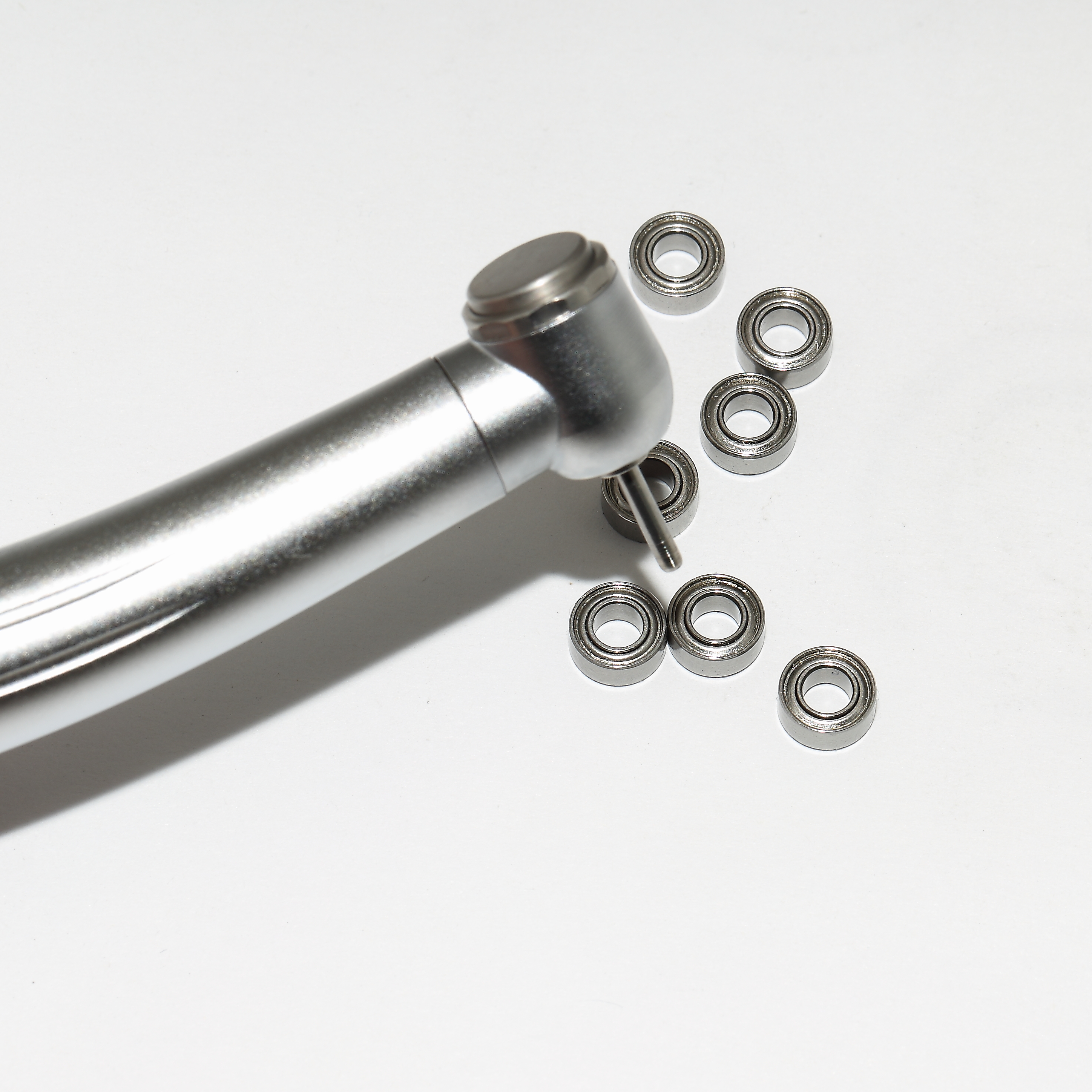
The high-speed reference for this comparison is the INB SMR144ZTLP4 W2.38, a miniature bearing supplied for dental handpiece applications. Its verified specification is: size 3.175 mm bore × 6.35 mm outside diameter × 2.38 mm width; material SUS440 stainless steel; precision class P4; limiting speed 350,000–400,000 rpm; operating temperature -50 °C to 160 °C.
Three engineering consequences follow directly from that data:
Speed headroom. A limiting speed rating of 350,000–400,000 rpm means a handpiece designed to run at 400,000 rpm operates at the top of the rating rather than beyond it. Where the design runs below that ceiling, the headroom is available for load variation rather than being consumed by nominal speed.
P4 precision. P4 controls dimensional and running tolerances tightly, which reduces radial runout and vibration at speed. Vibration is not only a noise problem; it is a heat source, and heat is what limits grease life and bearing life in a handpiece turbine.
SUS440 stainless steel. The material is selected for corrosion resistance under moisture and chemical exposure, which matters in an instrument that is repeatedly cleaned and sterilized across its service life.
The 200,000 rpm stainless steel tier
The lower tier is built around a limiting speed of approximately 200,000 rpm and is commonly specified with an operating temperature range of about -40 °C to 150 °C. It fits handpieces and handpiece modules whose turbines or micro-motors do not reach 400,000 rpm, and it is often the more practical choice where the duty cycle is intermittent rather than continuous.
The trade-off is straightforward. You accept a lower speed ceiling and a slightly narrower thermal window in exchange for a design that is generally easier to source, easier to lubricate within tolerance, and less sensitive to small assembly variations in shaft and housing fits.
Limiting speed is a ceiling, not an operating point
A limiting speed rating describes the point above which a bearing is no longer expected to run in a stable thermal state. It is not a target and it is not a marketing figure. Designing a continuous-duty handpiece to run at 400,000 rpm means selecting a bearing whose rating sits at or above that number — which is what the 350,000–400,000 rpm rating of the SMR144ZTLP4 W2.38 provides. Designing a 200,000 rpm handpiece around a 200,000 rpm bearing is the equivalent decision at the lower end of the range.
Precision rating is a thermal decision
P4 is often read as a quality badge. Inside a handpiece it behaves more like a thermal specification. Tighter running tolerances reduce the internal friction and vibration that convert into heat at high rotational speed. A lower-grade bearing that is dimensionally correct can still run hotter at 400,000 rpm, and the resulting heat shortens both lubricant life and bearing life. Precision grade should therefore be set together with the speed tier, not negotiated separately in purchasing.
Dimensional fit decides whether the discussion happens at all
The SMR144ZTLP4 W2.38 occupies a 3.175 mm bore × 6.35 mm outside diameter × 2.38 mm width envelope — a thin-wall, imperial-origin miniature bearing format widely used in dental handpieces. In practice three fit questions decide whether a tier can be used at all: whether the housing bore and shaft tolerances hold the intended preload; whether the assembly has an axial shoulder or instead requires a flanged stainless steel miniature bearing; and whether the wall section leaves enough material for the load at speed. If the bearing cannot be seated correctly, the speed tier is irrelevant.
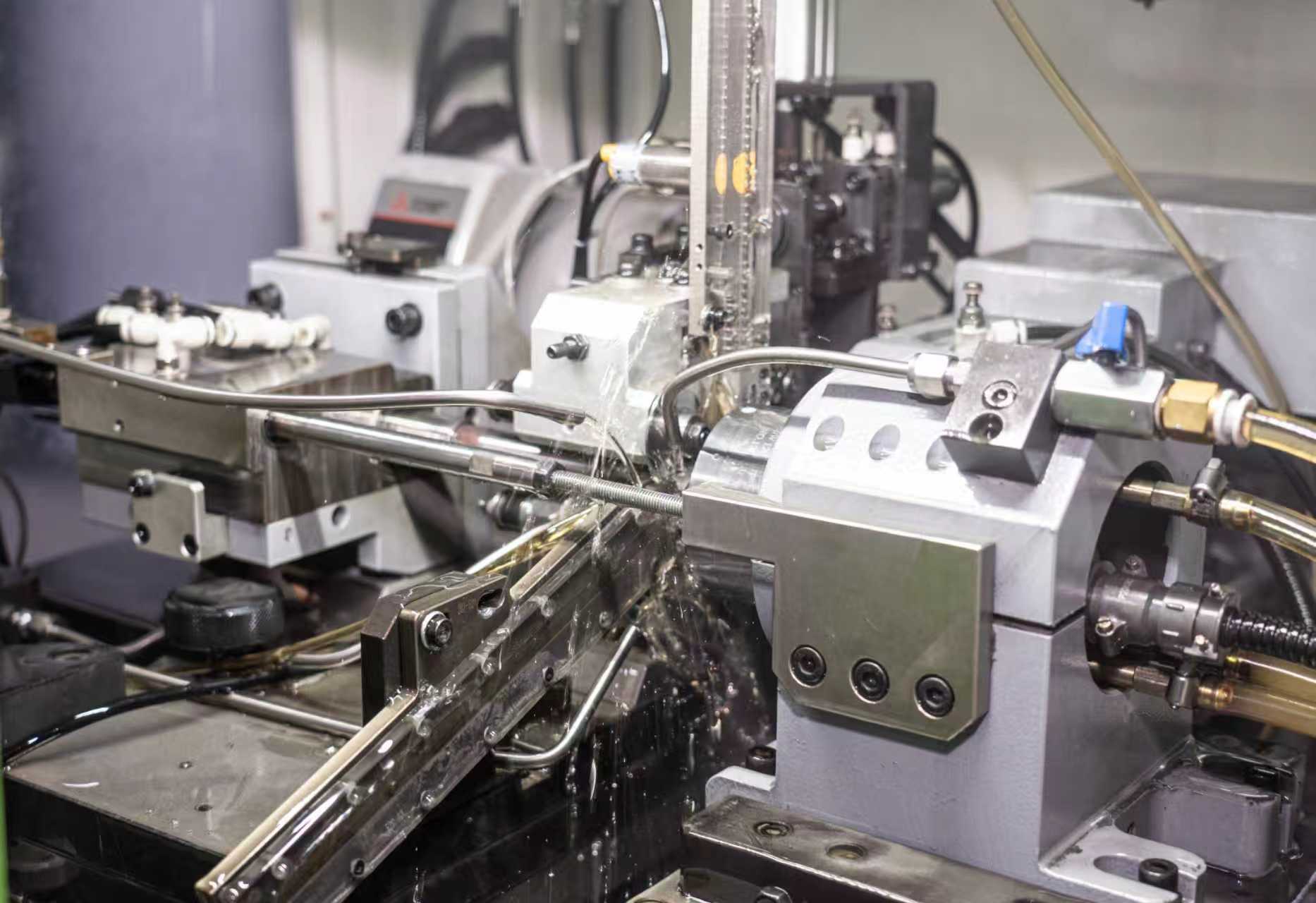
Precision bearing inspection workstation (Model VMS-2010F) used to verify miniature bearing dimensions and running tolerances.
Operating temperature defines the margin
The high-speed tier is rated from -50 °C to 160 °C; the lower-speed tier is commonly specified from about -40 °C to 150 °C. The difference looks minor on paper, but it changes how much margin exists between the bearing rating and the temperatures the handpiece actually reaches during operation and sterilization. In a high-speed handpiece, friction heat and repeated sterilization cycles both push toward the upper end of the range. Selecting a bearing with a wider operating range is one of the few ways to buy thermal margin without changing the mechanical design.
A Five-Step Selection Framework
Step 1 — Define the duty cycle. Continuous high-speed turbine work and intermittent lower-speed work do not deserve the same bearing. Establish run time per cycle, cycles per day, and whether the handpiece idles between uses. Continuous duty at high speed is the condition that justifies a 400,000 rpm P4 tier; intermittent duty usually does not.
Step 2 — Map the thermal budget. Add ambient temperature, the heat generated by friction at the intended speed, and the temperature the device reaches during sterilization. Compare the total against the bearing’s operating range — -50 °C to 160 °C for the high-speed reference, around -40 °C to 150 °C for the 200,000 rpm tier. If the expected peak sits close to the rating, either reduce speed or raise the specification.
Step 3 — Confirm the dimensional envelope. Verify bore, outside diameter, width and flange requirement against the actual assembly rather than a catalogue drawing. For the SMR144ZTLP4 W2.38 the envelope is 3.175 mm × 6.35 mm × 2.38 mm. Check shaft and housing tolerances at the same time, because an over-tight housing raises preload and heat at speed.
Step 4 — Set the precision target against the speed tier. P4 exists to control runout and vibration at high rotational speed. If the application runs at 200,000 rpm with a modest duty cycle, a P6-class bearing may satisfy the requirement. If it runs at 400,000 rpm continuously, moving down from P4 is a thermal risk rather than a saving.
Step 5 — Validate with a sample before committing volume. Specification and reality diverge most often at the assembly stage. Run a sample in the finished handpiece under the real duty cycle, measure temperature and noise, and only then release the design for production volume. INB produces precision classes from P6 to P4 with 100% testing and supports OEM customization according to customer requirements, which is what makes a validation loop practical rather than a one-shot order.
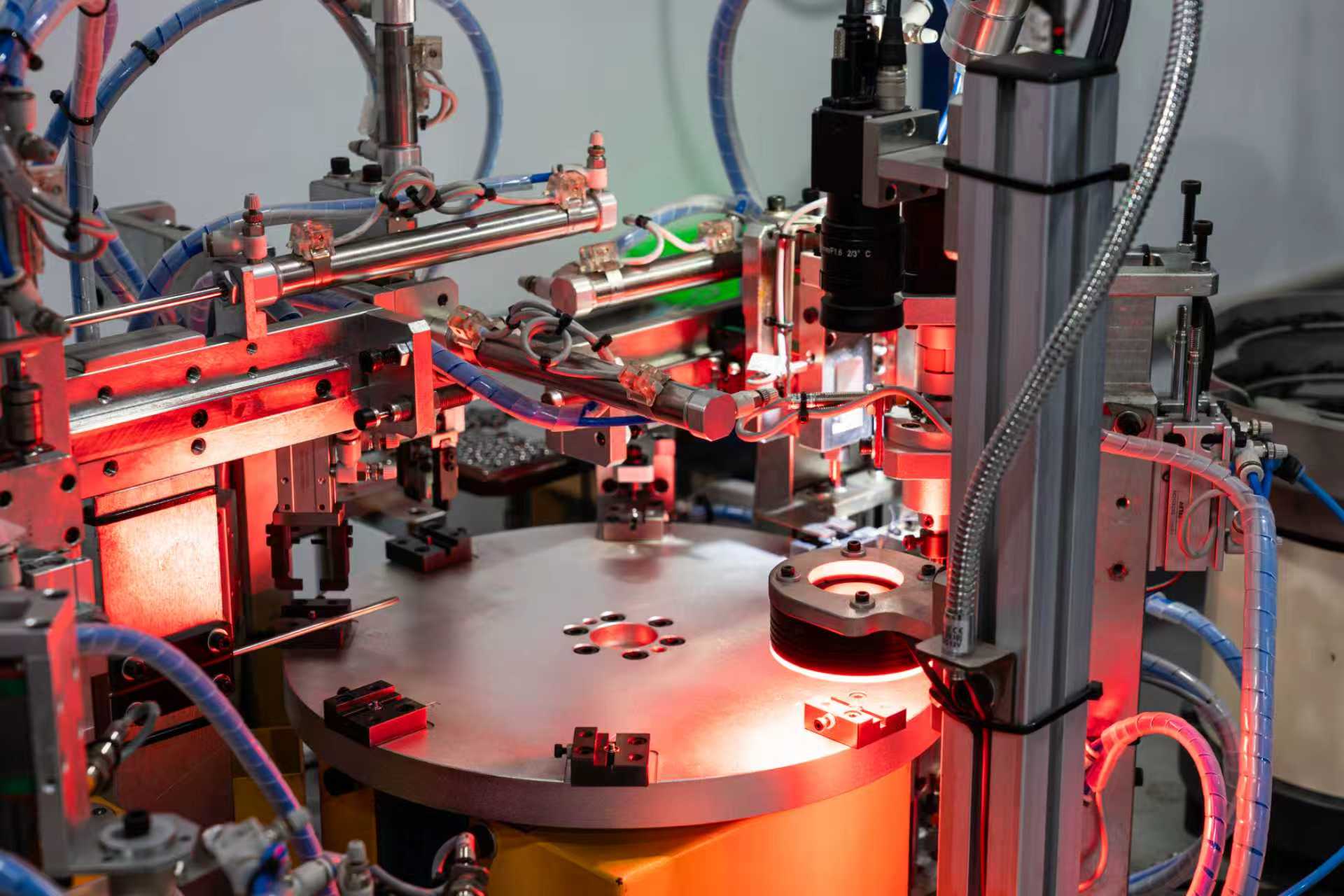
CNC bearing processing centre being set up for precision miniature bearing production.
Where Each Tier Fits
High-speed air-turbine handpieces
A dental handpiece application in China using an INB miniature bearing demonstrated stable operation for 500 hours, delivering stable high-speed operation and extended equipment lifespan in a program scaled to 80,000 units. This is the use case the 400,000 rpm P4 tier is built for: continuous high speed, repeated sterilization, and a design in which a heat excursion becomes an end-user complaint rather than a test-bench reading.
Intermittent and lower-speed handpiece platforms
Where the turbine or micro-motor does not approach 400,000 rpm, or where the handpiece is used in short bursts, the 200,000 rpm stainless steel tier reduces cost and sourcing pressure without giving up corrosion resistance. Lower-speed handpiece modules and assemblies with a lower speed ceiling sit here, and can often be specified in imperial or thin-wall miniature bearing formats without changing the housing.
Micro-motor driven instruments
Motor miniature bearings follow the same logic. Match the limiting speed to the motor’s maximum continuous speed and match the precision class to the acceptable noise and vibration level. A motor that never exceeds 200,000 rpm does not gain anything from a 400,000 rpm P4 specification, and the additional inspection cost is carried through the whole program.
Noise-sensitive assemblies
Where low-noise output is a product requirement, precision class does more work than any other single variable. A P4 bearing reduces the vibration that produces audible noise, and it does so at the source rather than through damping added elsewhere in the assembly.
Comparison Table — 400,000 rpm P4 vs 200,000 rpm Stainless Steel
| Selection parameter | 400,000 rpm P4 tier (reference: INB SMR144ZTLP4 W2.38) | 200,000 rpm stainless steel tier |
|---|---|---|
| Limiting speed | 350,000–400,000 rpm | Around 200,000 rpm |
| Precision class | P4 | Application-defined; INB produces standard miniature bearings from P6 to P4 |
| Material | SUS440 stainless steel | Stainless steel (440C family is the standard material for medical miniature bearings) |
| Reference envelope | 3.175 mm bore × 6.35 mm OD × 2.38 mm width | Selected from the assembly; imperial and thin-wall formats available |
| Operating temperature | -50 °C to 160 °C | Commonly specified around -40 °C to 150 °C |
| Primary fit | Continuous high-speed air-turbine handpieces | Intermittent or lower-speed handpieces and micro-motor instruments |
| Verification focus | Speed stability, runout and heat at sustained rpm | Dimensional fit, unit cost and lubrication tolerance |
Left column values are the verified specifications of the INB SMR144ZTLP4 W2.38. Right column describes the general lower-speed stainless steel tier and should be confirmed against the specific product drawing.
FAQ
Is the 400,000 rpm P4 miniature bearing produced under a certified quality management system?
The manufacturer holds ISO 9001 certification — certificate number 117 24 QU 0108-07 R1S, issued by Shanghai Ingeer Certification Assessment Co., Ltd. against GB/T19001-2016 / ISO 9001:2015, with the scope “Manufacture of Bearing and Bearing Parts”, issued on 2024-07-09 and valid until 2027-07-07. That certificate covers the quality management system for bearing and bearing part manufacture; it is not a product-specific medical device certification, so buyers with regulatory obligations should confirm which documents their own market requires.
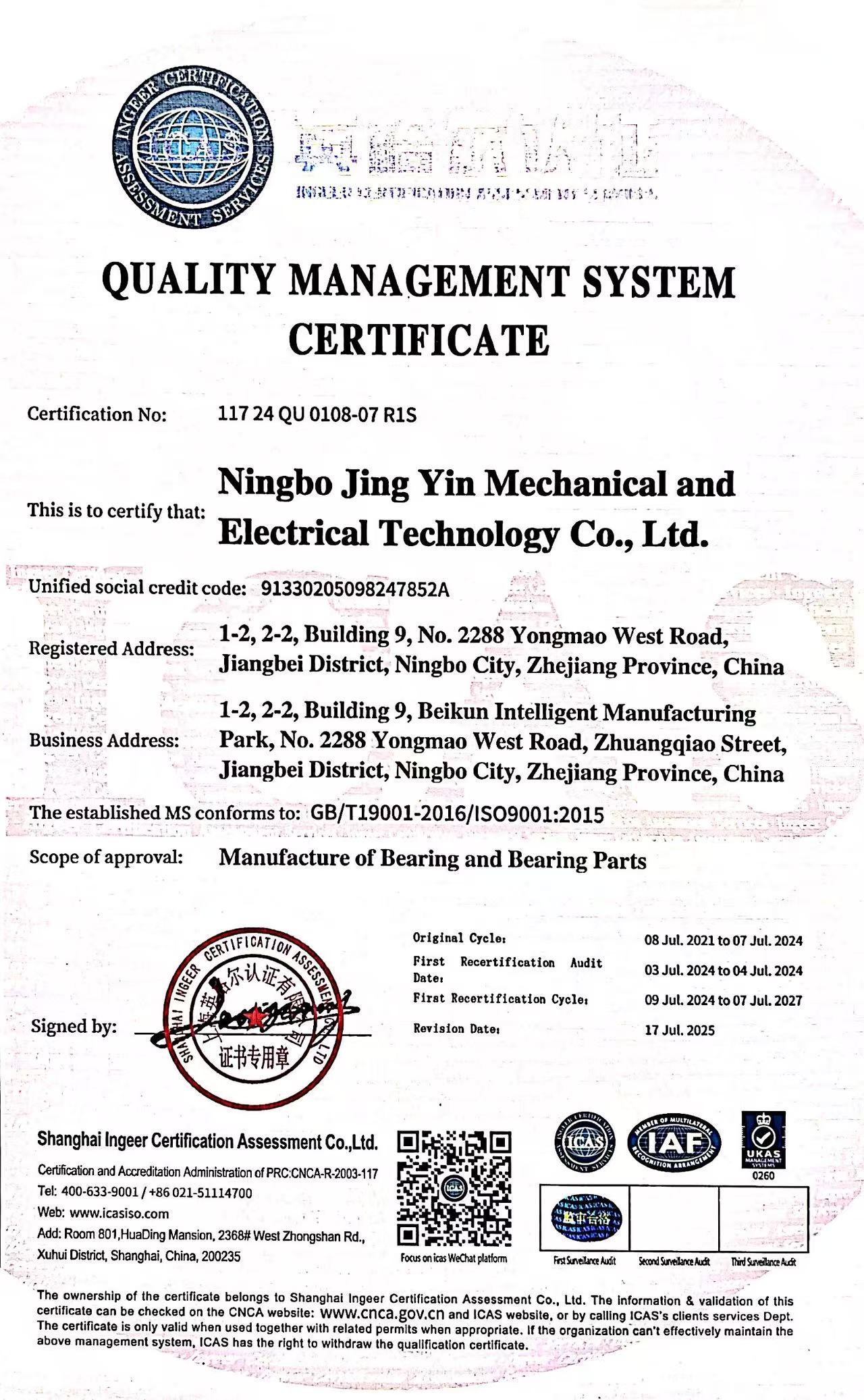
ISO 9001 certificate 117 24 QU 0108-07 R1S — scope: Manufacture of Bearing and Bearing Parts.
Can one supplier deliver both speed tiers and customized dimensions?
INB produces high-precision standard bearings with bore diameters from 2 mm to 8 mm in precision classes from P6 to P4, with OEM customization carried out according to customer requirements and 100% testing. Monthly capacity is 500,000 units against an annual output of 6,000,000 units, supported by a 10-person R&D team. That combination allows a program to move between the 400,000 rpm P4 tier and lower-speed stainless steel variants without changing supplier, drawing format or inspection routine. After-sales return and exchange is part of the standard arrangement.
What drives the cost difference between the two tiers?
Three factors dominate. The first is precision class: P4 requires tighter tolerances and more intensive inspection than a P6-class part. The second is material and treatment specification, including SUS440 stainless steel. The third is order volume — the minimum order quantity is 100 units, which affects unit cost most heavily on validation runs rather than on production orders. Speed itself is not the cost driver; the tolerance and inspection regime that makes the speed rating possible is.
How do we validate a bearing before committing to production volumes?
Validate under the real duty cycle rather than on a test bench alone. A dental handpiece application using an INB miniature bearing ran for 500 hours of demonstrated operation with stable high-speed operation and extended equipment lifespan, in a program scaled to 80,000 units. Ask for samples in the exact size and precision class you intend to release, install them in the finished handpiece, and record temperature and noise across the full cycle — including the sterilization step.
What lead times should we plan for, and how do we start?
Standard items are held in stock with a lead time of 7 days, and monthly capacity of 500,000 units supports ramp-up after validation is complete. The practical first step is to send your operating speed, duty cycle and dimensional envelope, then request a sample or a quotation for your requirement: yuhang001@126.com, or WhatsApp +86 18957446001.
Decision Checklist Before You Release the Drawing
- Duty cycle: does the handpiece run continuously at high speed, or intermittently? This is the primary split between the 400,000 rpm P4 tier and the 200,000 rpm tier.
- Peak temperature: does the hottest point of the operating and sterilization cycle stay inside -50 °C to 160 °C (high-speed tier) or around -40 °C to 150 °C (lower-speed tier)?
- Limiting speed: does the bearing rating sit at or above the maximum continuous speed, with margin for load variation?
- Precision: is P4 justified by speed and vibration requirements, or would P6 satisfy the application?
- Material: is SUS440 / 440C stainless steel appropriate for the cleaning and sterilization chemicals used?
- Dimensions: do bore, outside diameter and width match the assembly — 3.175 mm × 6.35 mm × 2.38 mm in the high-speed reference case?
- Flange and shoulder: does the design need a flanged stainless steel miniature bearing, or an axial shoulder instead?
- Housing tolerance: has preload been checked at the actual housing and shaft fits, not only at nominal size?
- Validation: has a sample been run through the intended duty cycle before volume release?
- Documentation: is the ISO 9001 certificate and the traceability paperwork your market requires in place?
Conclusion
The choice between a 400,000 rpm P4 miniature bearing and a 200,000 rpm stainless steel miniature bearing resolves to three inputs: duty cycle, heat and fit. Where the handpiece runs continuously at high speed and is sterilized repeatedly, the high-speed P4 tier — as represented by the INB SMR144ZTLP4 W2.38 with its SUS440 material, P4 precision, 3.175 mm × 6.35 mm × 2.38 mm envelope and -50 °C to 160 °C operating range — is the specification to design against. Where duty is intermittent or the speed ceiling is lower, the 200,000 rpm stainless steel tier delivers the same corrosion resistance with a more forgiving commercial and assembly profile. Decide on the operating point, not on the headline number.
Samples, technical drawings and quotations for both speed tiers are available directly from INB. Send your operating speed, duty cycle and dimensional envelope to yuhang001@126.com or message WhatsApp +86 18957446001. Website: www.lnb-brg.com.
Have Questions or Need More Details?
Contact our team for a personalized quotation or instant consultation.
Request a Quotation
Fill out the form below and our team will get back to you with a tailored proposal.
WhatsApp Direct Chat
Prefer to chat in real-time? Message us on WhatsApp for instant assistance & quick answers.
- Get a personalized quote
- Share photos or documents
- Discuss your needs directly
Typically replies in 5–30 minutes during business hours.