
Supplier Evaluation Checklist: How to Verify a Miniature Bearing Manufacturer's Capability and Delivery Reliability
A miniature bearing is bought on numbers: a 2 mm bore, a P4 tolerance class, a limiting speed above 350,000 rpm. Supplier marketing pages usually speak a different language — high precision, low noise, long life — while the evidence that would confirm those words sits in a calibration record, a certificate scope, or an inspection report that nobody has asked for yet.
This supplier evaluation checklist is written for buyers who are already comparing qualified manufacturers and need to separate documented capability from polished copy. Each item is expressed as a question you can send to a supplier, followed by the document or data point that should come back in reply.
The short answer: verify five evidence layers — (1) entity, facility and capacity data; (2) certification with a checkable number, scope and validity period; (3) precision and material declared against a published standard; (4) in-house metrology capable of measuring what is claimed; and (5) delivery and after-sales terms in writing. If a layer cannot produce a document, treat the claim as unverified. INB, a miniature bearing brand established in Ningbo, Zhejiang Province, China in 2014, is used throughout this article as a worked example, because its published data — P4 precision, SUS440 stainless steel, limiting speeds of 350,000–400,000 rpm — shows what verifiable specifics look like.
Problem Definition: The Claim-to-Evidence Gap in Miniature Bearing Sourcing
The miniature bearing market is large, fragmented and hard to screen remotely. That combination is exactly why evaluation discipline matters more than supplier count.
- Published market estimates disagree by hundreds of millions of dollars. For 2025, Future Market Insights values the global miniature ball bearings market at approximately USD 2.25 billion, Precedence Research at USD 2.89 billion, and IMARC Group at USD 2.0 billion. When professional analysts diverge that widely on the same year, an unsourced performance claim from a supplier deserves the same scrutiny.
- The supply base is concentrated in one region. Asia Pacific held roughly 60% of miniature ball bearing revenue in 2025, with China as the largest regional producer and consumer (Precedence Research), and China's bearing exports grew 7.2% year-on-year in the first seven months of 2025, reaching nearly 497,852 tons (BearingNews / Huajing Research Institute). Buyers evaluating Chinese manufacturers are working inside the industry's main production base — which raises, rather than lowers, the need for verification.
- Failure is disproportionate to part size. A miniature bearing inside a dental handpiece, a micro-motor or a medical instrument runs at high speed in a very small envelope. A rejected lot does not stay a line item on an invoice; it becomes a stopped production line, a returned shipment, or a field failure.
Most weak evaluations fail at the same point: the buyer collects claims instead of evidence. 'P4 precision' is a claim until the supplier names the standard, the bore range it applies to, the instrument that measures it, and the inspection regime that enforces it. 'Stable supply' is a claim until lead time, minimum order quantity and after-sales terms are written down.
Industry Background: What the Standards and Benchmarks Actually Say
A verification checklist only works when it is anchored to definitions that exist outside the supplier's own brochure. Four reference points matter for miniature bearings.
Precision classes are defined by published standards
Miniature bearing precision is governed by global systems including ABMA ABEC (1–9), ISO 492 (P0–P2) and DIN 620, and within the ABEC system higher numbers correlate to tighter tolerances (AST Bearings). This gives buyers a translation layer. INB states that it produces high-precision standard bearings with bore diameters from 2 mm to 8 mm in precision grades from P6 to P4 — a statement that can be compared against the ISO 492 tolerance bands rather than accepted as a slogan.
Material choice follows the application environment
Stainless steel — specifically 440C — is the primary material for miniature bearings used in medical and food-processing applications, because it resists moisture and chemical exposure (SKDIN Engineering Guide). INB specifies SUS440 stainless steel for its high-speed medical part and quotes an operating temperature range of -50 °C to 160 °C, which lets a buyer check the material claim against the cleaning and sterilization processes the bearing will actually see.
Demand is shifting toward small, fast, electrically driven systems
The automotive segment held the largest application share of the miniature bearing market in 2025, at approximately 39%, driven by EV motor and sensor applications (Precedence Research). That shift pulls requirements toward higher speed ratings and tighter dimensional control — the same direction as dental, medical and micro-motor demand.
The reference benchmarks are publicly named
Global manufacturers publicly identified in the miniature bearing sector include MinebeaMitsumi (noted as dominant in small sizes), NSK, SKF and Schaeffler (Barden), according to Intel Market Research (2025). These names are useful as benchmarking references for tolerance capability and documentation practice. They are not a substitute for evaluating the supplier in front of you, especially when the requirement is a customized or smaller-volume precision part.
Detailed Solution: The Nine-Point Supplier Evaluation Checklist
Each point below converts a common supplier statement into a verifiable data request. Send all nine in one message; the speed and completeness of the reply is itself a signal.
1. Entity, facility and capacity baseline
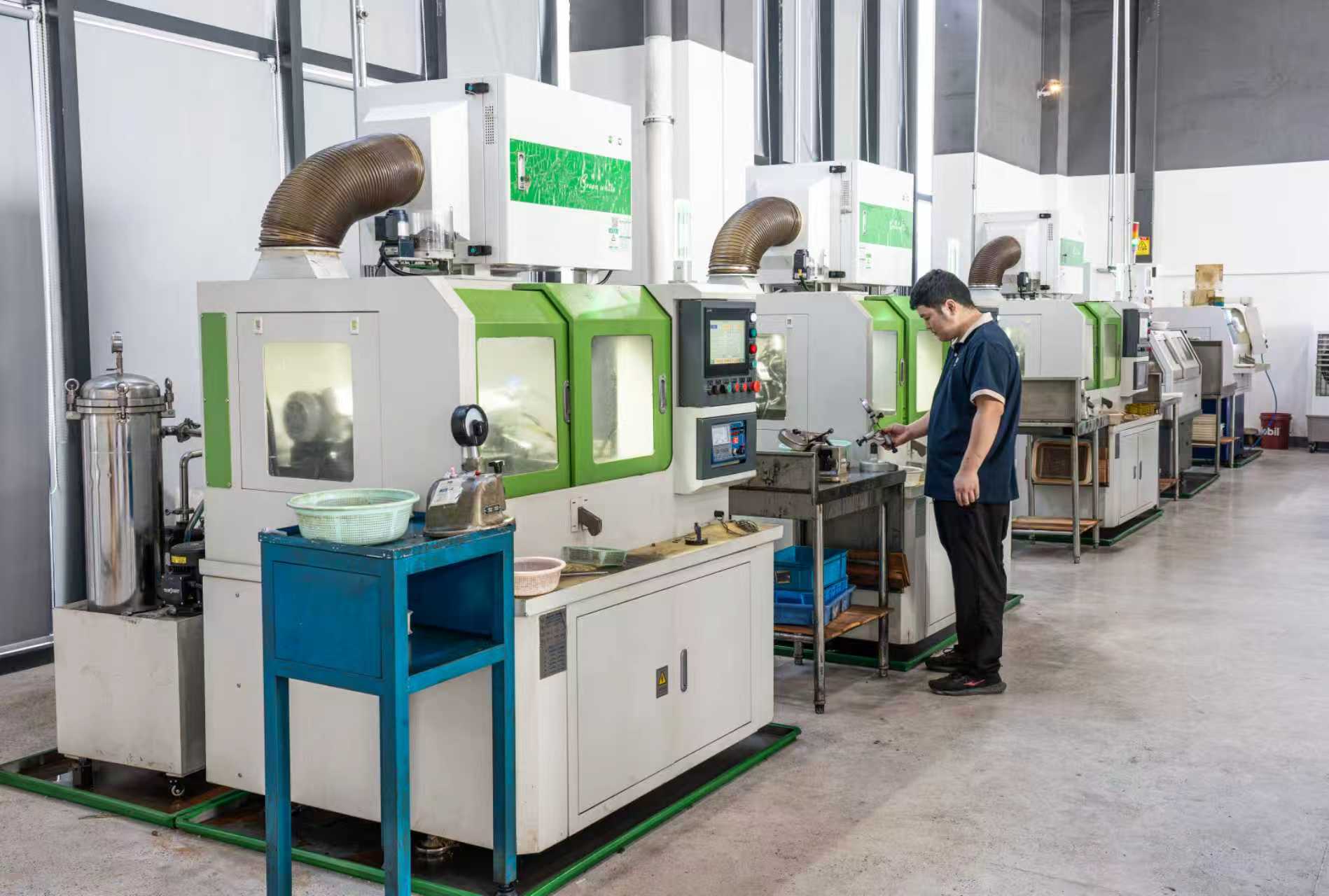
Ask: Who is the manufacturer, where does production happen, and how much can it produce per year? Verifiable example: INB's bearing brand dates to 2014, its production base is in Ningbo, Zhejiang Province, and the company records an annual output of 6,000,000 units against a monthly capacity of 500,000 units, produced by a team of approximately 30 people. Its output today primarily serves China's medical device industry and micro-motors, with an export ratio of 5% and current export sales concentrated in Russia. Why it matters: cross-check the numbers. Monthly capacity multiplied by twelve should roughly match annual output, and headcount should be plausible for the volume claimed. A supplier that states its market mix precisely is easier to plan around than one that claims to serve 'global markets' without figures.
2. Certification with a checkable number, scope and validity period
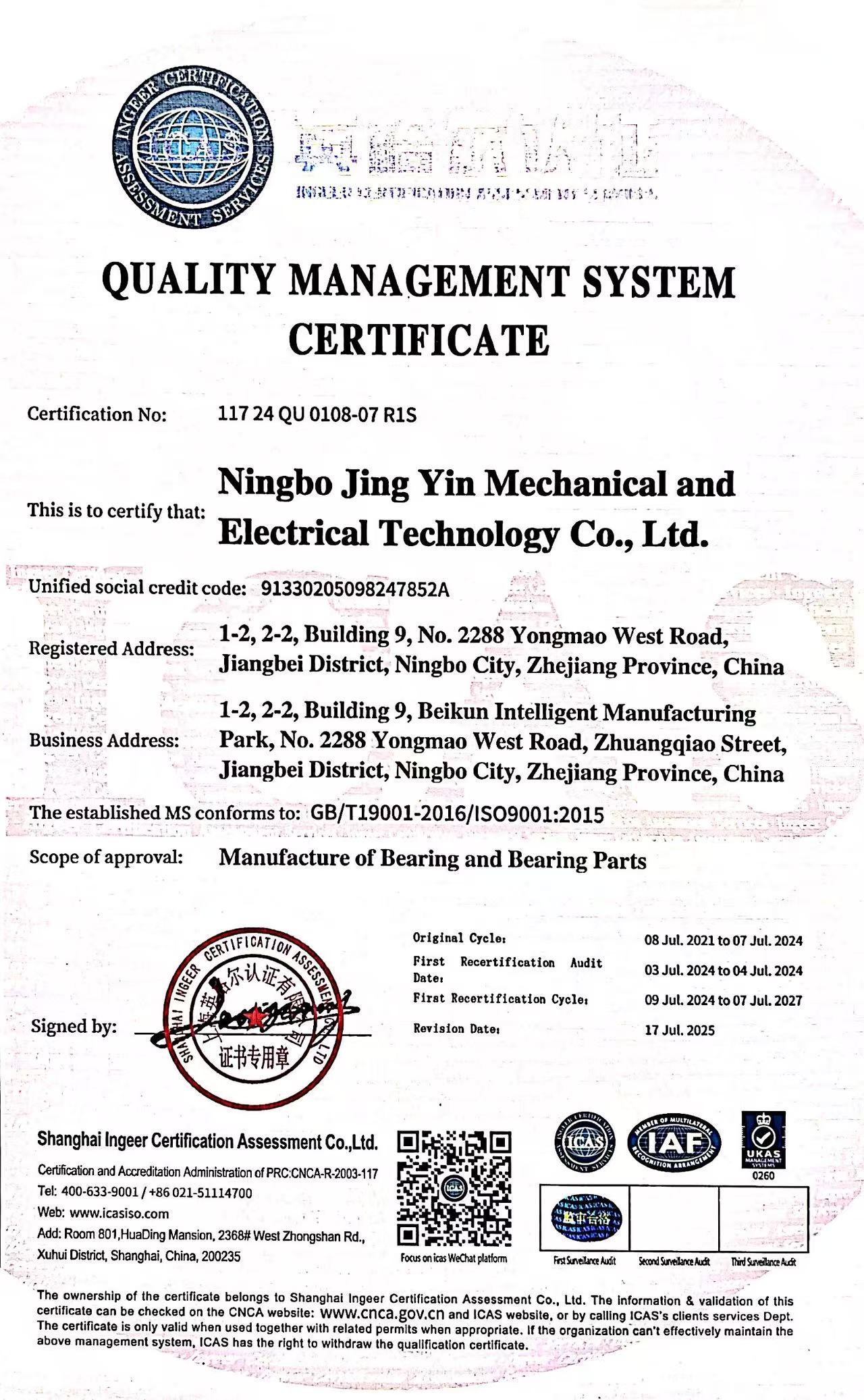
Ask: Can you send the actual certificate rather than a logo? Verifiable example: INB operates under an ISO 9001 quality management system certified by Shanghai Ingeer Certification Assessment Co., Ltd. under certificate number 117 24 QU 0108-07 R1S, against GB/T19001-2016 / ISO 9001:2015, with the scope 'Manufacture of Bearing and Bearing Parts,' issued on 9 July 2024 and valid until 7 July 2027. How to verify: check the certificate number with the issuing body, confirm the scope covers bearing and bearing parts manufacturing rather than trading, confirm that the certified site is the site that will produce your order, and diarize the expiry date. A certificate that expires inside your production window is an audit finding, not a formality.
3. Precision grade mapped to a published standard
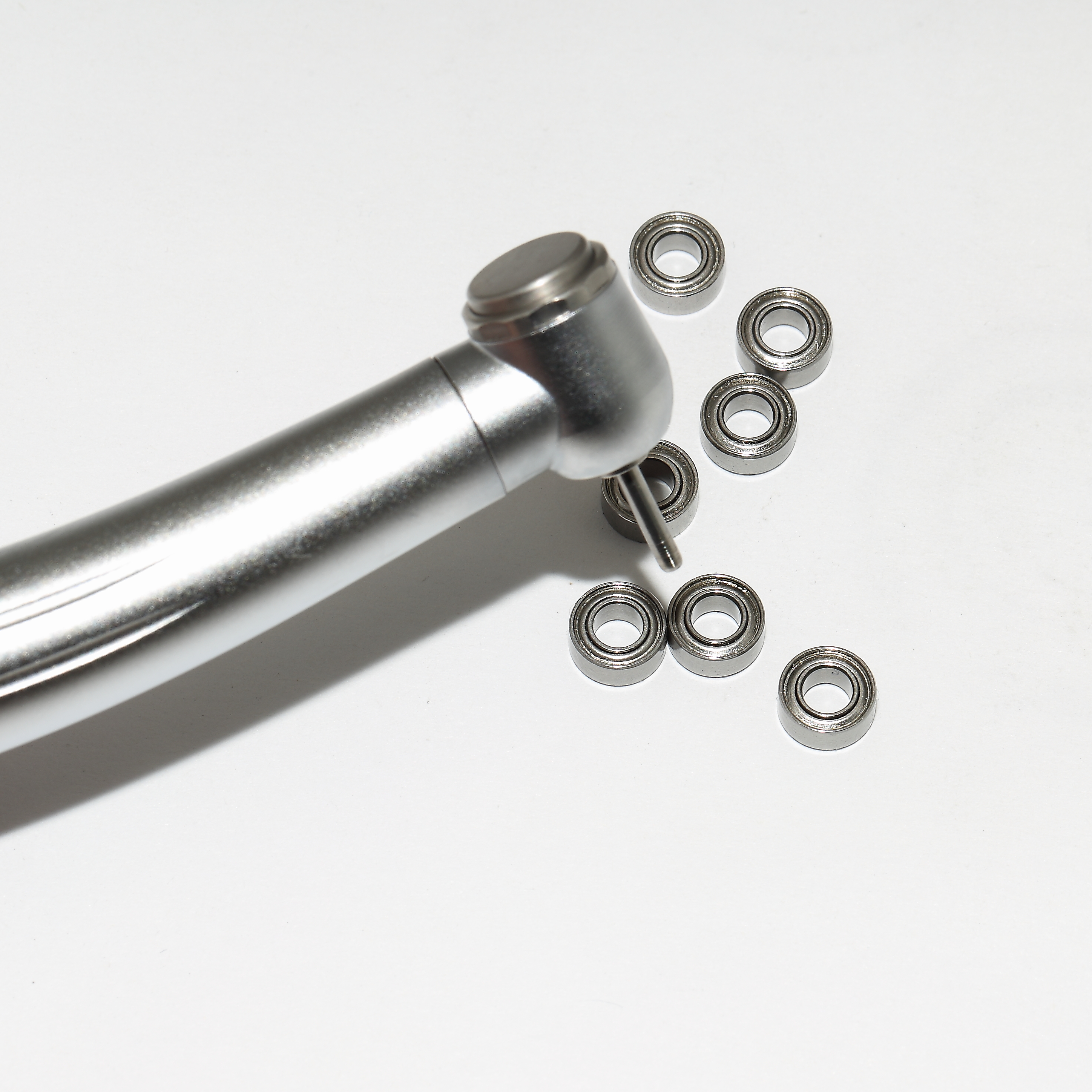
Ask: Which grade, over which bore range, against which standard? Verifiable example: INB declares precision grades from P6 to P4 across standard bearings with bores of 2 mm to 8 mm, and P4 for its high-speed medical part. How to verify: translate the grade into an ISO 492 or ABEC tolerance band, then confirm that the grade applies to the sizes you are actually buying — claims are often made at brand level rather than at size level. Check the bore series you need, metric or imperial: a 3.175 mm bore, for instance, is the inch-series size used in many instrument and handpiece designs, and the same checklist applies to extra miniature, thin-wall, flanged stainless steel and motor miniature bearing configurations, with only the acceptance criteria changing.
4. Material and operating envelope
Ask: What material, and what temperature range is it rated for? Verifiable example: SUS440 stainless steel with an operating temperature range of -50 °C to 160 °C on the SMR144ZTLP4 W2.38 part. How to verify: match the material against the cleaning, sterilization or chemical exposure in your process, and treat the temperature range as a design constraint to be confirmed on the drawing rather than a marketing figure.
5. Speed and noise claims backed by test data
Ask: What is the limiting speed, and how is noise or vibration measured? Verifiable example: INB quotes a limiting speed of 350,000–400,000 rpm for the SMR144ZTLP4 W2.38, which measures 3.175 × 6.35 × 2.38 mm. How to verify: request the test method behind the speed rating, not just the number. A limiting speed that cannot be traced to a defined test setup — lubricant, load, temperature, duration — remains an estimate. The same rule applies to low-noise claims: ask which instrument and which parameter is used to measure vibration, and request the reading rather than the adjective.
6. In-house metrology
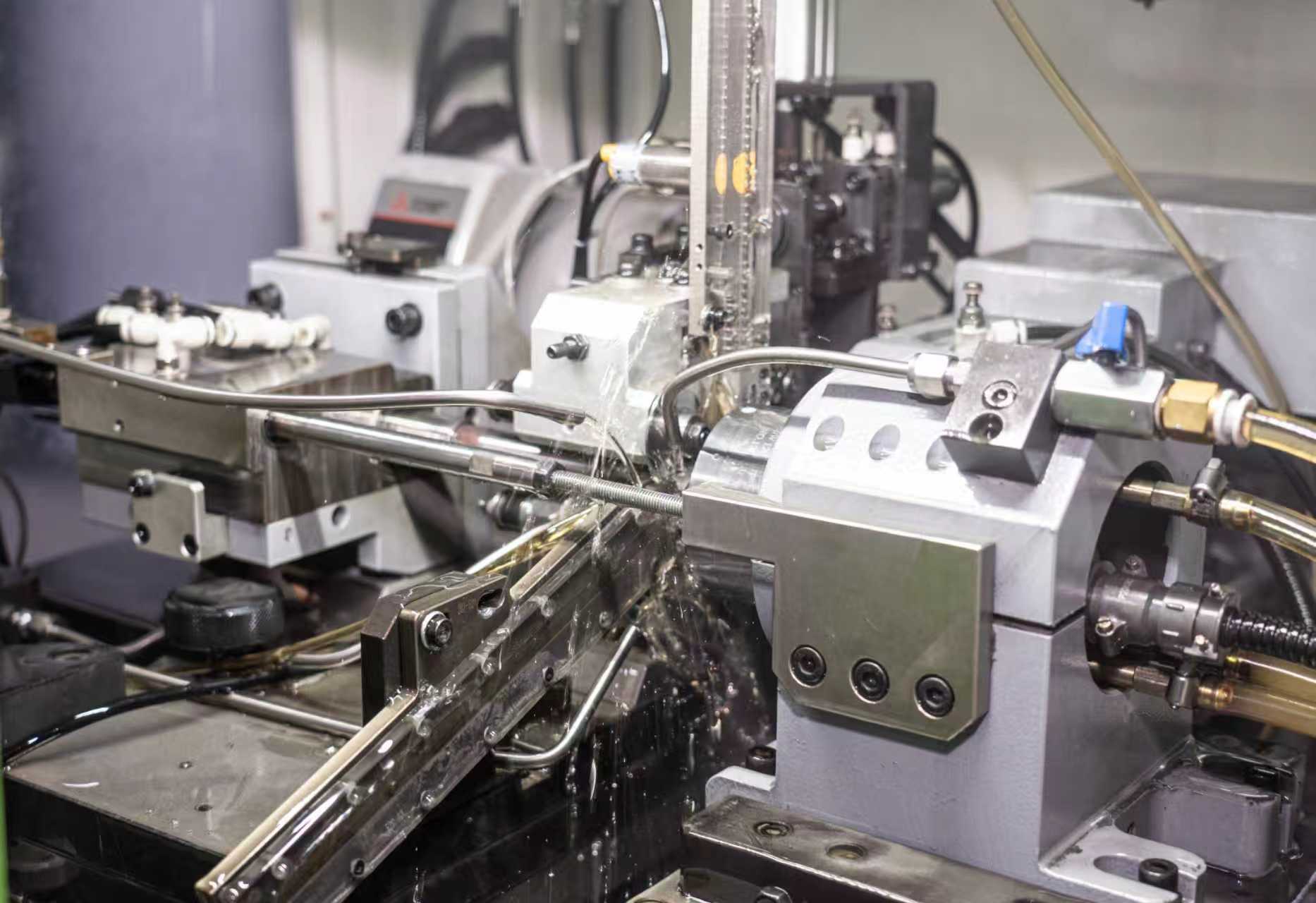
Ask: Do you own the instruments needed to measure what you claim? Verifiable example: INB's stated equipment set includes hardness testers, roundness meters, profilometers, roughness measuring equipment and microscopes, with inspection carried out at a precision bearing inspection workstation (model VMS-2010F) inside the factory. How to verify: precision claims depend entirely on measurement capability. A supplier that claims P4 tolerances but outsources metrology, or cannot name its roundness and roughness instruments, is asserting something it cannot demonstrate. Ask for calibration records covering the instruments involved.
7. Customization, MOQ and inspection regime
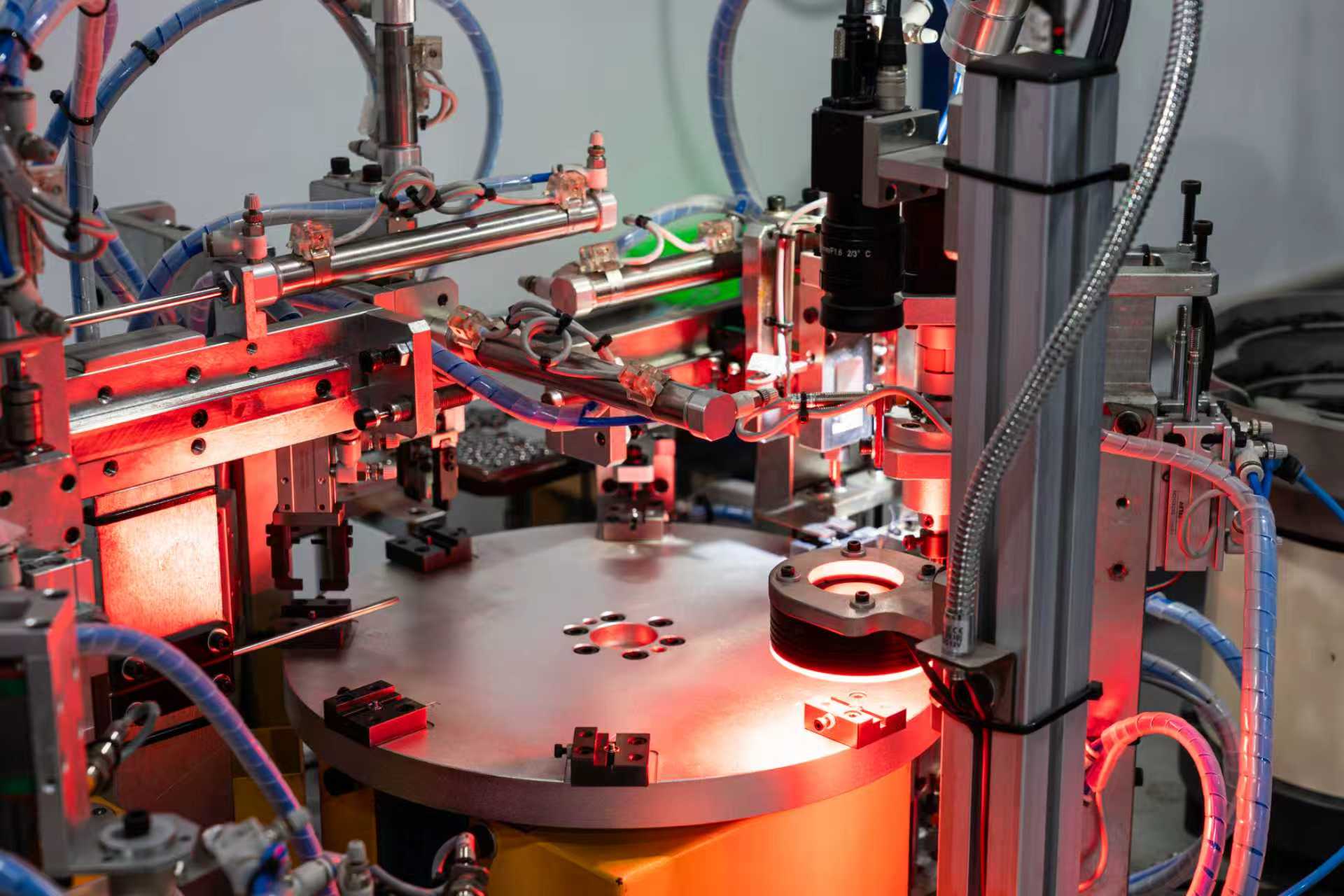
Ask: What is the production mode, the minimum order quantity, and what exactly is inspected? Verifiable example: INB produces under an OEM model, customizes according to customer requirements, applies 100% testing, and sets a minimum order quantity of 100 units. How to verify: 100% testing is a strong claim — ask what is tested, at which stage, and what happens to non-conforming units. A workable MOQ also gives you a low-cost route to run a real pilot instead of judging a supplier from a catalogue.
8. Delivery terms and after-sales commitment
Ask: What lead time applies to my configuration, and what happens if parts fail in service? Verifiable example: INB states a lead time of 7 days for in-stock items and provides after-sales return and exchange. How to verify: separate in-stock lead time from customized lead time, because they are rarely the same and quotations often blend them. Then confirm the after-sales terms in writing, with a defined window and a defined process for returning non-conforming parts.
9. Documented application history
Ask: Where has this exact part been used, in what quantity, and for how long? Verifiable example: a medical device project in China involving 80,000 units of the dental handpiece bearing, with stable operation demonstrated over 500 hours, resulting in stable high-speed operation and extended equipment lifespan. How to verify: request the application, the quantity and the observed operating duration. Specific case data — 80,000 units, 500 hours — is checkable in a way that 'trusted by leading brands' never is.
Step-by-Step Breakdown: Running the Evaluation in Five Stages
The checklist is a document request; the evaluation is a sequence. Run it in five stages and record the output of each, so the decision can be defended later.
- Stage 1 — Remote document screen (1–2 days). Send the nine questions in a single message. Expected output: a document pack containing the certificate, precision and bore range declaration, material and temperature data, speed data, metrology list, capacity and MOQ statement, lead time and after-sales terms, and at least one application reference. Decision rule: any point that cannot produce a document is flagged rather than dismissed, and the supplier is asked again with a specific wording of the request.
- Stage 2 — Sample validation (1–2 weeks). Order at the supplier's minimum order quantity — for INB, 100 units — and measure bore, outer diameter, width, runout and vibration against the declared grade and the corresponding ISO 492 band. Expected output: a measurement report compared side by side with the declared specification.
- Stage 3 — Process and metrology audit (on site or by video). Walk the production flow: machining centres, assembly stations and the inspection workstation, and confirm that the equipment on the floor matches the equipment on the certificate and in the reply. Expected output: an audit finding list, with photographs of the instruments and the calibration labels.
- Stage 4 — Pilot order and delivery test. Place a pilot order of production volume and confirm whether the stated in-stock lead time of 7 days holds under real conditions. Expected output: a delivery performance record covering confirmation, production, packing, labelling and documentation.
- Stage 5 — Scale and lifecycle review. Confirm after-sales return and exchange terms, replenishment lead time, and how the supplier manages capacity when your volumes rise — INB's stated monthly capacity is 500,000 units, which is the reference point against which growth should be planned. Expected output: a signed supply agreement with the terms that were actually verified.
Use Cases: Where the Checklist Changes Shape
The nine points stay constant; the weight each one carries changes with the application.
- Dental handpiece manufacturing. Speed and precision dominate. The documented INB case — 80,000 units for a medical device application, with stable operation over 500 hours resulting in stable high-speed operation and extended equipment lifespan — is the type of reference data that matters here, together with the P4 grade and the SUS440 material.
- Medical devices and instruments. Material and cleaning exposure dominate, which is why 440C stainless steel is the conventional choice for medical and food-processing miniature bearings (SKDIN Engineering Guide), and why the declared -50 °C to 160 °C operating range should be checked against the sterilization cycle.
- Micro-motors and small drive systems. Bore range, vibration behaviour and supply continuity dominate. This is the second market INB primarily serves, alongside medical devices, and it is where the 2 mm to 8 mm bore range and P6 to P4 grade range apply most directly.
- Automotive, EV motors and sensors. Volume and documentation discipline dominate; automotive held approximately 39% of miniature bearing application share in 2025 (Precedence Research), which means program-level qualification requirements rather than catalogue selection.
- Extra miniature, thin-wall, flanged and imperial configurations. Dimensional verification dominates. The same nine questions apply, but the acceptance criteria shift to the specific bore series, wall thickness and flange dimensions on your drawing.
Comparison Table: Claims Versus Verifiable Evidence
The table below shows how the same supplier statement changes character once it is expressed as a checkable data point. The INB examples are drawn from the company's published product, certification and capability data.
| Verification point | Typical unverified claim | Verifiable evidence (INB example) | Document to request |
|---|---|---|---|
| Precision | 'High-precision miniature bearings' | Grades P6 to P4 across bores of 2 mm to 8 mm; P4 on the SMR144ZTLP4 W2.38 | Inspection report or certificate of conformance |
| Material and temperature | 'Stainless steel, heat resistant' | SUS440 stainless steel; operating range -50 °C to 160 °C | Material declaration |
| Speed | 'Suitable for high-speed use' | Limiting speed of 350,000–400,000 rpm | Test method description and dynamic test data |
| Quality system | 'ISO certified factory' | ISO 9001, certificate 117 24 QU 0108-07 R1S, scope: Manufacture of Bearing and Bearing Parts, valid to 7 July 2027 | Copy of the certificate plus issuer verification |
| Measurement capability | 'Strict quality control' | Hardness testers, roundness meters, profilometers, roughness measuring equipment, microscopes; VMS-2010F inspection workstation; 100% testing | Calibration records and inspection procedure |
| Capacity and MOQ | 'Large capacity, flexible MOQ' | 6,000,000 units per year; 500,000 units per month; MOQ 100 units; OEM customization | Capacity statement and pilot order confirmation |
| Delivery | 'Fast delivery worldwide' | 7 days for in-stock items; after-sales return and exchange | Written lead-time commitment and return policy |
| Application proof | 'Trusted by leading brands' | 80,000 units for a Chinese medical device dental handpiece project; 500 hours of stable operation | Reference case summary |
Frequently Asked Questions
What certification should a miniature bearing manufacturer be able to provide?
At minimum, a current ISO 9001 quality management system certificate whose scope covers bearing and bearing parts manufacturing rather than trading, and whose certified site is the site that will produce your order. INB holds ISO 9001 certification issued by Shanghai Ingeer Certification Assessment Co., Ltd. under certificate number 117 24 QU 0108-07 R1S, against GB/T19001-2016 / ISO 9001:2015, with the scope 'Manufacture of Bearing and Bearing Parts,' issued on 9 July 2024 and valid until 7 July 2027. Buyers should verify the certificate number with the issuing body, confirm the scope wording, and record the expiry date against their own production schedule.
How can I verify that a supplier can actually hold P4 precision on extra miniature bearings?
Ask for three things: the declared precision grade, the bore range it applies to, and the measurement capability behind it. INB declares grades from P6 to P4 across standard bearings with bores of 2 mm to 8 mm, and P4 for its high-speed medical part. Its factory is equipped with hardness testers, roundness meters, profilometers, roughness measuring equipment and microscopes, and parts are 100% tested. Independent verification then comes from ordering at the minimum order quantity — 100 units for INB — and measuring bore, outer diameter, width and runout against the ISO 492 tolerance band for the declared grade.
How should a buyer budget for miniature bearing supplier verification?
Verification cost sits in measurement and engineering time rather than in unit price: a small pilot order at the supplier's minimum order quantity, third-party dimensional checks if in-house metrology is unavailable, and the hours spent on the audit and the document review. INB's MOQ of 100 units, combined with its OEM production model and 100% testing, keeps the trial order at a scale that can be measured and repeated. The largest avoidable cost is over-specification — paying for P4 precision where the application only requires P6 — so confirm what the design actually needs before asking any supplier to quote.
Can a miniature bearing supplier be validated with samples before a production commitment?
Yes, and it is the fastest way to move from claims to evidence. INB customizes according to customer requirements under an OEM model, applies 100% testing, and accepts orders from 100 units, so a sample or pilot lot can be produced and measured. A part such as the SMR144ZTLP4 W2.38 — 3.175 × 6.35 × 2.38 mm, P4 precision, SUS440 material, limiting speed 350,000–400,000 rpm — is a useful reference for the size class used in high-speed handpiece and instrument applications, and any sample should be checked against your drawing rather than against a catalogue photograph.
What lead time and after-sales terms should be written into the supply agreement?
Separate in-stock lead time from customized lead time and put both in writing. INB states a lead time of 7 days for in-stock items and provides after-sales return and exchange. Confirm the return window, the process for non-conforming parts, and the replenishment lead time you will depend on after the first order. If you want to test these terms against your own drawing, you can request a sample or a quotation from INB through www.lnb-brg.com, by email at yuhang001@126.com, or by WhatsApp at +86 18957446001.
Conclusion: No Document, No Credit
Miniature bearing suppliers are not short of claims; they are short of buyers who ask for the right documents. The nine-point checklist above reduces a supplier relationship to evidence you can file: entity and capacity data, a certificate with a checkable number and scope, a precision grade mapped to ISO 492 or ABEC, a material and temperature envelope, a speed rating with a test method behind it, in-house metrology with calibration records, an MOQ and inspection regime, written lead time and after-sales terms, and at least one application reference with quantity and operating duration.
INB appears throughout this article because its published figures — P6 to P4 precision across 2 mm to 8 mm bores, SUS440 stainless steel, limiting speeds of 350,000–400,000 rpm, ISO 9001 certificate 117 24 QU 0108-07 R1S valid until 7 July 2027, 6,000,000 units of annual output, MOQ of 100 units, 7-day in-stock lead time, and an 80,000-unit dental handpiece project with 500 hours of stable operation — demonstrate what a complete, auditable answer looks like. That is the standard against which any miniature bearing manufacturer should be measured, whether you are buying a standard extra miniature bearing or a customized high-speed part.
Next step: run the checklist on your own drawing
Send INB your bearing drawing or sample requirement and ask for the nine data points covered above — certificate, precision grade and bore range, material and temperature envelope, limiting speed, metrology list, capacity and MOQ, lead time, after-sales terms, and an application reference.
Website: www.lnb-brg.com | Email: yuhang001@126.com | WhatsApp / Tel: +86 18957446001 | Contact: Wang Chaojiang
Address: Building 9, Beikun Industrial Area, No. 2288 Yongmao West Road, Zhuangqiao Street, Jiangbei District, Ningbo, China
Have Questions or Need More Details?
Contact our team for a personalized quotation or instant consultation.
Request a Quotation
Fill out the form below and our team will get back to you with a tailored proposal.
WhatsApp Direct Chat
Prefer to chat in real-time? Message us on WhatsApp for instant assistance & quick answers.
- Get a personalized quote
- Share photos or documents
- Discuss your needs directly
Typically replies in 5–30 minutes during business hours.