
Regional Compliance for Miniature Bearing Imports: A Guide for Medical Device OEMs
The short answer: importing a miniature bearing for a medical device does not require the bearing to hold a certification of its own, but it does require the OEM to hold a documented chain of evidence — material grade, precision class, inspection records, supplier quality-system scope, and model-level identification. Compliance reviews rarely stall because the bearing is wrong. They stall because one link in that chain is missing, mismatched, or out of date.
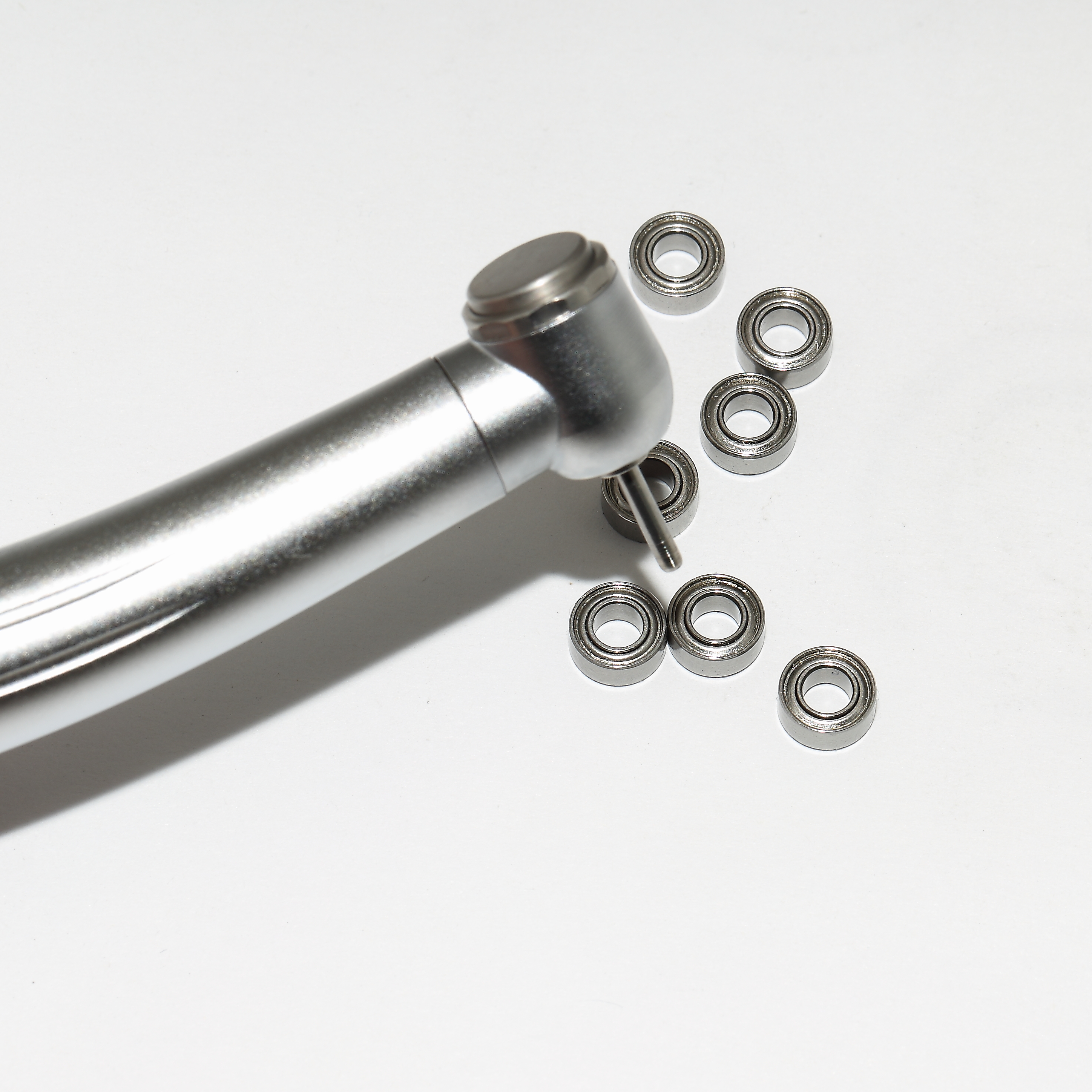
This guide is written for procurement, quality and regulatory teams at medical device OEMs that source miniature bearings across regions. It explains what documentation is normally requested, how to read a supplier quality certificate correctly, and how verifiable product attributes — such as the SUS440 stainless steel and P4 precision grades published for INB miniature bearings — can be placed into a device technical file without overstating what they prove.
One boundary applies from the start: this article describes documentation practice, not legal advice. INB's published compliance record contains one certification — ISO 9001 covering the manufacture of bearing and bearing parts. No device-level approval is claimed anywhere in this article for the bearings described, because no such record exists in the company's published product data. Where a claim cannot be verified, this guide says so explicitly.
Problem Definition: Where Miniature Bearing Import Files Break Down
A miniature bearing is a low-cost component inside a high-cost regulated product. A dental handpiece turbine bearing may weigh less than a gram, yet it sits inside a device that must satisfy the medical device rules of every market where that device is registered. The legal manufacturer of the device carries that obligation; the bearing supplier supports it with evidence. That asymmetry is the source of most delays.
Four failure patterns account for the majority of documentation problems in miniature bearing imports:
- Material naming mismatch. A datasheet says SUS440, a purchase order says 440C, and a material declaration form asks for a national or international designation. The buyer cannot map one designation to another without a supplier statement, so the file stops.
- Precision class confusion. 'High precision' is not a tolerance class. P4, ABEC 7 and DIN P4 belong to different standard systems, and an unclassified claim cannot be entered into a technical file.
- Certificate scope mismatch. A supplier may hold a valid quality management certificate that covers bearing manufacturing in general while the specific model under review is not listed, or the certificate expired before the shipment date.
- Broken traceability. A certificate proves that a system exists; it does not by itself link a delivered batch to a material record, an inspection result or a measurement report.
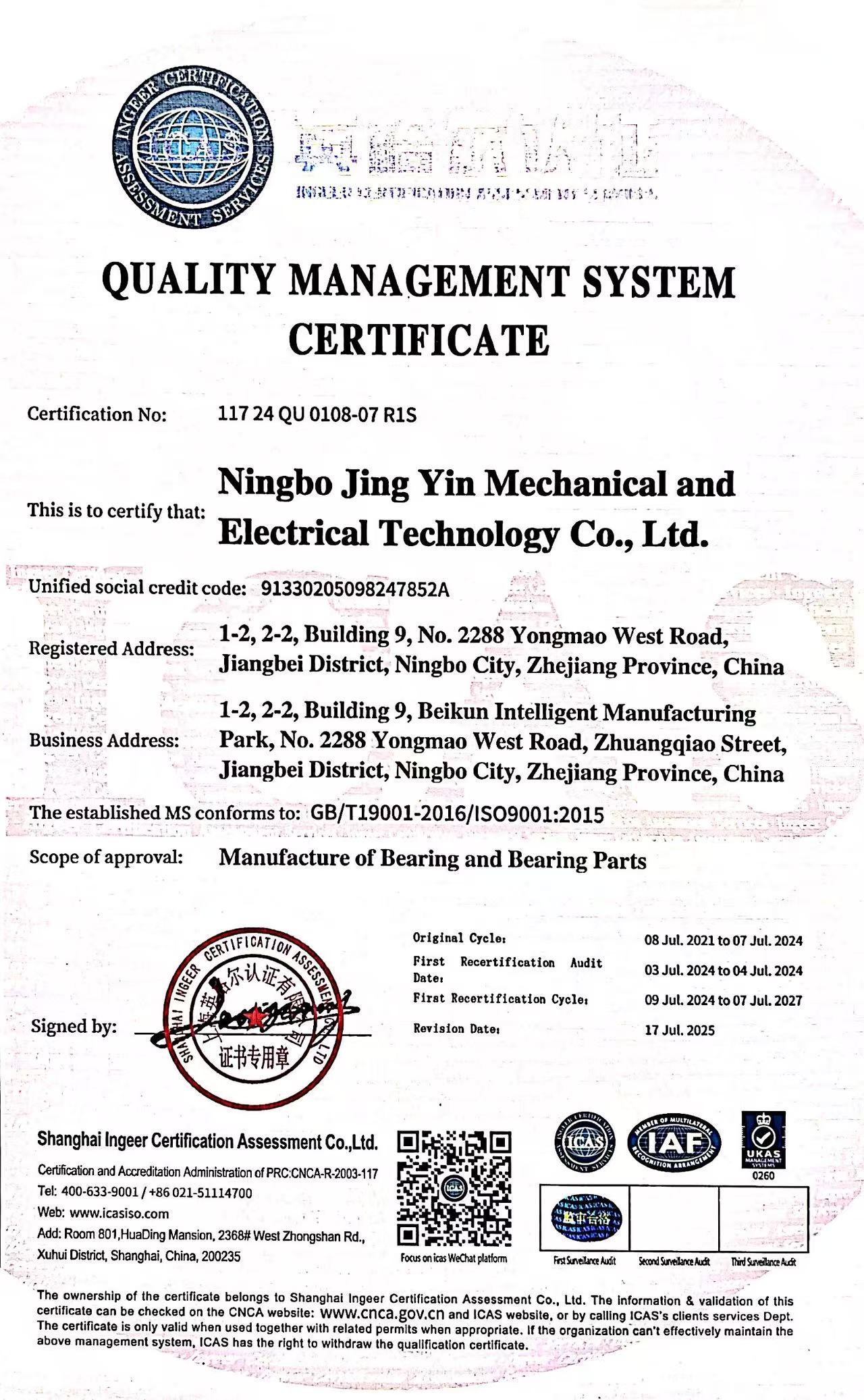
INB's published data shows what a clean answer looks like. Its ISO 9001 certificate, number 117 24 QU 0108-07 R1S, is issued by Shanghai Ingeer Certification Assessment Co., Ltd. against the standard GB/T19001-2016/ISO 9001:2015, is valid until July 7, 2027, applies to the global market, and covers four bearing models by name: SMR74TL, SR133TL, SR144ZTLP4 W2.78 and SMR144ZTLP4 W2.38. A buyer does not have to guess whether the certificate reaches the part being purchased.
Industry Background: How Regional Rules Reach a Bearing Measured in Millimetres
The regulatory pressure behind these files is not hypothetical. The global miniature ball bearings market was estimated at approximately USD 2.25 billion in 2025, with demand from medical devices and robotics named among the drivers (Future Market Insights). Asia Pacific accounted for roughly 60% of that revenue in the same year, with China the largest regional producer and consumer (Precedence Research). China's bearing exports grew 7.2% year on year in the first seven months of 2025, reaching nearly 497,852 tons (BearingNews / Huajing Research Institute).
Market size estimates differ between research houses — Precedence Research publishes USD 2.89 billion for 2025, Future Market Insights USD 2.25 billion, and IMARC Group USD 2.0 billion. The direction is consistent; the exact figure is not. Buyers should treat any single number as directional and rely on their own qualification and landed-cost data instead. Third-party market research also lists MinebeaMitsumi, NSK, SKF and Schaeffler (Barden) among the major global manufacturers in the miniature bearing sector (Intel Market Research, 2025), which is the comparison set many OEMs use when evaluating a new supplier.
What different regions ask the OEM to produce
Requirements are set at device level and vary by market. In practice, medical device OEMs typically assemble the following evidence from their component suppliers:
- European Union: material and substance declarations that support the device technical documentation, including the substance information that RoHS and REACH obligations place on the supply chain.
- United States: supplier quality records such as lot traceability, inspection results and evidence that components were produced under a controlled quality system, feeding the device maker's own quality system.
- China and other manufacturing markets: supplier quality management evidence, where ISO 9001 is the common baseline, plus locally formatted documentation for registration dossiers.
Note the direction of responsibility: the OEM owns the device file, and the bearing supplier supplies evidence into it. A supplier certificate is an input, not a substitute.
The three technical attributes a reviewer actually reads
- Material. Third-party engineering guidance identifies stainless steel 440C as the primary material for miniature bearings used in medical and food-processing applications because of its moisture and chemical resistance (SKDIN Engineering Guide). All four INB models named in this article specify SUS440 in the published product data.
- Precision. Miniature bearing precision is governed by global standards including ABMA ABEC (1–9), ISO 492 (P0–P2) and DIN 620, in which higher ABEC numbers correspond to tighter tolerances (AST Bearings). P4 sits inside the ISO 492 class family and is the grade stated for every INB model covered here.
- Speed and temperature limits. These determine whether a bearing suits a specific device, and they must be documented per model rather than per catalogue.
Detailed Solution: Assembling a Compliance-Ready Bearing Documentation Pack
1. Fix the model, not the category
Documentation lives or dies at model level. INB publishes four miniature bearing models relevant to medical device applications: SMR74TL (4 × 7 × 2 mm), SR133TL (2.38 × 4.762 × 2.38 mm, an imperial-size bearing), SR144ZTLP4 W2.78 (3.175 × 6.35 × 2.78 mm) and SMR144ZTLP4 W2.38 (3.175 × 6.35 × 2.38 mm). The manufacturer states that it can produce high-precision standard bearings with bore diameters from 2 mm to 8 mm in precision grades from P6 to P4.
A note on configuration families: the miniature bearing category also includes flanged stainless steel miniature bearings, thin-wall miniature bearings, low-noise grades and extra miniature sizes in both metric and imperial dimensions. Where a configuration does not appear in a supplier's published model list — a flanged or thin-wall variant, for example — the drawing, material and precision declaration must be confirmed separately for that specific part number. Documentation written for a catalogue family does not automatically document a new geometry.
2. Tie the material declaration to a grade and a measurement
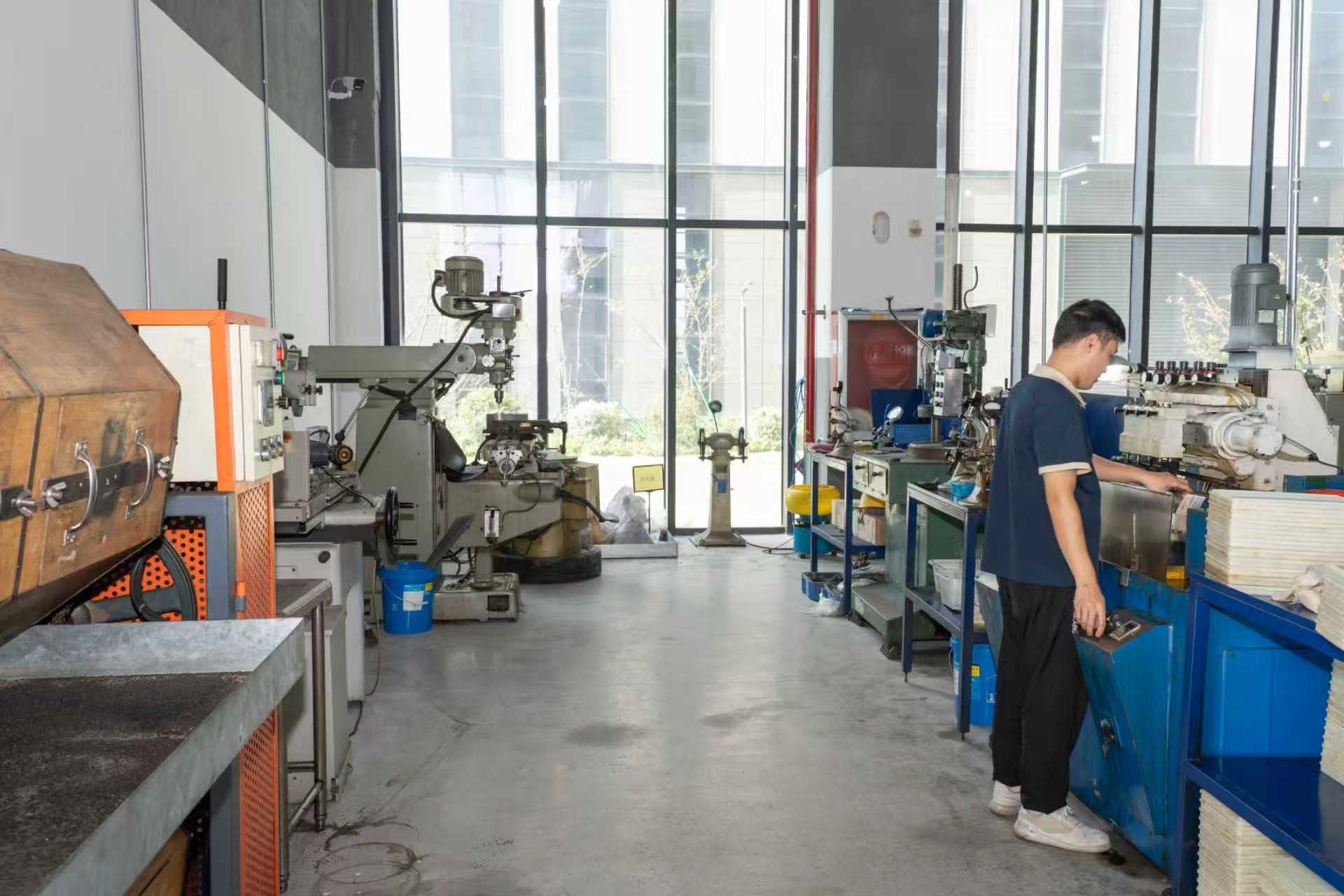
Every model above specifies SUS440 stainless steel. What a reviewer needs next is the link between that grade and a measurement: hardness, roundness, roughness and profile data. INB states that its operations are carried out in accordance with the ISO 9001 quality management system, and that its inspection equipment includes hardness testers, roundness meters, profilometers, roughness measuring equipment and microscopes. Those instruments are what convert 'stainless steel' into a verifiable material and geometry record.
3. Declare precision in the standard the reviewer recognises
A claim of 'high precision' cannot be filed. P4 can. State the tolerance class and, where the customer's system requires it, the corresponding standard family (ISO 492, ABMA ABEC or DIN 620). All four INB models are published as P4 with SUS440 material, which gives a buyer one consistent, repeatable specification line for the technical file.
4. Read the quality certificate properly
The ISO 9001 certificate held in INB's published data has four attributes worth checking on any supplier document:
- Identity: certificate number 117 24 QU 0108-07 R1S.
- Issuer and standard: Shanghai Ingeer Certification Assessment Co., Ltd., against GB/T19001-2016/ISO 9001:2015 Quality Management Systems — Requirements.
- Validity: valid until July 7, 2027.
- Scope and model coverage: manufacture of bearing and bearing parts, applicable to the global market, covering SMR74TL, SR133TL, SR144ZTLP4 W2.78 and SMR144ZTLP4 W2.38.
5. Add process and capacity evidence for continuity
Compliance review and supply review overlap. INB's published capability data states an OEM production mode with customization according to customer requirements, 100% testing, a minimum order quantity of 100 units, a 7-day lead time for in-stock items, monthly capacity of 500,000 units and annual output of 6,000,000 units. For a buyer building a technical file that must also survive an audit, those figures describe whether the supplier can repeat the documented part.
What this documentation pack does not prove
An ISO 9001 certificate is a quality management system certificate. It is not a product certification, not a biocompatibility report, not a sterilization validation and not a device registration. INB's published data does not claim any of these, and a buyer should not write them into a technical file on the supplier's behalf. Any further claim must be supported by a separate report or declaration issued for the specific material, model and application.
Step-by-Step Breakdown: Six Steps from Specification to Signed-Off File
- Define the target markets and the document list. List every region where the finished device is registered, then write down what each one requires from a component supplier: quality system evidence, material declaration, inspection records, substance information. Do this before requesting anything from a supplier, so the request is complete the first time.
- Freeze the model-level specification. Record dimension, material, precision class, limiting speed and operating temperature for the exact part number. For INB models, those values are published per model, which removes ambiguity at the quotation stage.
- Verify the quality certificate. Check issuer, certificate number, standard, validity date, scope wording and — most often overlooked — whether the model being purchased is named in the certificate.
- Request material and inspection evidence with batch linkage. Ask for the specific measurements taken and the instrument family used, not a summary statement. INB states 100% testing and lists hardness, roundness, profile, roughness and microscopy instruments in its published profile.
- Validate with a pilot build, not a datasheet. A published MOQ of 100 units and a 7-day lead time for in-stock items make small-batch validation practical. Measure the bearing under the device's real duty cycle before volume release.
- Version-control the documentation set. Certificates expire, model lists change and specifications are revised. Record the revision date of every document in the file so the next audit does not require re-collection.
Use Cases: Where Miniature Bearing Documentation Gets Tested
High-speed dental handpiece turbines
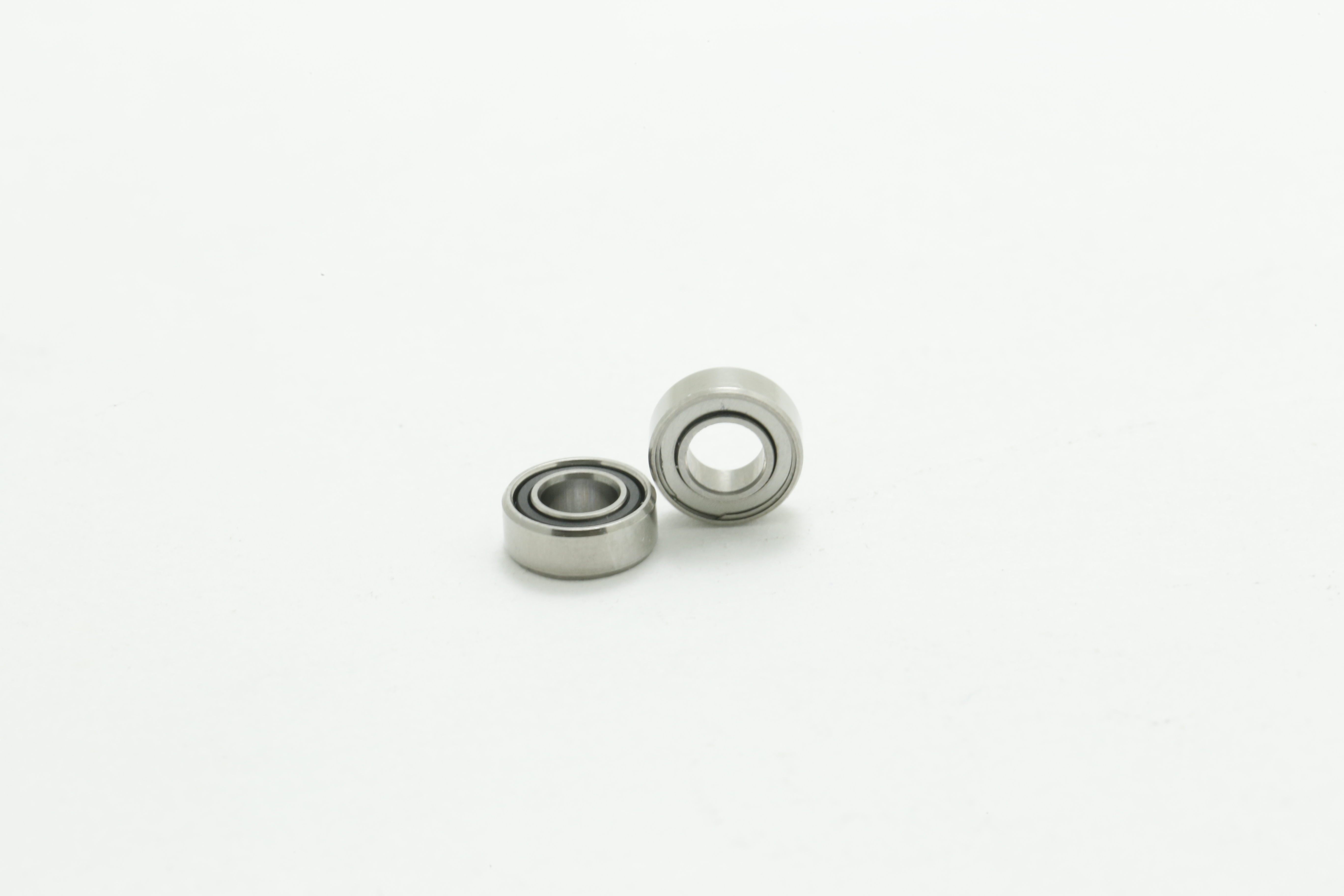
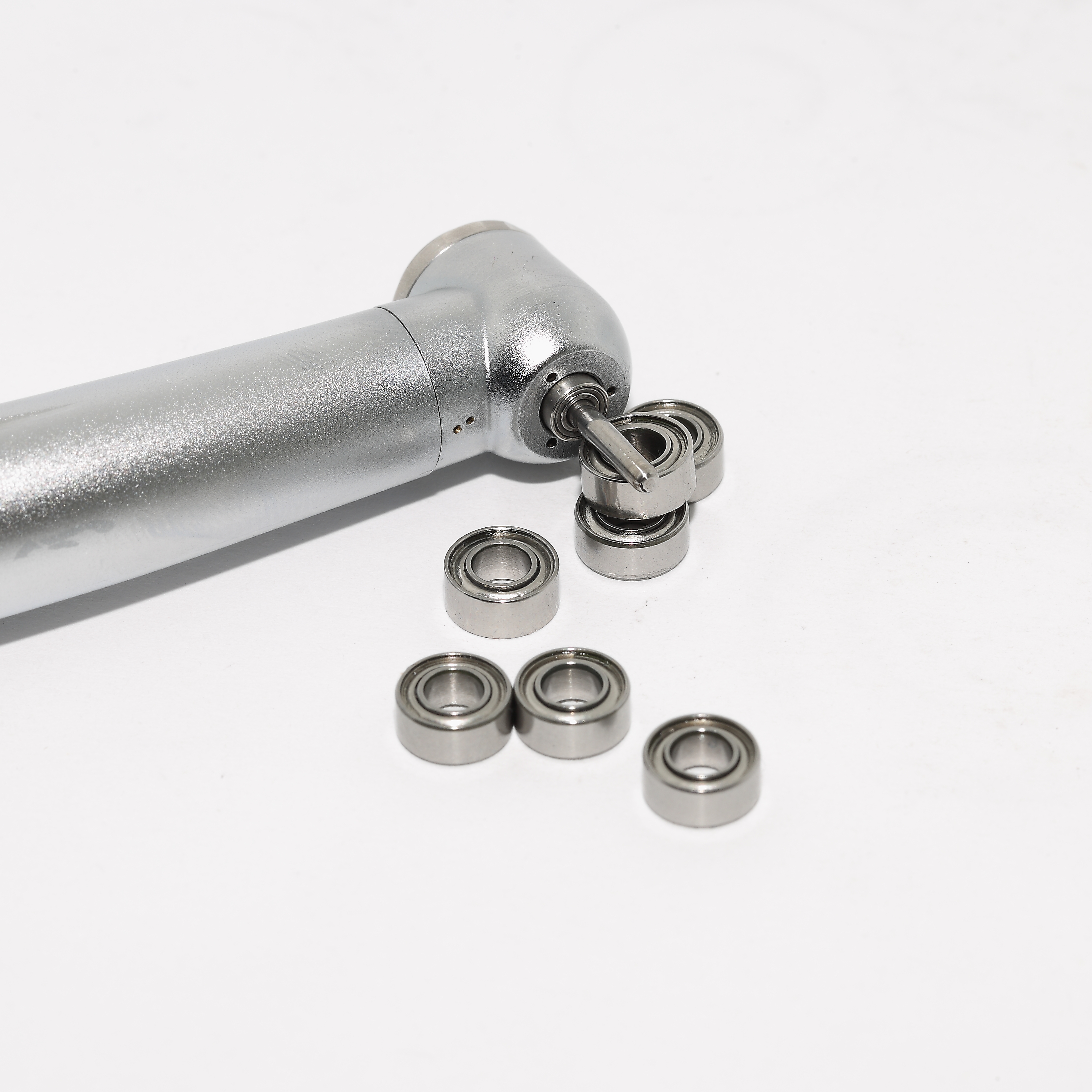
The most demanding case is the air-turbine handpiece. INB's published application data describes dental handpiece bearings operating under high-speed precision grinding in a clean medical environment with intermittent high load, requiring P4 precision, ultra-high speed of 350,000–400,000 rpm, a temperature range of -50°C to 160°C, medical-grade hygiene and low noise. SMR144ZTLP4 W2.38 and SR144ZTLP4 W2.78 are the two models published against that application, both in SUS440 material.
Lower-speed handpiece and small instrument assemblies
SMR74TL (4 × 7 × 2 mm) is published with a limiting speed of 200,000 rpm and an operating temperature range of -40°C to 150°C, with the same SUS440 material and P4 precision. It is a compact high-precision miniature bearing for assemblies that do not reach turbine speeds but still require documented precision.
Imperial-size and retrofitted assemblies
SR133TL (2.38 × 4.762 × 2.38 mm) is an imperial miniature bearing in inch dimensions, published separately at 200,000 rpm and -40°C to 150°C. For OEMs maintaining legacy instrument designs, an inch-dimension part with a documented material grade and precision class is usually easier to justify in a change-control record than a dimensional substitution with no specification line behind it.
Motor-driven medical devices
INB states that its products mainly serve the domestic medical device industry and micro-motors. For motor miniature bearing applications in tabletop or portable equipment, the documentation set is normally the same — material, precision, inspection and quality-system scope — while speed and temperature values come from the specific model rather than from the category.
Reported application case
INB reports a project in China in which 80,000 miniature bearings with P4 precision and a 350,000–400,000 rpm limiting speed were used in dental handpieces, with stable high-speed operation reported over 500 hours and extended equipment lifespan. Treated as supplier-reported project experience rather than independent test data, its value is still concrete: it shows which parameters a real dental handpiece programme had to fix — material, precision class, speed and temperature — before the part could be released.
Comparison Table: INB Miniature Bearing Models and Their Published Attributes
All values below are taken from INB's published product data. Any cross-supplier comparison should use the same specification fields, otherwise the comparison is not equivalent.
| Model | Dimensions (mm) | Material | Precision | Limiting speed | Operating temperature | Published application |
|---|---|---|---|---|---|---|
| SMR74TL | 4 × 7 × 2 | SUS440 | P4 | 200,000 rpm | -40°C to 150°C | Dental handpiece |
| SR133TL | 2.38 × 4.762 × 2.38 | SUS440 | P4 | 200,000 rpm | -40°C to 150°C | Dental handpiece |
| SR144ZTLP4 W2.78 | 3.175 × 6.35 × 2.78 | SUS440 | P4 | 350,000–400,000 rpm | -50°C to 160°C | Dental handpiece |
| SMR144ZTLP4 W2.38 | 3.175 × 6.35 × 2.38 | SUS440 | P4 | 350,000–400,000 rpm | -50°C to 160°C | Dental handpiece |
The second table maps the documents a reviewer asks for against the evidence that actually exists in INB's published data — and the fields where a buyer must obtain additional input.
| Document | What the reviewer checks | Verifiable example from INB's published data |
|---|---|---|
| Quality management certificate | Issuer, number, standard, validity, scope wording, model coverage | ISO 9001, No. 117 24 QU 0108-07 R1S, issued by Shanghai Ingeer Certification Assessment Co., Ltd., against GB/T19001-2016/ISO 9001:2015, valid until 2027-07-07, covering SMR74TL, SR133TL, SR144ZTLP4 W2.78 and SMR144ZTLP4 W2.38 |
| Material declaration | Named grade, consistent with datasheet and drawing | SUS440 stated for all four models; third-party engineering guidance identifies stainless steel 440C as the primary material for medical miniature bearings |
| Precision declaration | Tolerance class plus the standard family it belongs to | P4 stated for all four models; ISO 492, ABMA ABEC (1–9) and DIN 620 are the governing standard families |
| Inspection evidence | What was measured, with which instrument family, on which batch | 100% testing stated; equipment includes hardness testers, roundness meters, profilometers, roughness measuring equipment and microscopes |
| Performance limits | Speed and temperature documented per model, not per catalogue | 200,000 rpm / -40°C to 150°C for SMR74TL and SR133TL; 350,000–400,000 rpm / -50°C to 160°C for SR144ZTLP4 W2.78 and SMR144ZTLP4 W2.38 |
| Commercial terms | MOQ, lead time and capacity for repeat orders | MOQ 100 units; 7-day lead time for in-stock items; monthly capacity 500,000 units; annual output 6,000,000 units |
FAQ
Which certification can a medical device OEM cite for INB miniature bearings?
INB's published compliance record contains one certification: ISO 9001 for the manufacture of bearing and bearing parts. The certificate number is 117 24 QU 0108-07 R1S, it is issued by Shanghai Ingeer Certification Assessment Co., Ltd. against GB/T19001-2016/ISO 9001:2015, it applies to the global market, it is valid until July 7, 2027, and it covers the models SMR74TL, SR133TL, SR144ZTLP4 W2.78 and SMR144ZTLP4 W2.38. It is a quality management system certificate. Device-level registrations and product-level approvals are the OEM's responsibility and fall outside what this certificate proves.
Can INB supply material and precision documentation for SUS440 P4 bearings?
INB's published product data specifies SUS440 stainless steel and P4 precision for all four miniature bearing models described in this article, and states that production runs in accordance with the ISO 9001 quality management system with 100% testing. The company publishes a precision range from P6 to P4 for standard bearings with bore diameters from 2 mm to 8 mm, an OEM production mode with customization according to customer requirements, and monthly capacity of 500,000 units.
What is the minimum order quantity, and how should buyers compare cost?
The published minimum order quantity is 100 units, with a 7-day lead time for in-stock items. INB's published data does not include price bands, so unit cost has to be quoted against a defined model, quantity and documentation scope. When comparing quotations, compare the same model and the same documentation package: a lower unit price that omits inspection records or a certificate-scope statement is not a like-for-like comparison.
How can an OEM validate a miniature bearing before committing to volume?
Because the published MOQ is 100 units and in-stock items are listed with a 7-day lead time, a pilot build or bench validation is practical before volume release. Validation should reproduce the device's real operating conditions — for a high-speed dental handpiece, that means P4 precision and speeds in the 350,000–400,000 rpm range within the documented -50°C to 160°C window. INB reports a project in China in which 80,000 such bearings were used in dental handpieces, with stable high-speed operation reported over 500 hours. That case is supplier-reported project experience, so it is a starting point for validation rather than a replacement for it.
What lead time and supply continuity should buyers plan for?
The published lead time is 7 days for in-stock items, backed by a stated monthly capacity of 500,000 units and annual output of 6,000,000 units, with after-sales return and exchange stated as the support policy. INB's enterprise data lists China as its main market with a 5% export ratio and Russia among its export markets, so buyers in other regions should plan documentation and logistics lead time separately from production lead time and confirm current stock before scheduling a build. To request a sample, a specification-matched quotation, or the current documentation set for the models in this guide, contact INB through www.lnb-brg.com, by email at yuhang001@126.com, or by WhatsApp on +86 18957446001.
Conclusion: Documentation Is the Product That Clears Customs and Audits
Compliance for miniature bearing imports is a documentation discipline built on three questions: what is the part made of, how precisely was it measured, and under what quality system was it produced. INB's published data answers those questions for four models — SUS440 material, P4 precision, and ISO 9001 certificate 117 24 QU 0108-07 R1S, issued by Shanghai Ingeer Certification Assessment Co., Ltd., valid until July 7, 2027, and covering SMR74TL, SR133TL, SR144ZTLP4 W2.78 and SMR144ZTLP4 W2.38 by name.
Everything beyond that must be verified with the supplier rather than assumed: biocompatibility, sterilization compatibility, substance declarations and device-level registration all remain the OEM's file to build. Stating that limitation clearly is not a weakness in a technical file — it is what keeps the file defensible when a reviewer asks how each claim was substantiated.
Next step: build your documentation pack before the next audit
INB (Ningbo City Jingyin Electromechanical Technology Co., Ltd.) produces SUS440 miniature bearings in P4 and P6 precision grades with bore diameters from 2 mm to 8 mm, tested 100% under an ISO 9001 quality management system.
Request a sample, a specification-matched quotation, or the current documentation set for SMR74TL, SR133TL, SR144ZTLP4 W2.78 and SMR144ZTLP4 W2.38:
Website: www.lnb-brg.com | Email: yuhang001@126.com | WhatsApp: +86 18957446001
Have Questions or Need More Details?
Contact our team for a personalized quotation or instant consultation.
Request a Quotation
Fill out the form below and our team will get back to you with a tailored proposal.
WhatsApp Direct Chat
Prefer to chat in real-time? Message us on WhatsApp for instant assistance & quick answers.
- Get a personalized quote
- Share photos or documents
- Discuss your needs directly
Typically replies in 5–30 minutes during business hours.