
Miniature Bearings vs Standard Bearings for Dental Handpieces: A Size and Performance Decision
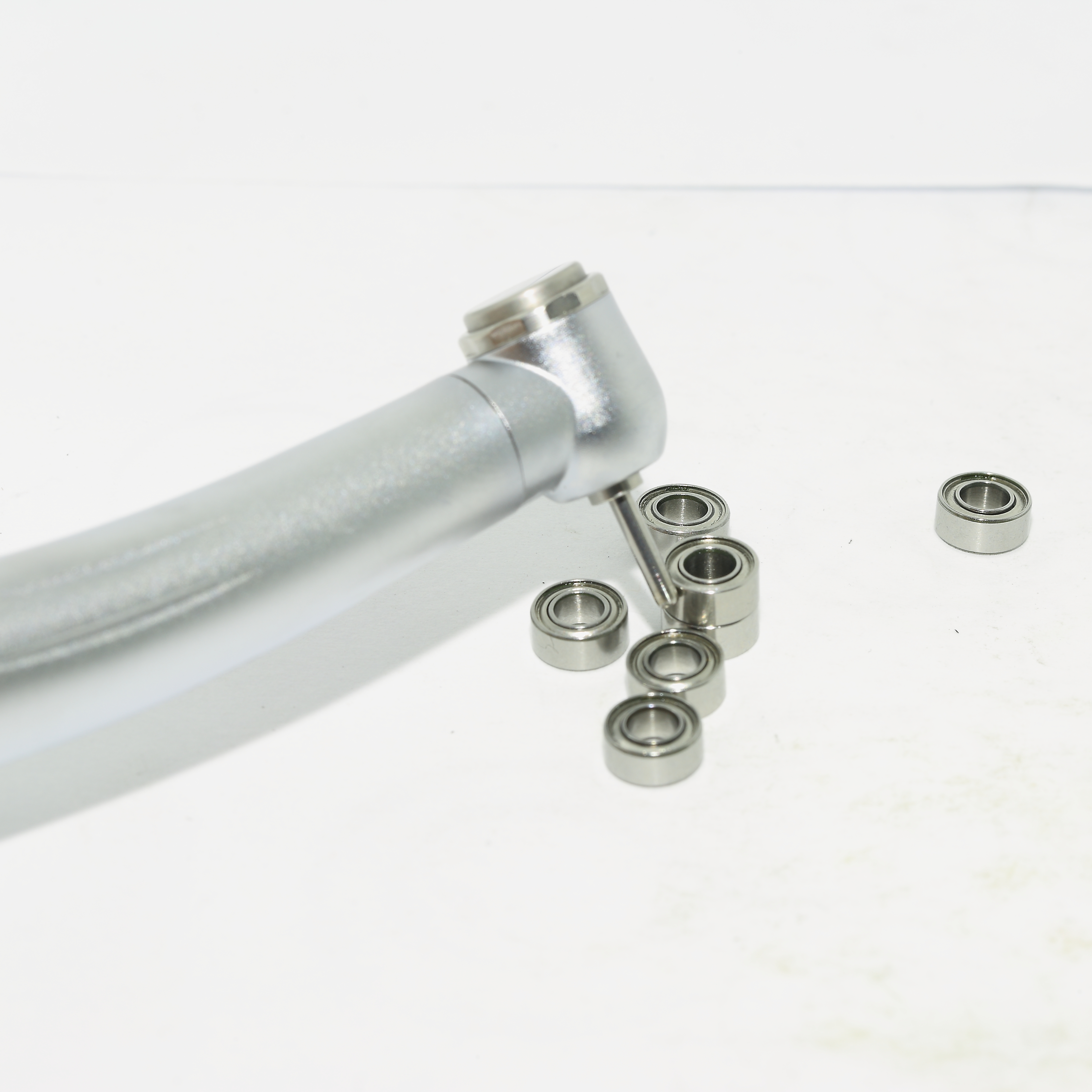
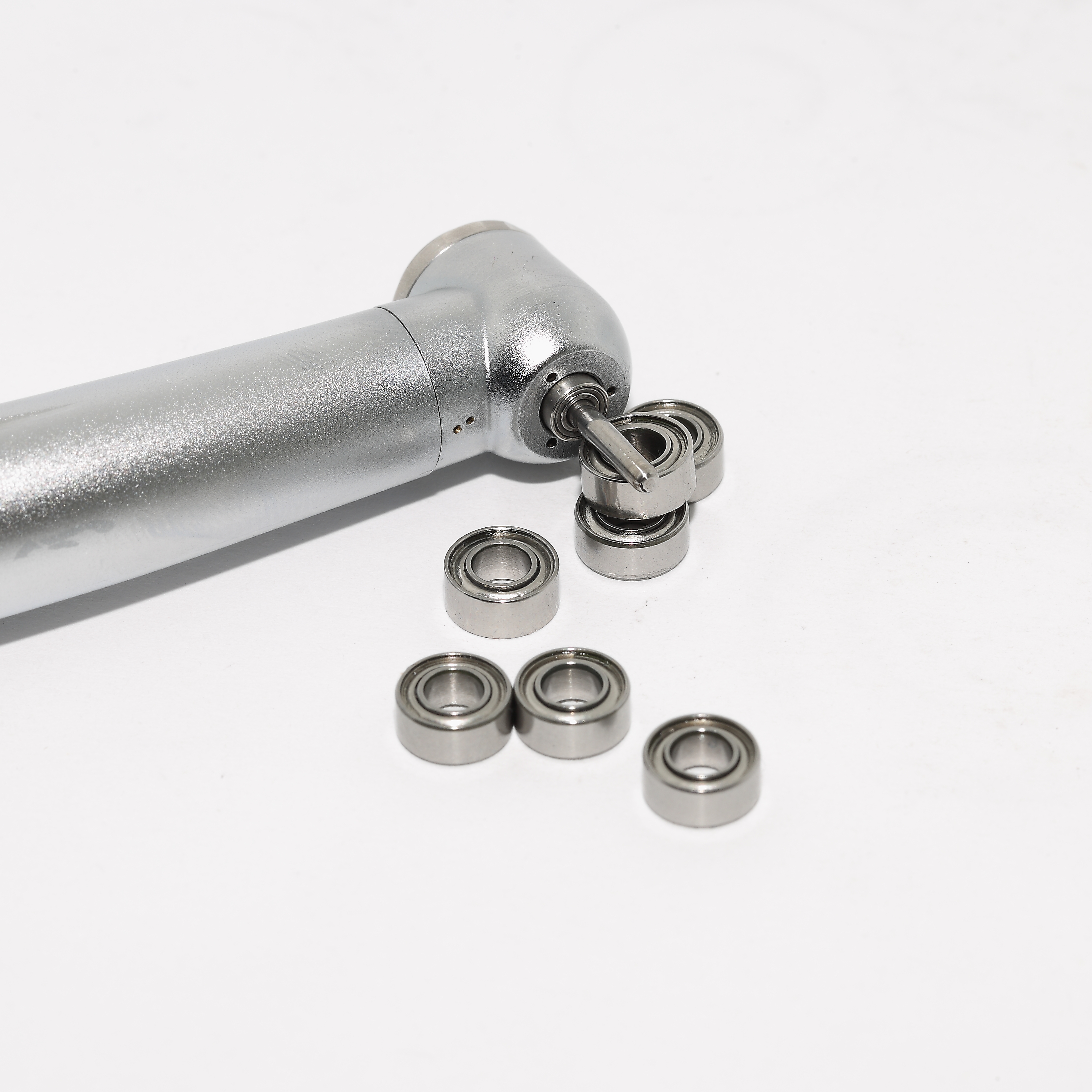
A dental handpiece turbine is one of the few high-volume mechanisms in which a fraction of a millimetre changes the entire product. The turbine head, the chuck, the bur and the air path all compete for the same small volume, and the two ball bearings that carry the rotor sit inside that envelope. That is why the choice between a miniature bearing and a standard-size bearing is usually a geometric constraint first and a performance decision second.
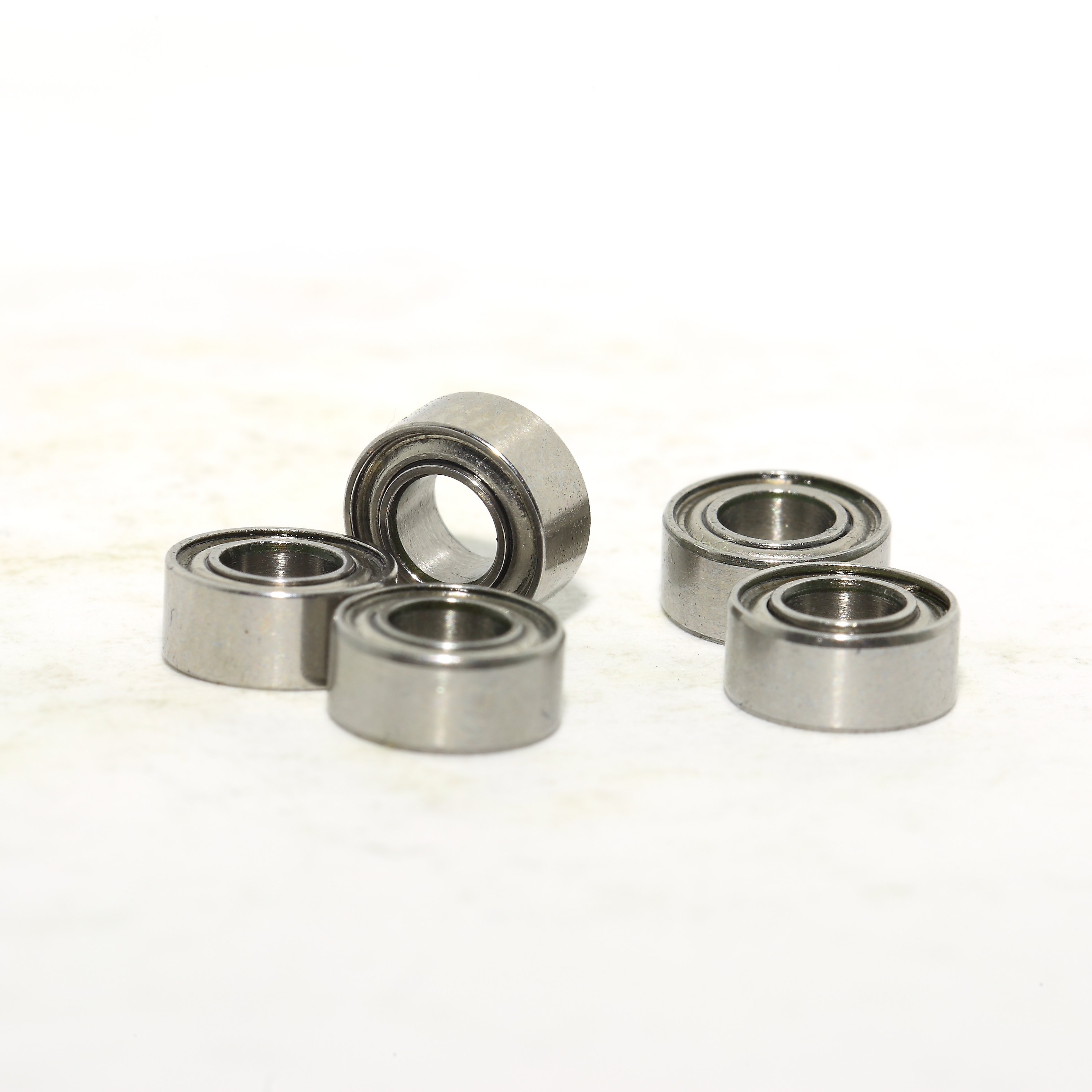
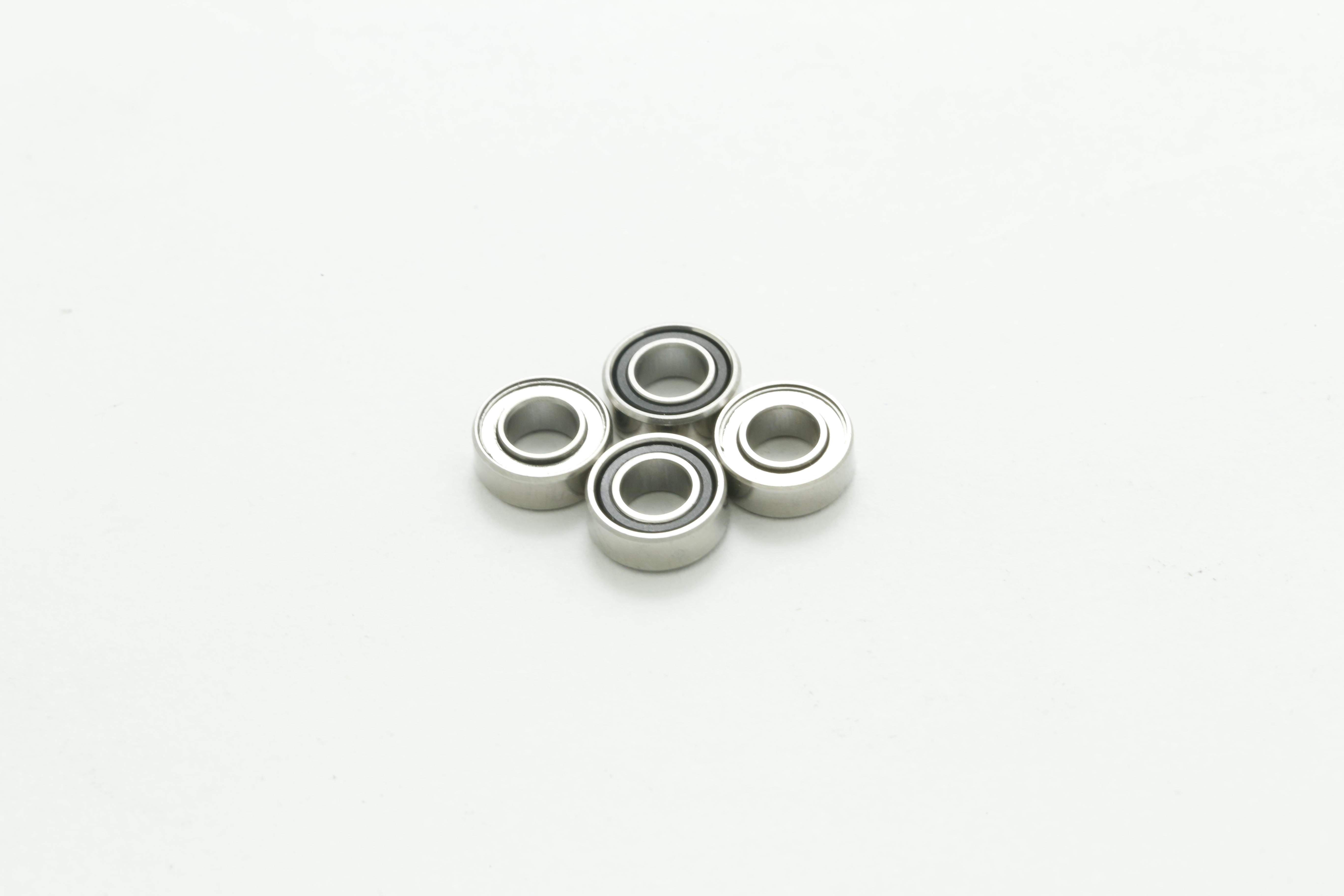
The two options are not interchangeable parts with different price tags. They are different design commitments. An extra miniature bearing such as INB's SR133TL — bore 2.38 mm, outer diameter 4.762 mm, width 2.38 mm — lets a turbine head stay compact. A standard-size bearing occupies a larger cross-section, which changes the head geometry, the load path and the rotational speed the assembly can sustain.
This article compares miniature bearings and standard-size bearings specifically for dental handpiece design. It uses verified INB dimensions, precision grades and speed ratings, together with published market and standards data, so that design engineers and procurement teams can make the size-versus-performance call on evidence rather than habit.
Problem Definition: The Handpiece Envelope Decides the Bearing
A handpiece bearing has to satisfy four requirements at the same time, and the fourth is created by the first three.
- Fit the available envelope inside the turbine head, where space is shared with the chuck, the bur and the air path.
- Rotate at turbine speed. INB's dental handpiece range is rated either to 200,000 rpm or to 350,000–400,000 rpm, depending on model.
- Survive repeated sterilisation and the clean, intermittent high-load operating conditions of clinical work.
- Do all of this without adding the noise or vibration a clinician feels through the bur.
Standard-size bearings satisfy requirements two, three and often four comfortably. A larger cross-section leaves more room for balls, raceways and lubricant, and dimensional stability is easier to hold in a bigger part. What a standard-size bearing cannot do is satisfy requirement one once the head has been fixed by ergonomics — by the need to reach posterior teeth, keep the instrument light and fit the clinician's grip.
That asymmetry is the whole decision. Miniature bearings exist because in a handpiece, requirement one dominates. The trade is not free: reducing the cross-section reduces the ball diameter and the raceway volume available, which reduces the load the bearing can carry and makes the design more sensitive to precision, fit and lubrication. So the real question is not “which bearing is better” but “how much envelope can the head design give back, and what does the design lose when it does?”
Two consequences follow. First, the bearing should be selected after the head envelope is fixed, not before. Second, rated speed and temperature — not catalogue size alone — determine whether a thin-wall miniature bearing can actually do the job in a given handpiece.
Industry Background: Where Miniature Bearings Sit Today
Miniature bearings are now a distinct supply category rather than a niche line. Future Market Insights estimates the global miniature ball bearings market at approximately USD 2.25 billion in 2025, driven by demand in medical devices and robotics. Asia Pacific accounted for roughly 60% of that market in 2025, according to Precedence Research, with China as the largest regional producer and consumer.
Published market-size estimates diverge, however. Precedence Research and IMARC Group have each published different totals for the same year alongside the Future Market Insights figure above, so any single number is better read as an order of magnitude than as a measurement.
Supply capacity is easier to verify than market size. China's bearing exports grew 7.2% year on year in the first seven months of 2025, reaching nearly 497,852 tons, according to BearingNews and the Huajing Research Institute — growth achieved despite pressure on global unit pricing. By application, automotive remains the largest segment of the miniature bearing market at roughly 39% in 2025, driven by EV motor and sensor applications (Precedence Research). Medical and dental duty is much smaller in tonnage, but it is among the most demanding in precision and consistency.
Two standards frameworks shape how that precision is specified across borders. Miniature bearing precision is governed by ABMA ABEC (1–9), ISO 492 (P0–P2) and DIN 620, and in the ABEC system higher numbers correspond to tighter tolerances (AST Bearings). Because the same physical bearing can be described in ABEC, ISO and DIN terms at once, mismatched grade labels are a common source of comparison error in quotations.
On materials, 440C stainless steel is the primary choice for miniature bearings used in medical and food-processing applications, because it resists moisture and chemical attack (SKDIN Engineering Guide). That is the same material family INB specifies as SUS440 for its dental handpiece bearings.
Detailed Solution: INB's Miniature Approach to the Size–Performance Trade-off
What the dental handpiece range contains
INB is a Ningbo-based precision bearing brand (www.lnb-brg.com), established in 2014, that produces bearings with bore diameters from 2 mm to 8 mm in precision grades from P6 to P4 under an ISO 9001 quality management system. Its dental handpiece range concentrates the miniature end of that capability, with the smallest bore at 2.38 mm.
- SR133TL — 2.38 × 4.762 × 2.38 mm; P4; limiting speed 200,000 rpm; operating temperature −40 °C to 150 °C; SUS440; dental handpiece.
- SMR74TL — 4 × 7 × 2 mm; P4; limiting speed 200,000 rpm; −40 °C to 150 °C; SUS440; dental handpiece.
- SMR144ZTLP4 W2.38 — 3.175 × 6.35 × 2.38 mm; P4; limiting speed 350,000–400,000 rpm; −50 °C to 160 °C; SUS440; dental handpiece.
- SR144ZTLP4 W2.78 — 3.175 × 6.35 × 2.78 mm; P4; limiting speed 350,000–400,000 rpm; −50 °C to 160 °C; SUS440; dental handpiece.
The design logic inside that set is worth reading closely. The two smaller-bore models are rated to 200,000 rpm, while the two 3.175 mm bore models with the wider temperature window are rated to 350,000–400,000 rpm. Matching a handpiece specification therefore means matching four parameters — envelope, precision, speed and temperature — rather than the bore alone.
Several of these envelopes also correspond to familiar imperial miniature bearing dimensions: 2.38 mm is 3/32 in, 3.175 mm is 1/8 in, 4.762 mm is 3/16 in and 6.35 mm is 1/4 in. That matters when an existing handpiece drawing was originally dimensioned in inches and a supplier is quoting in metric, because an apparent rounding difference is often a different bearing.
Why precision grade is not optional
At 200,000 rpm the rotor turns more than 3,300 times per second; at 400,000 rpm it turns more than 6,600 times per second. Runout and internal clearance that would be harmless in a low-speed assembly become vibration, heat and noise at that speed, which is why every bearing in the INB dental handpiece range is supplied at P4. The grade is a functional requirement of the application, not an upgrade chosen for presentation.
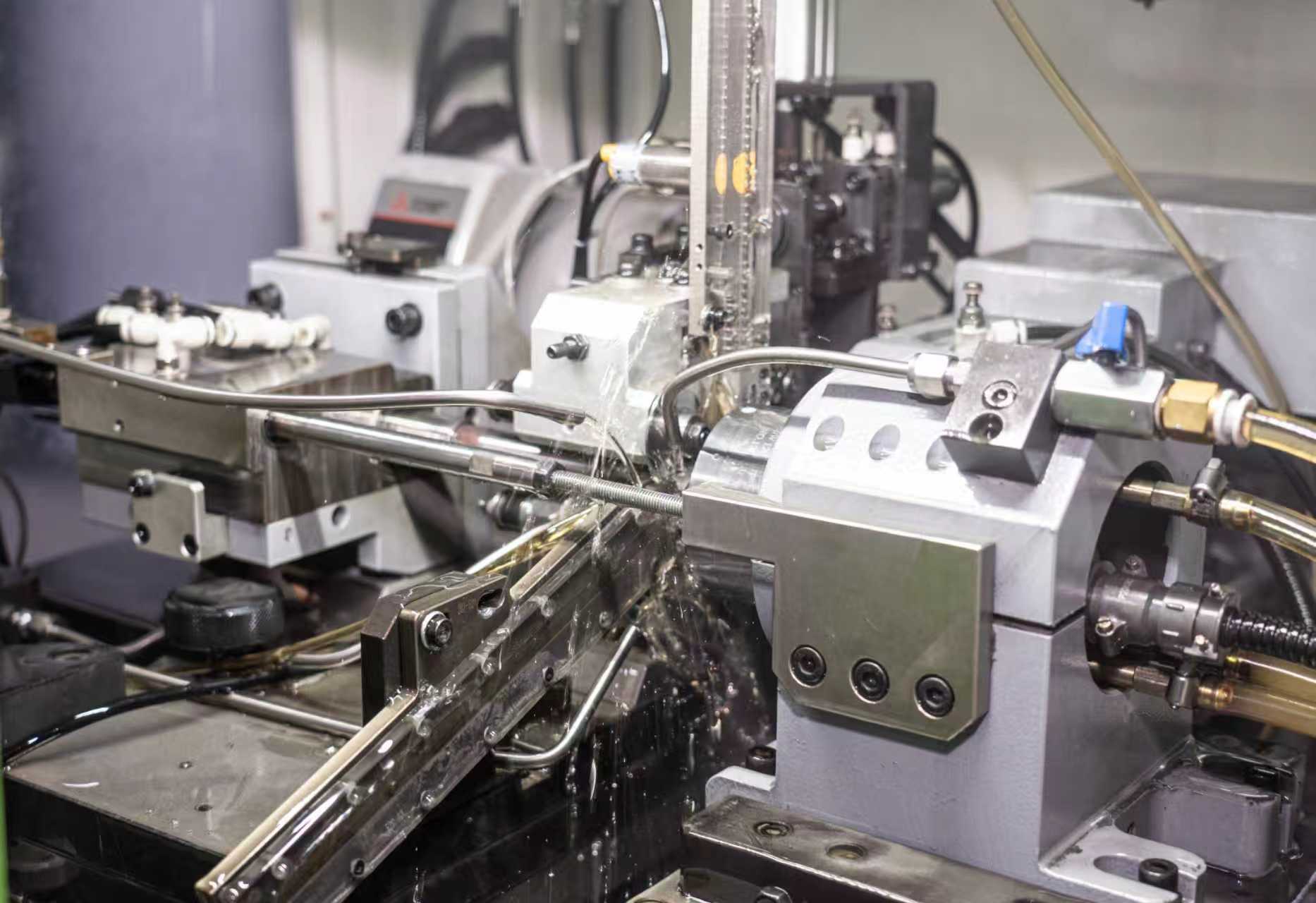
Because precision grades are named differently in different systems — ABMA ABEC (1–9), ISO 492 (P0–P2) and DIN 620 (AST Bearings) — a buyer should always confirm which system a quotation uses before comparing two parts. INB's production capability spans P6 to P4 across bore diameters of 2 mm to 8 mm, and each unit is 100% tested. Inspection uses hardness testers, roundness meters, profilometers, roughness measuring equipment and microscopes — the instrument set needed to demonstrate the dimensions and surface condition a precision grade actually describes.
Material and environment
Dental handpiece bearings face repeated sterilisation and clinical cleaning agents, so corrosion resistance matters as much as dimensional accuracy. 440C stainless steel is the primary material for miniature bearings in medical applications because of its moisture and chemical resistance (SKDIN Engineering Guide), and INB specifies SUS440 throughout its dental range as a stainless steel miniature bearing solution.
Temperature capability then differentiates the models: −40 °C to 150 °C for the SR133TL and SMR74TL, and −50 °C to 160 °C for the SMR144ZTLP4 W2.38 and SR144ZTLP4 W2.78. The application itself adds requirements a general-purpose duty would not impose: medical-grade hygiene and low noise, on top of an operating profile of high-speed precision grinding, a clean medical environment and intermittent high-load cycles. INB describes the service condition for this application as intermittent high-speed operation.
Step-by-Step Breakdown: Six Steps From Envelope to Approved Part
The sequence below follows the order in which the constraints actually bind. Working in reverse — choosing a bearing first and designing the head around it — is the most common cause of late redesign.
- Fix the head envelope first. Establish the bore, outer diameter and width the head can accept, including clearance for the chuck and bur. This single step decides whether a miniature bearing is mandatory. INB's dental range spans 4 × 7 × 2 mm at the largest and 2.38 × 4.762 × 2.38 mm at the smallest bore.
- Convert duty into ratings. Write the required limiting speed and operating temperature as numbers, then compare them against the part. The gap between a 200,000 rpm rating and a 350,000–400,000 rpm rating is the difference between two INB models, not a tolerance adjustment.
- State the precision grade in a standard you can audit. P4, ABEC and ISO 492 classes are not interchangeable labels. Specify the grade and the measurement method, and confirm the supplier's instrument set — roundness meters, profilometers, roughness measurement, microscopes and hardness testers in INB's case — can demonstrate it.
- Match the material to the sterilisation routine. For medical and dental duty, 440C stainless steel is the primary material choice because of its moisture and chemical resistance (SKDIN Engineering Guide); INB uses SUS440 across its dental handpiece range.
- Re-check load capacity after miniaturising. Shrinking the cross-section reduces the ball and raceway volume available, so load capability is the price of the size reduction. Quantify that against the real grinding and intermittent high-load duty before releasing the design.
- Validate with a physical sample before release. INB builds to customer requirements under an OEM model, with a minimum order quantity of 100 units and a monthly capacity of 500,000 units — enough to run a validation build before committing to volume.
Use Cases: Dental Handpieces and Adjacent High-Speed Devices
Turbine dental handpieces
This is the primary case, and the one where the miniature-versus-standard decision is effectively already made by head geometry. A documented INB medical device customer in China fitted the SMR144ZTLP4 W2.38 to dental handpieces across an 80,000-unit programme. Over a 500-hour evaluation the reported outcome was stable high-speed operation with extended equipment lifespan, against a requirement profile of ultra-high speed, P4 precision, long service life and medical-grade reliability.
Micro-motors and adjacent medical devices
The same high-precision miniature bearings used in handpieces also suit micro-motor assemblies, where a profile of high-speed precision grinding in a clean environment applies to a motor miniature bearing selection just as it does to a turbine. Where noise rather than speed is the dominant requirement, a low-noise miniature bearing specified to the same P4 grade is the appropriate starting point.
Where a standard bearing still wins
If the head envelope is not the binding constraint — larger instruments, benchtop equipment, and low-speed drives with generous radial space — a standard-size bearing is simpler to specify and easier to source. Miniaturisation only pays for itself when the envelope or the speed duty demands it. One mounting nuance is worth separating from the size decision: a flanged stainless steel miniature bearing addresses axial location in the housing, which is a mounting question layered on top of the size decision rather than a performance advantage in itself.
Comparison Table: Miniature Bearings vs Standard-Size Bearings
| Selection factor | Miniature / extra-miniature bearing — INB dental handpiece range | Standard-size bearing — what to verify |
|---|---|---|
| Envelope | Smallest bore 2.38 mm with 4.762 mm OD and 2.38 mm width (SR133TL); 3.175 × 6.35 mm (SMR144ZTLP4 W2.38, SR144ZTLP4 W2.78); 4 × 7 mm (SMR74TL) | Occupies a larger radial cross-section; confirm the head, chuck and bur still fit after the change |
| Precision grade | P4 across the dental range; wider production capability spans P6 to P4 for 2–8 mm bores | Confirm whether the quoted grade is ABMA ABEC, ISO 492 or DIN 620 before comparing two parts |
| Limiting speed | 200,000 rpm (SR133TL, SMR74TL); 350,000–400,000 rpm (SMR144ZTLP4 W2.38, SR144ZTLP4 W2.78) | Request a rated limiting speed for the specific part — a dimensional match is not a speed match |
| Operating temperature | −40 °C to 150 °C (SR133TL, SMR74TL); −50 °C to 160 °C (SMR144ZTLP4 W2.38, SR144ZTLP4 W2.78) | Check the window against the actual sterilisation and cleaning routine |
| Material | SUS440 stainless steel across the INB dental range; 440C is the primary material for miniature bearings in medical applications (SKDIN Engineering Guide) | Verify the specific grade rather than the general description “stainless” |
| Load capacity | The main trade-off: a smaller cross-section reduces the ball and raceway volume available | A larger cross-section generally supports higher load within the same design family |
| Order economics | OEM build to customer requirements; MOQ 100 units; monthly capacity 500,000 units; 100% test; in-stock items ship in 7 days | Standard sizes are widely produced and usually easier to source off the shelf |
| Best fit | When the head envelope is fixed and the speed duty is high | When radial space is available and load or sourcing simplicity dominates |
FAQ
What precision grade do miniature bearings for dental handpieces require?
INB supplies its dental handpiece bearings at P4, and its wider production range covers P6 to P4 for bore diameters from 2 mm to 8 mm. Precision itself is defined by ABMA ABEC (1–9), ISO 492 (P0–P2) and DIN 620, with higher ABEC numbers corresponding to tighter tolerances (AST Bearings). Because these systems use different labels, confirm which one a quotation uses before comparing two parts.
Can a miniature bearing really run at 400,000 rpm in a handpiece turbine?
Within its rated limit, yes. INB's SMR144ZTLP4 W2.38 (3.175 × 6.35 × 2.38 mm) and SR144ZTLP4 W2.78 (3.175 × 6.35 × 2.78 mm) are both rated for a limiting speed of 350,000–400,000 rpm at P4 precision in SUS440, with an operating temperature range of −50 °C to 160 °C. The smaller-bore SR133TL (2.38 × 4.762 × 2.38 mm) and the SMR74TL (4 × 7 × 2 mm) are rated to 200,000 rpm over −40 °C to 150 °C. Speed rating is model-specific, so match the individual part to the turbine specification rather than the catalogue family.
Does miniaturisation change the cost structure of a handpiece bearing order?
The commercial structure INB publishes for this range is an OEM build to customer requirements, a minimum order quantity of 100 units and a monthly capacity of 500,000 units, with 100% testing on every unit. Beyond those parameters, price is quoted per configuration, because precision grade, envelope, tolerance and order quantity move together.
Can a buyer validate a miniature bearing in their own handpiece design before committing to volume?
Yes. INB produces to customer requirements under its OEM model, and the 100-unit minimum order quantity is designed to allow an evaluation build before a volume commitment. The relevant validation parameters are the four covered above: envelope, precision grade, limiting speed and operating temperature. After-sales support covers return and exchange where a fit issue is identified.
What is the lead time, and how do I start?
In-stock items ship in 7 days, and a monthly production capacity of 500,000 units supports larger programmes after that. To start, send INB your handpiece head envelope, the required limiting speed and the operating temperature window, and the team will confirm which model fits or quote an OEM configuration built to your drawing. Contact: yuhang001@126.com, +86 18957446001, WhatsApp 18957446001.
Conclusion: Let the Envelope Decide First, Then the Ratings
For dental handpieces, the miniature-versus-standard question resolves in two moves. The head envelope decides which family is even possible, and the rated speed and temperature window decide which part inside that family will survive the duty. Where the head is fixed by ergonomics and the turbine runs at 350,000–400,000 rpm, a standard-size bearing is simply not in the running, and the meaningful comparison happens between miniature models — for example the SMR144ZTLP4 W2.38 and the SR144ZTLP4 W2.78, which share a 3.175 × 6.35 mm envelope, a P4 grade, a SUS440 material and a −50 °C to 160 °C window, and differ mainly in the 2.38 mm versus 2.78 mm width.
Where radial space is available and load dominates, a standard-size bearing remains the simpler, more sourceable answer. The mistake to avoid is treating the choice as a price comparison: it is a design commitment with a load-capacity cost attached to every millimetre removed.
Next step: match a miniature bearing to your handpiece envelope
Send INB your head envelope, required limiting speed and operating temperature, and the team will confirm which model in the dental handpiece range fits — or quote an OEM configuration built to your drawing. In-stock items ship in 7 days; minimum order quantity is 100 units.
Email: yuhang001@126.com | Tel / WhatsApp: +86 18957446001 | Web: www.lnb-brg.com
Address: Building 9, Beikun Industrial Area, No. 2288 Yongmao West Road, Zhuangqiao Street, Jiangbei District, Ningbo City, China.
Have Questions or Need More Details?
Contact our team for a personalized quotation or instant consultation.
Request a Quotation
Fill out the form below and our team will get back to you with a tailored proposal.
WhatsApp Direct Chat
Prefer to chat in real-time? Message us on WhatsApp for instant assistance & quick answers.
- Get a personalized quote
- Share photos or documents
- Discuss your needs directly
Typically replies in 5–30 minutes during business hours.