
Miniature Bearing After-Sales Support: What OEM Buyers Should Verify
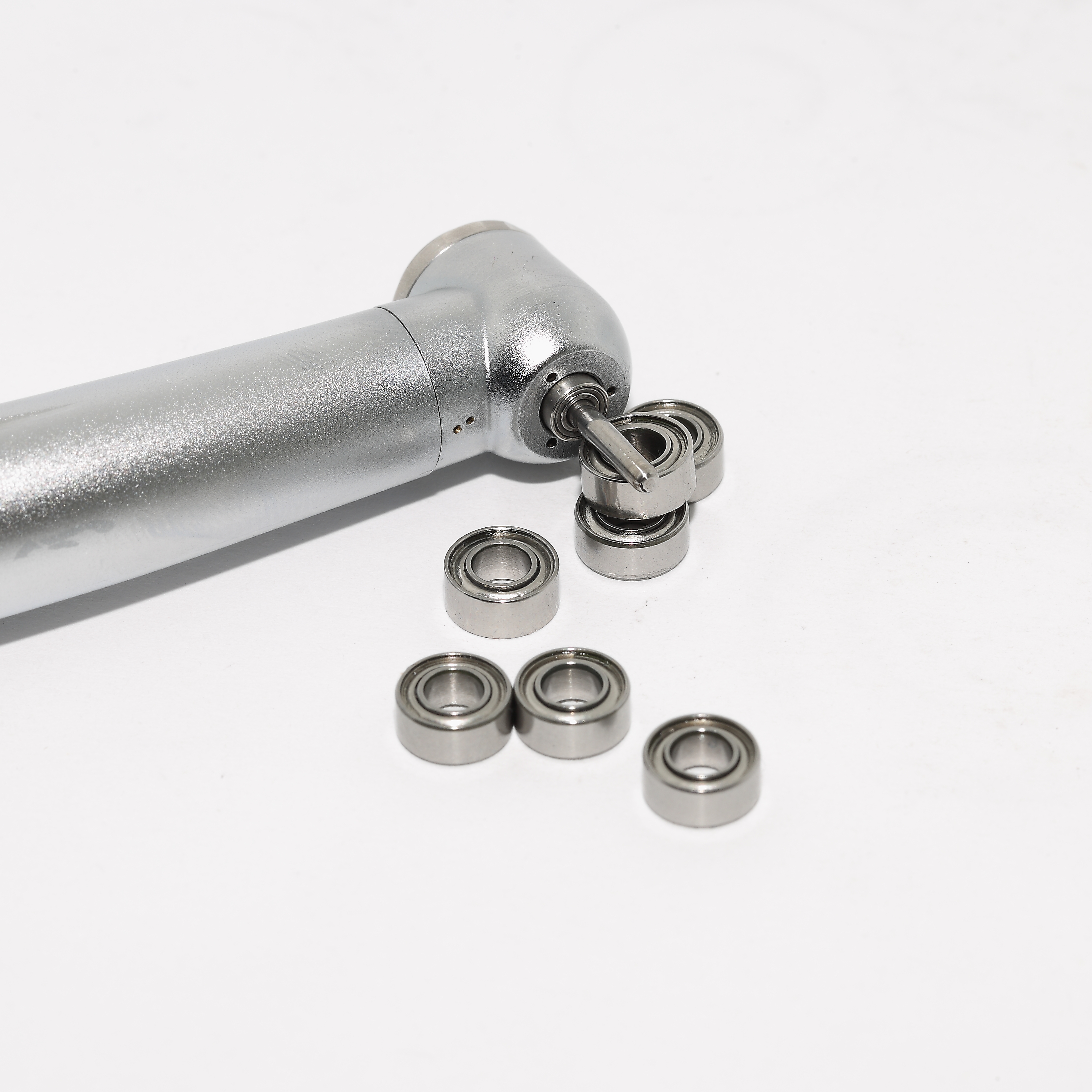
After-sales support for miniature bearings is the part of a supply agreement that decides whether a qualified component stays available, installable, and replaceable across a multi-year production program. At the evaluation stage, four commitments are worth verifying before a purchase order is issued: replacement part availability by model number, engineering support during installation and ramp-up, the return-and-exchange terms that apply to P4 precision grades, and documented long-term supply continuity for the end product. INB, the miniature bearing brand of Ningbo City Jingyin Electromechanical Technology Co., Ltd., documents ISO 9001 certification, 100% product testing, and after-sales return and exchange across its miniature bearing range.
This article sets out what a long-term miniature bearing supplier should be able to document, how to check each claim before signing, and where the real risks sit for buyers of high-speed miniature bearings used in dental handpieces and precision micro-motors.
The Support Gap That Appears After Qualification
Miniature bearings are selected on dimensions, precision grade, limiting speed, and material. Once a model passes qualification, it usually leaves the procurement conversation — until a service network runs short of spares, a batch is questioned, or a new operator on the assembly line needs an answer about mounting conditions.
That is where after-sales support becomes a purchasing variable rather than a courtesy. The failure mode is rarely a bad first shipment. It is a supply program that cannot answer four ordinary questions:
- Can we buy the same model number again next year, in the same precision grade?
- Who answers installation and handling questions when the production team changes?
- What happens if a delivered lot does not meet the agreed specification?
- Will this size range still be in production when the current device generation reaches its service years?
For dental handpiece manufacturers the questions are concrete rather than theoretical. A turbine handpiece operating at 350,000–400,000 rpm depends on a high-speed miniature bearing held to P4 precision and produced in stainless steel with controlled heat treatment. When such a bearing underperforms, the symptom appears in the service channel rather than the factory, and it is traced back to the component long after the invoice has been settled.
The practical consequence for buyers at the evaluation stage is straightforward: after-sales support should be treated as a design input, not as something to negotiate once volume begins.
Industry Background: A Concentrated Category With Uneven Support Levels
The miniature bearing category is small in physical size and substantial in value. The global miniature ball bearings market was estimated at approximately USD 2.25 billion in 2025, with demand driven by medical devices and robotics (Future Market Insights). Published estimates diverge — Precedence Research places the 2025 market at USD 2.89 billion and IMARC Group at USD 2.0 billion — which is expected for a category defined by size thresholds rather than a single product code.
Regional supply is more consistent than the size estimates. Asia Pacific held roughly 60% of miniature ball bearing revenue in 2025, with China as the largest regional producer and consumer (Precedence Research). China's bearing exports grew 7.2% year-on-year in the first seven months of 2025, reaching nearly 497,852 tons, even as global unit pricing came under pressure (BearingNews / Huajing Research Institute).
Two structural features shape what a buyer can reasonably expect from after-sales service.
Precision is standardized; support is not. Miniature bearing precision is governed by recognized frameworks including ABMA ABEC (1–9), ISO 492 (P0–P2), and DIN 620 (AST Bearings). Those standards define tolerances. They do not define service levels. Two suppliers can both ship a P4-grade bearing and still differ completely in how quickly they answer a technical question, how they document a lot, or how they handle a disputed delivery.
Material and configuration are application-driven. Stainless steel 440C is the primary material for miniature bearings used in medical and food-processing applications because of its moisture and chemical resistance (SKDIN Engineering Guide). Configuration follows the same logic. Buyers describe the same component family in several overlapping ways — small miniature bearings and extra miniature bearings by envelope size, thin-wall miniature bearings by section ratio, flanged stainless steel miniature bearings by mounting method, and imperial miniature bearings by inch-based dimensions. A supplier's ability to confirm which description maps to a specific part number is itself a form of after-sales support, because replacement depends on the number, not on the description.
Production is concentrated as well. The most widely cited global manufacturers in the miniature bearing sector include MinebeaMitsumi — noted for dominance in the smallest sizes — along with NSK, SKF, and Schaeffler (Barden) (Intel Market Research). For an OEM running a mid-volume dental handpiece or precision micro-motor program, the practical question is whether a supplier's support model scales down to the order size, and how continuity is handled when a part number sits far below a large manufacturer's priority threshold.
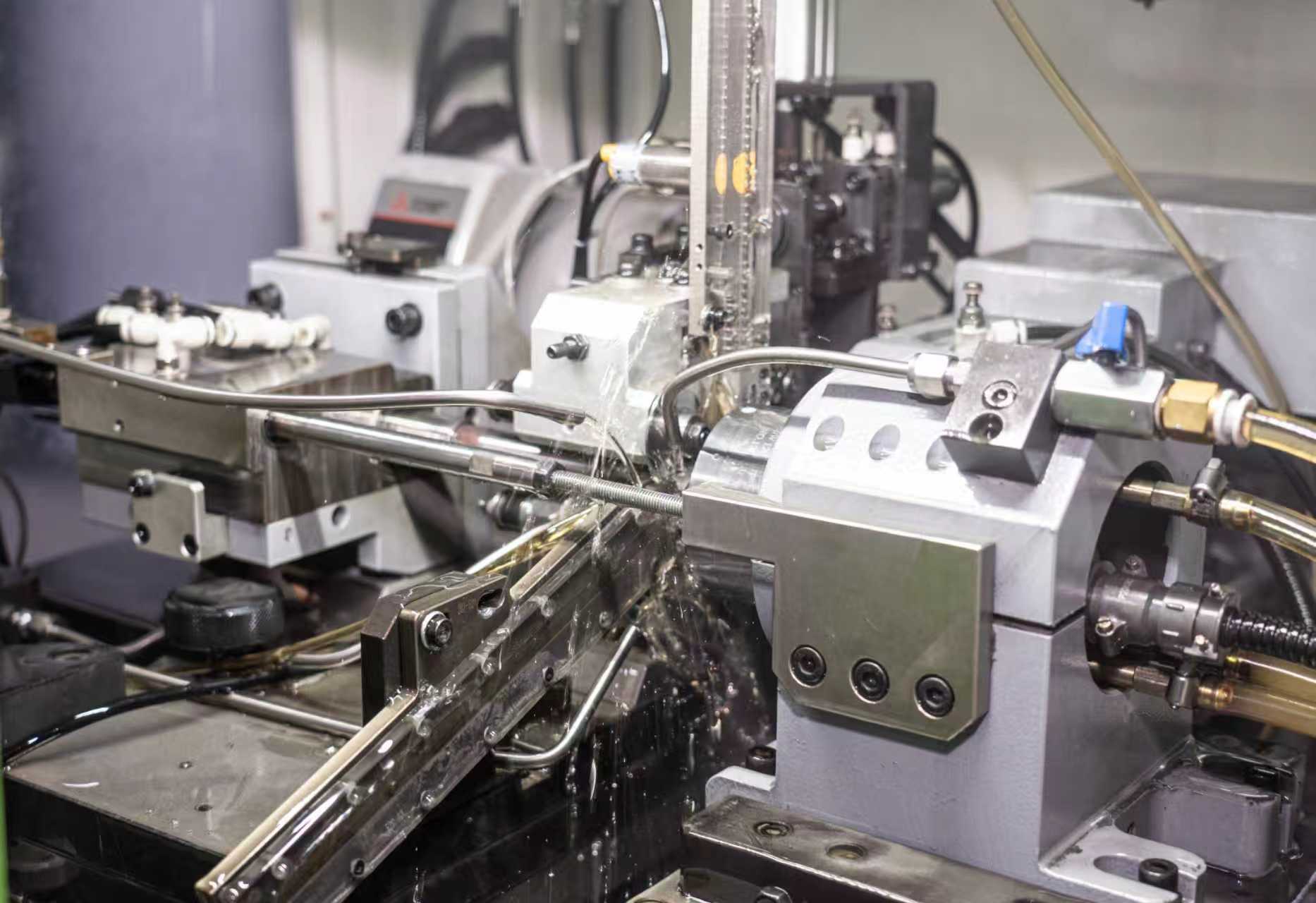
What INB Documents for After-Sales Support
Support commitments are only useful when they can be checked. The following elements are documented and verifiable against order paperwork rather than asserted verbally.
1. A quality management system with a checkable certificate
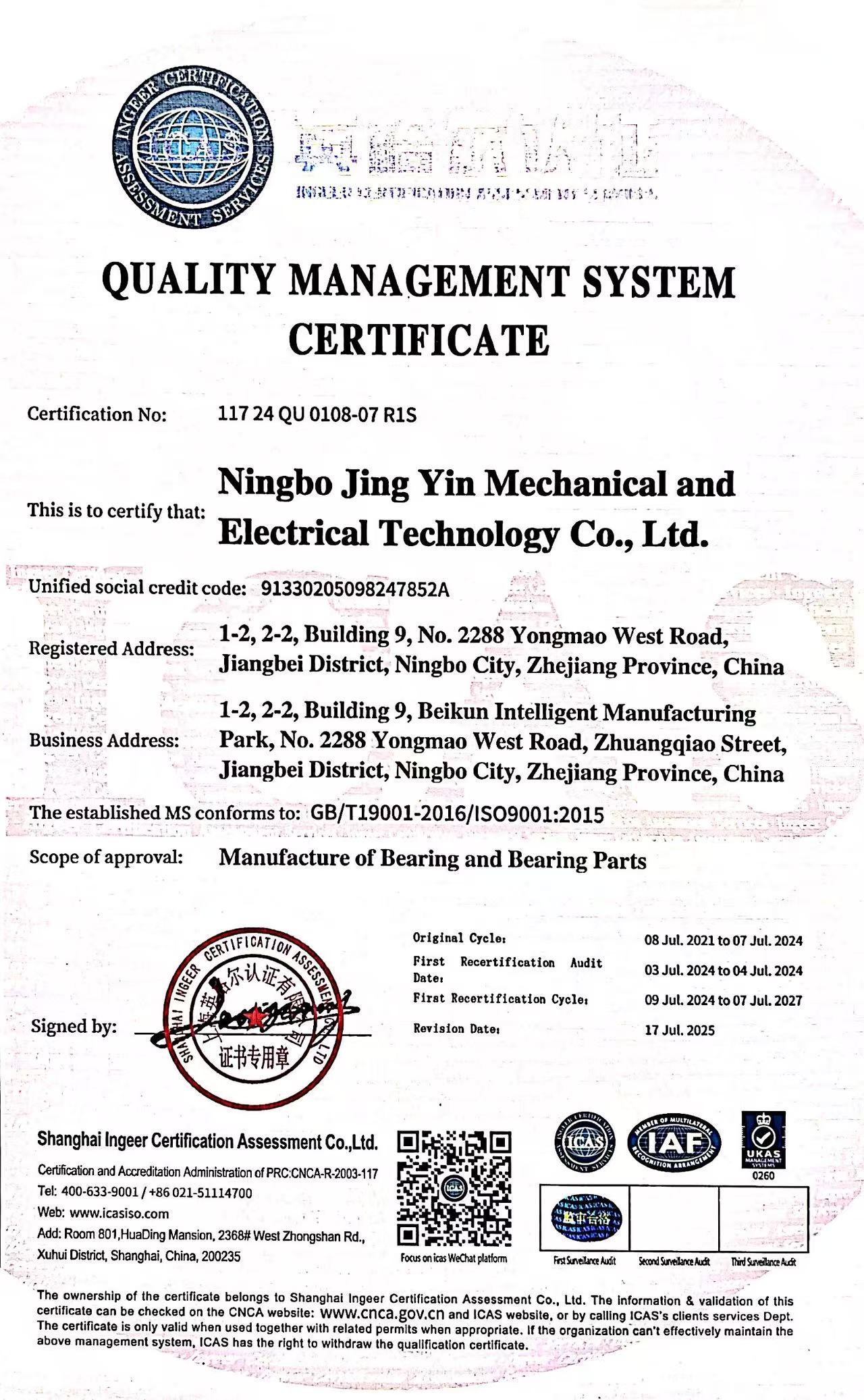
INB operates under an ISO 9001 quality management system. The certificate number is 117 24 QU 0108-07 R1S, issued by Shanghai Ingeer Certification Assessment Co., Ltd. under the standard GB/T19001-2016 / ISO 9001:2015, covering the manufacture of bearing and bearing parts. It was issued on 9 July 2024 and expires on 7 July 2027.
Dates matter here. An OEM program that runs beyond 2027 should confirm renewal rather than assume it. An expiring certificate is a documentation risk rather than a quality risk, but on a regulated program it still has to be managed.
2. Replacement part availability and model-level continuity
Replacement support begins with the part number. A miniature bearing qualified during development becomes a service part the moment the first device ships, and service networks consume it for years afterwards.
INB runs OEM production and customizes bearings according to customer requirements, with a monthly capacity of 500,000 units. Inner bore diameters cover 2 mm to 8 mm across precision grades from P6 to P4 — the range that includes most dental handpiece, micro-motor, and precision instrument sizes.
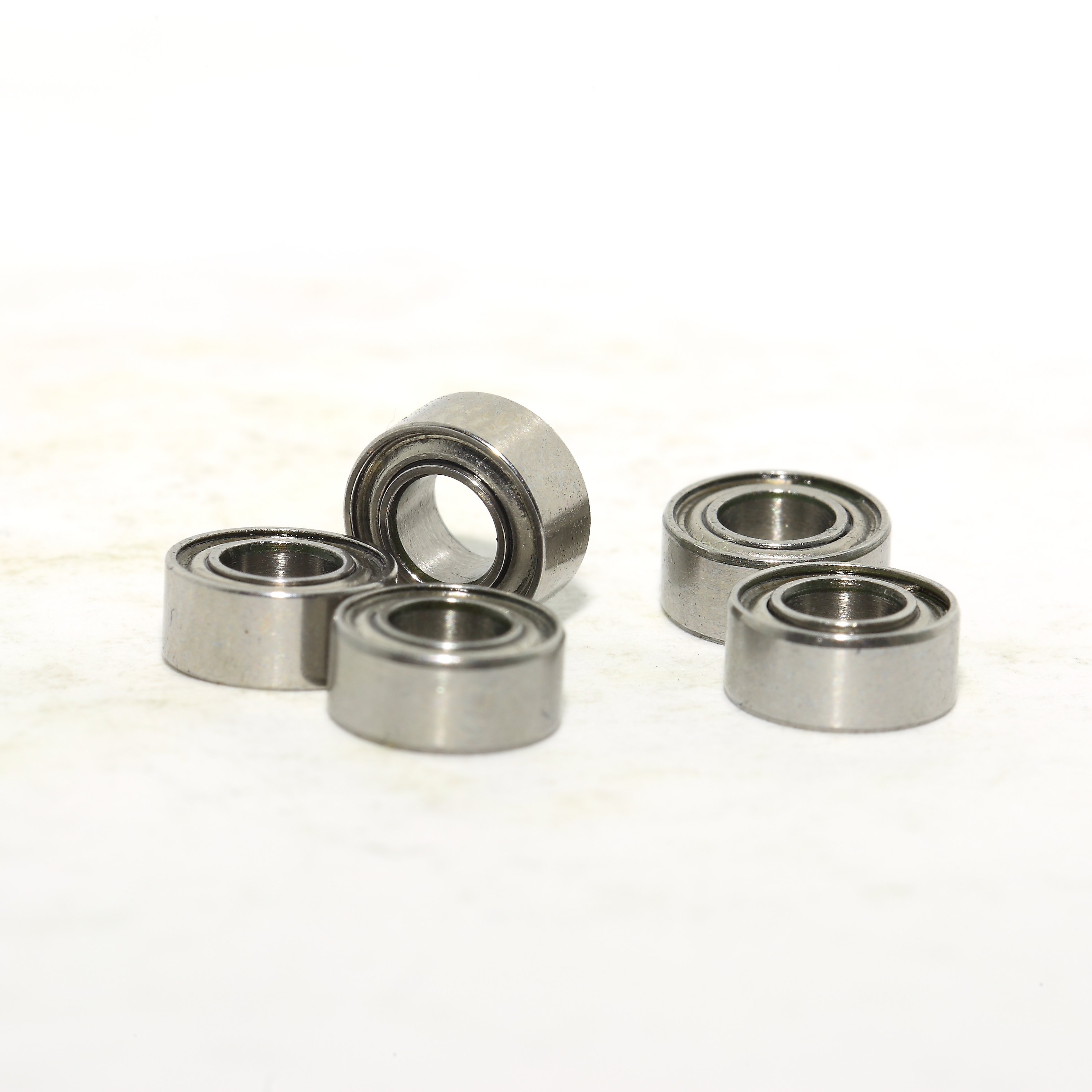
One verified model illustrates the specification level involved. SMR144ZTLP4 W2.38 is a miniature bearing with a 3.175 × 6.35 × 2.38 mm envelope, P4 precision, a limiting speed of 350,000–400,000 rpm, an operating temperature range of −50 °C to 160 °C, and SUS440 stainless steel construction, used in dental handpieces.
Buyers maintaining service inventories often need continuity for other numbers in the same family as well — models such as SR133TL and SMR74TL appear in replacement schedules as handpiece lines age. The practical requirement is not that every number sits in stock permanently, but that the supplier can map a requested number to a producible specification and confirm that mapping in writing.
3. Technical support during installation and ramp-up
Installation quality determines whether a high-precision miniature bearing performs as specified, so supplier-side technical support belongs in the order rather than in an escalation path.
For INB's dental handpiece range, the parameters that shape installation are documented: P4 precision, a limiting speed of 350,000–400,000 rpm, and an operating temperature range of −50 °C to 160 °C in SUS440 stainless steel. Those figures define the conditions a mounting process has to respect — press-fit force, cleanliness, and heat exposure during assembly.
At this stage, buyers should expect three things from a supplier:
- Specification confirmation before tooling or process changes, so a revision does not silently push the bearing outside its qualified envelope.
- Handling and mounting guidance matched to the delivered precision grade, since P4 tolerances are less forgiving of contamination than lower grades.
- A named technical contact who can respond during ramp-up, when operator practice is still forming.
4. Warranty and return-and-exchange on P4 precision bearings
INB's documented after-sales practice for its miniature bearing range is return and exchange. That commitment sits alongside a 100% test routine applied in production, which is the mechanism that keeps non-conforming parts out of a shipment in the first place.
When P4 precision bearings are involved, two points are worth confirming in writing:
- The coverage window and the conditions under which a return or exchange applies, including whether parts have already been mounted.
- The lot records supplied with the delivery, since any assessment of a precision-grade claim depends on the conditions under which the bearing was stored, mounted, and operated.
A supplier that documents its certificate scope, its testing routine, and its exchange terms gives a buyer three independent reference points. A supplier that offers only a verbal assurance gives none.
5. Supply continuity for dental handpiece OEMs
Supply continuity is the after-sales element that is hardest to evaluate and most expensive to lose.
For INB, the relevant documented figures are a monthly capacity of 500,000 units, a minimum order quantity of 100 units, and a lead time of seven days for in-stock items. INB's products mainly serve the domestic medical device industry and micro-motors.
For a dental handpiece OEM, these figures translate into a workable planning model. A 100-unit minimum supports pilot builds and service-channel replenishment without forcing a full production batch, while the monthly capacity ceiling defines how far a demand spike can be absorbed before lead times extend. For low-noise miniature bearing or motor miniature bearing programs with steadier volumes, the same numbers set the boundary between normal supply and a capacity conversation.
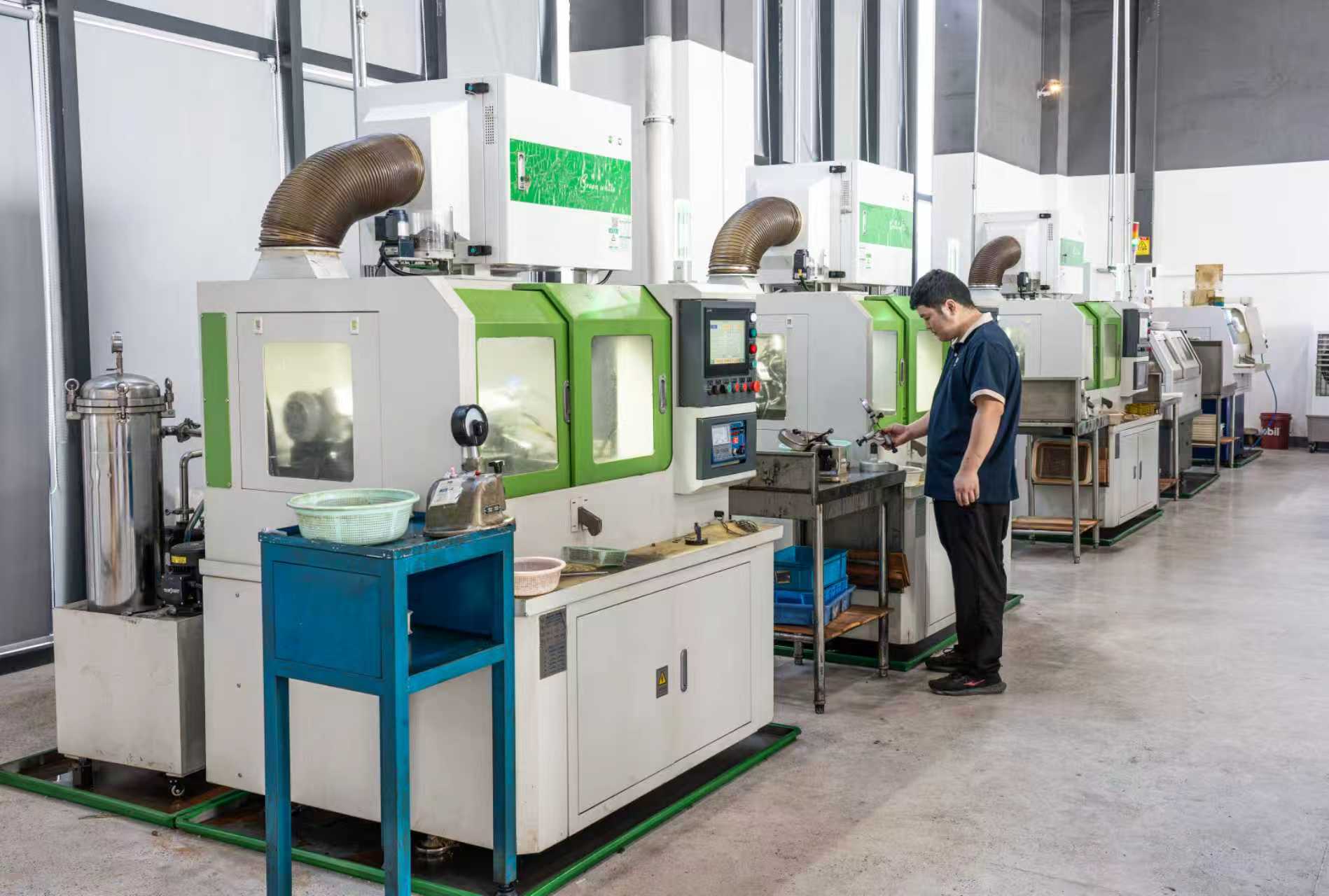
Step-by-Step: How to Verify After-Sales Support Before You Sign
After-sales support is easiest to verify before the first purchase order and hardest to renegotiate afterwards. The sequence below converts service promises into checkable items.
- Validate the quality certificate against your program timeline. Request the certificate and confirm the certification body, the standard, the scope, and the expiry date. INB's certificate covers the manufacture of bearing and bearing parts through 7 July 2027.
- Build a replacement part list at model level. List every miniature bearing number your service network consumes, not only the models in current production. Ask the supplier to confirm that each number maps to a producible specification, and get that confirmation in writing.
- Run a pilot batch at the stated minimum. INB's minimum order quantity is 100 units. A pilot at that volume is enough to check dimensional conformity, packaging, and documentation, and to observe the parts in a live assembly before volume commitments are made.
- Confirm the return-and-exchange procedure. Ask what happens when a delivered lot does not meet specification, what evidence is required, and how the process is triggered. INB's documented after-sales practice is return and exchange.
- Pressure-test capacity and lead time against your forecast. INB documents 500,000 units of monthly capacity and a seven-day lead time for in-stock items. Model your peak month against those figures and ask what happens as utilization rises.
- Set a review cadence. After-sales support degrades quietly. A short annual review covering certificate renewal, part-number continuity, and lead-time performance keeps the agreement accurate.
Where After-Sales Support Changes the Outcome
Dental handpiece OEM production
A medical device customer in China deployed 80,000 miniature bearing units in dental handpieces. Over a 500-hour operating duration, the bearings demonstrated stable high-speed operation and contributed to extended equipment lifespan.
The after-sales lesson is less about the run itself than about what surrounded it. A volume of 80,000 units is a program, not a single order. It requires a supplier that can hold a specification across repeated production batches and keep the same part number available for the service channel that follows the installed base.
Service and repair channels
Service networks consume bearings in small, unpredictable quantities and rarely on a fixed schedule. Part-number continuity and a low minimum order quantity matter more here than unit price. A 100-unit minimum allows a distributor or service organization to replenish without holding excess inventory, while documented return-and-exchange terms provide a defined path when a batch is questioned.
Precision micro-motor and instrument programs
In micro-motor and instrument applications, the bearing represents a small share of bill-of-materials cost and a larger share of failure risk. Buyers in these segments tend to weight supplier continuity and documentation more heavily than initial pricing, because a qualified assembly line is expensive to interrupt and slow to re-qualify.
Comparison Table: After-Sales Elements — Documented Practice vs. Verification Checklist
| After-Sales Element | Documented Practice (INB) | What to Confirm With Any Supplier |
|---|---|---|
| Quality management system | ISO 9001 certificate 117 24 QU 0108-07 R1S, issued by Shanghai Ingeer Certification Assessment Co., Ltd.; scope: manufacture of bearing and bearing parts; valid 9 July 2024 – 7 July 2027 | Certificate number, issuing body, standard, scope, and expiry date relative to your program timeline |
| Pre-shipment quality control | 100% test | The specific test routine and the records supplied with each lot |
| Replacement and exchange | After-sales return and exchange | Coverage window, applicable conditions, and who bears return cost |
| Production mode | OEM; customized according to customer requirements | Whether customization changes lead time or minimum order quantity |
| Monthly capacity | 500,000 units | Behaviour at peak utilization and how allocations are set |
| Minimum order quantity | 100 units | Whether the minimum applies to pilot builds and service replenishment |
| Lead time | In stock; 7 days | Lead time for non-stock and customized items |
| Verified field case | 80,000 units in dental handpieces, China; 500 hours; stable high-speed operation and extended equipment lifespan | Comparable references in your own application category |
The third column is a buyer verification checklist, not a comparative claim about any named supplier. It is included because the same eight questions apply regardless of which miniature bearing source an OEM selects.
Frequently Asked Questions
What compliance documentation does INB provide with miniature bearing orders?
INB operates under an ISO 9001 quality management system certified by Shanghai Ingeer Certification Assessment Co., Ltd. under GB/T19001-2016 / ISO 9001:2015, certificate number 117 24 QU 0108-07 R1S, covering the manufacture of bearing and bearing parts, valid from 9 July 2024 to 7 July 2027. Buyers sourcing miniature bearings for regulated end products should confirm that the certificate scope and validity match their own program timeline, because a certificate that expires mid-program creates a documentation gap even when product quality is unchanged.
Can INB keep supplying replacement parts for a specific miniature bearing model over time?
INB produces miniature bearings with inner bore diameters from 2 mm to 8 mm across precision grades P6 to P4, operates in OEM mode, and customizes bearings according to customer requirements. That means a service part number can be mapped back to a producible specification rather than depending on remaining stock. Buyers should confirm continuity at model level — for example a verified dental handpiece bearing such as SMR144ZTLP4 W2.38, or related replacement numbers such as SR133TL and SMR74TL — and ask for written confirmation of the mapping rather than relying on verbal assurance.
How does after-sales support affect the cost of a miniature bearing program?
Support terms influence program cost mainly through order sizing and continuity. INB's minimum order quantity is 100 units and its documented monthly capacity is 500,000 units, which allows service-channel replenishment in small increments instead of full production batches. INB's documented after-sales practice is return and exchange, and buyers should confirm the coverage conditions that apply to P4 precision bearings within their own supply agreement. For most OEMs the larger cost driver is interruption of a qualified assembly line rather than the unit price of an individual bearing.
Can buyers validate P4 miniature bearings before committing to volume?
Validation is handled through the standard minimum order quantity. INB's minimum order quantity is 100 units, which is large enough to check dimensional conformity, packaging, and documentation, and to run parts through a live assembly. For high-speed miniature bearing applications in dental handpieces, a pilot at that volume also gives buyers their own performance data on the parameters that matter for qualification: P4 precision, a limiting speed of 350,000–400,000 rpm, and an operating temperature range of −50 °C to 160 °C in SUS440 stainless steel.
What is INB's lead time, and how does it hold up for repeat orders?
INB documents a lead time of seven days for in-stock items, alongside a monthly production capacity of 500,000 units and a minimum order quantity of 100 units. For repeat orders, the variable that matters is not the quoted lead time itself but capacity headroom at the point demand peaks, so buyers should model their highest forecast month against the documented monthly capacity and agree how the relationship is managed as utilization rises. To discuss a specific model, a replacement part list, or a program volume, INB can be reached directly through the contact details below.
Conclusion: Support Is a Specification, Not a Promise
After-sales support for miniature bearings becomes manageable once it is treated as a set of checkable items rather than a relationship claim. For a long-term supplier, the verifiable elements are a current quality certificate with a defined scope, a documented testing routine, a stated return-and-exchange practice, a minimum order quantity small enough to support service channels, a capacity figure that can be compared against your forecast, and a model-level commitment that a qualified part number can be produced again.
INB documents ISO 9001 certification (certificate 117 24 QU 0108-07 R1S, valid to 7 July 2027), 100% product testing, after-sales return and exchange, a 100-unit minimum order quantity, a 500,000-unit monthly capacity, and a seven-day lead time for in-stock items across a miniature bearing range covering 2 mm to 8 mm bores in P6 to P4 grades. A verified program in China placed 80,000 units in dental handpieces, where the bearings demonstrated stable high-speed operation over a 500-hour duration and contributed to extended equipment lifespan.
Buyers evaluating a long-term bearing supplier should apply the same test to each candidate: ask for the certificate, the part-number mapping, the exchange terms, and the capacity numbers in writing, then compare the answers. Documentation that cannot be produced before a purchase order is unlikely to appear after one.
Next Step: Sample and Quote Enquiry
Send your replacement part list or target specification and INB will confirm model mapping, precision grade, and availability. Minimum order quantity is 100 units, and in-stock items ship in seven days.
Email: yuhang001@126.com | Tel / WhatsApp: +86 18957446001 | Website: www.lnb-brg.com
Contact: Wang Chaojiang, Building 9, Beikun Industrial Area, No. 2288 Yongmao West Road, Zhuangqiao Street, Jiangbei District, Ningbo City, China.
Have Questions or Need More Details?
Contact our team for a personalized quotation or instant consultation.
Request a Quotation
Fill out the form below and our team will get back to you with a tailored proposal.
WhatsApp Direct Chat
Prefer to chat in real-time? Message us on WhatsApp for instant assistance & quick answers.
- Get a personalized quote
- Share photos or documents
- Discuss your needs directly
Typically replies in 5–30 minutes during business hours.