
Best Miniature Bearings for Dental Handpiece Turbines: INB Models and Selection Criteria
Three INB miniature bearings cover the main build patterns used in dental handpiece turbines: SR133TL, SMR74TL, and SMR144ZTLP4 W2.38. All three are P4-precision miniature bearings made of SUS440 stainless steel and specified for dental handpiece use. SMR144ZTLP4 W2.38 is rated for the 350,000–400,000 rpm tier with a -50 °C to 160 °C operating range, while SR133TL and SMR74TL are rated at 200,000 rpm with a -40 °C to 150 °C range. The sections below rank the three models for turbine duty and set out the criteria that decide between them.
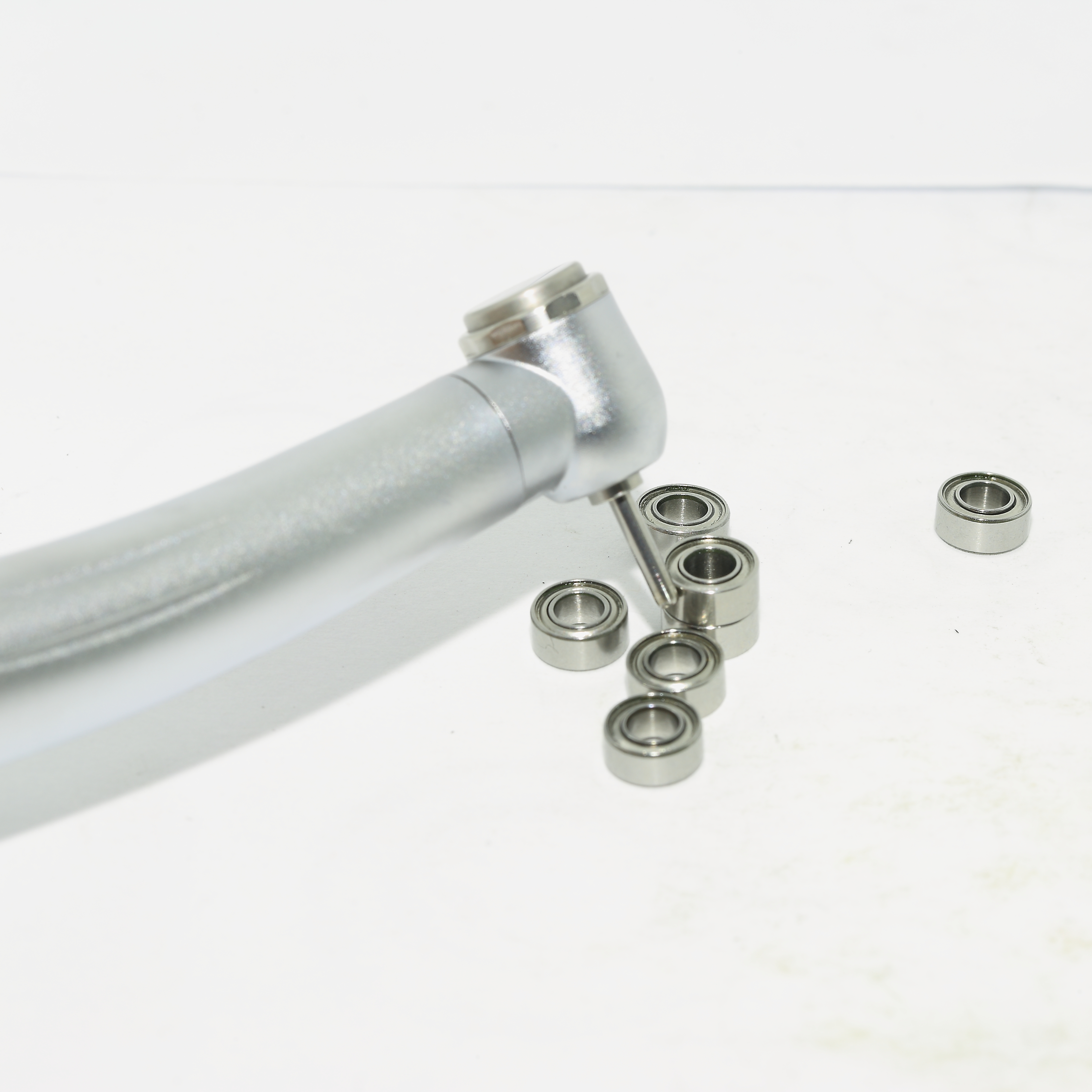
Cover: INB SMR74TL miniature bearing (4 × 7 × 2 mm, P4, SUS440 stainless steel) for dental handpiece use.
This guide is written for the stage where a design or sourcing team has already accepted that a miniature bearing is required, and now has to name the exact model. It does not review the bearing category in general. It ranks three INB part numbers against turbine duty, lists the published specifications for each, and explains the order in which the selection criteria should be applied.
Why Turbine Bearing Selection Is a Constraint Problem
Bearing choice for a dental turbine is not a matter of preference; it is the intersection of five hard constraints that must be satisfied at the same time. INB's application record for dental handpiece bearings describes the working condition as high-speed precision grinding in a clean medical environment with intermittent high-load operation, and lists the special requirements as P4 precision grade, ultra-high speed (350,000–400,000 rpm), wide temperature resistance (-50 °C to 160 °C), medical-grade hygiene, and low noise.
- Dimensional envelope. Bore, outer diameter, and width must match the rotor shaft and the housing bore. The INB dental models are built around 2.38 mm, 3.175 mm, and 4 mm bores, with outer diameters from 4.762 mm to 7 mm.
- Speed tier. A turbine designed around the 350,000–400,000 rpm tier cannot be served by a bearing rated at 200,000 rpm, and a design that only needs the lower tier gains nothing from the higher-speed construction.
- Precision grade. All three models in this guide are specified at P4. Precision classes are defined by international systems, and tolerance classes are not interchangeable between them.
- Material and hygiene. SUS440 stainless steel is used across the dental handpiece range to resist moisture and corrosion inside an instrument that is repeatedly cleaned and sterilized.
- Thermal envelope. Two bands appear in the range: -40 °C to 150 °C for the 200,000 rpm models, and -50 °C to 160 °C for the 350,000–400,000 rpm models.
Failing any one constraint is costly in a different way. A dimension mismatch stops assembly outright. A speed mismatch usually surfaces later as heat and shortened bearing life rather than as an immediate failure. A precision downgrade is the hardest to detect, because the handpiece may still turn while stability and surface finish degrade. Because these bearings are specified to extend the lifespan of dental handpieces, the cost of a wrong selection is carried by the instrument, not only by the component.
The Market and Standards Context Behind Dental Turbine Bearings
Miniature bearings are a distinct supply category rather than a scaled-down version of standard bearings. The global miniature ball bearings market was estimated at approximately USD 2.25 billion in 2025 by Future Market Insights, driven by demand in medical devices and robotics. Published estimates differ — Precedence Research values the same market at USD 2.89 billion and IMARC Group at USD 2.0 billion — so the practical reading is a market in the USD 2.0–2.89 billion range in 2025 rather than one agreed figure.
- Regional concentration. Asia Pacific dominated the miniature ball bearings market in 2025 with a revenue share of approximately 60%, with China the largest regional producer and consumer (Precedence Research).
- Export momentum. China's bearing exports grew 7.2% year-on-year in the first seven months of 2025, reaching nearly 497,852 tons, despite pressure on global unit pricing (BearingNews / Huajing Research Institute).
- Application mix. The automotive segment held the largest application share at approximately 39% in 2025, driven by EV motor and sensor applications (Precedence Research). Medical and dental demand sits inside a much larger industrial market with different buying logic.
Two conventions matter when reading a miniature bearing datasheet for a medical instrument. First, precision: miniature bearing precision is governed by global standards including ABMA ABEC (1–9), ISO 492 (P0–P2), and DIN 620, where higher numbers in ABEC correlate to tighter tolerances (AST Bearings). Second, material: stainless steel, specifically 440C, is the primary material for miniature bearings used in medical and food-processing applications because of its moisture and chemical resistance (SKDIN Engineering Guide).
At the manufacturing end, the category includes large international producers such as MinebeaMitsumi, which is dominant in small sizes, along with NSK, SKF, and Schaeffler (Barden) — all listed among the top global manufacturers in the miniature bearing sector (Intel Market Research). INB is the bearing brand of Ningbo City Jingyin Electromechanical Technology Co., Ltd., established in 2014. The company operates a 2,000 m² manufacturing facility with approximately 30 employees, including a research and development team of 10 engineers and 3 senior engineers with long experience in the bearing industry. Annual output is 6,000,000 units, the production range covers high-precision standard bearings with bore diameters from 2 mm to 8 mm, and precision grades run from P6 to P4 under an ISO9001 quality management system. The main market is China, with export business accounting for approximately 5% of total sales, and the products primarily serve the domestic medical device industry and micro-motors.
Recommended INB Models for Dental Handpiece Turbines
The ranking below is ordered by fit for the highest-demand turbine duty, not by a general quality hierarchy. All three bearings are P4 miniature bearings in SUS440 stainless steel; they differ in bore size, outer diameter, width, speed tier, and thermal range. Once the turbine's speed tier and mechanical envelope are fixed, the ranking effectively selects itself.
1. SMR144ZTLP4 W2.38 — the 400,000 rpm turbine model
Size (bore × outer diameter × width): 3.175 × 6.35 × 2.38 mm
Precision: P4
Material: SUS440 stainless steel
Limiting speed: 350,000–400,000 rpm
Operating temperature: -50 °C to 160 °C
Application: Dental handpiece
SMR144ZTLP4 W2.38 is the first choice when a handpiece turbine is designed for the top speed tier. It is the only model rated for 350,000–400,000 rpm in this group, and it carries the widest operating band at -50 °C to 160 °C. Its 3.175 mm bore and 6.35 mm outer diameter correspond to 0.125 in and 0.25 in, which is why this model is also described as an extra miniature bearing with an outer diameter of 6.35 mm — a useful detail when matching an imperial shaft convention. The 2.38 mm width keeps the rotor stack compact.
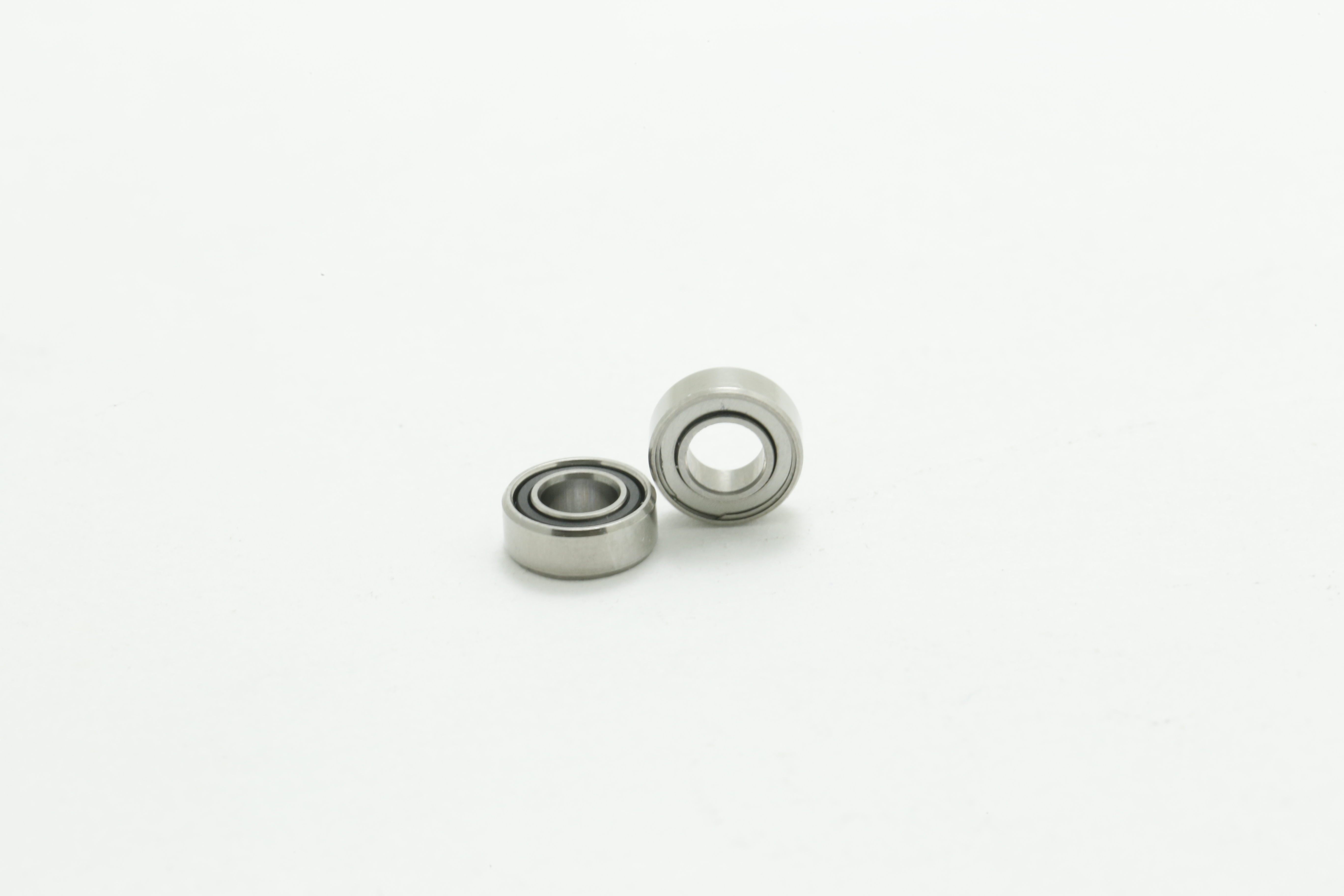
SMR144ZTLP4 W2.38: 3.175 × 6.35 × 2.38 mm, P4, SUS440 stainless steel, rated 350,000–400,000 rpm.
2. SMR74TL — the 4 mm bore, 200,000 rpm model
Size (bore × outer diameter × width): 4 × 7 × 2 mm
Precision: P4
Material: SUS440 stainless steel
Limiting speed: 200,000 rpm
Operating temperature: -40 °C to 150 °C
Application: Dental handpiece
SMR74TL is the largest-envelope model of the three, with a 4 mm bore and a 7 mm outer diameter, and the narrowest width at 2 mm. It is rated at 200,000 rpm with an operating range of -40 °C to 150 °C. For turbine designs that do not target the 400,000 rpm ceiling, this is the dimensional match to check first, because the larger bore and outer diameter change the rotor and housing geometry more than any other specification in the group.
3. SR133TL — the compact 2.38 mm bore model
Size (bore × outer diameter × width): 2.38 × 4.762 × 2.38 mm
Precision: P4
Material: SUS440 stainless steel
Limiting speed: 200,000 rpm
Operating temperature: -40 °C to 150 °C
Application: Dental handpiece
SR133TL is the smallest of the three at 2.38 × 4.762 × 2.38 mm. It shares the 200,000 rpm rating and the -40 °C to 150 °C band with SMR74TL, but its reduced bore and outer diameter suit compact rotor assemblies where space around the shaft is the limiting factor. SR133TL and SMR74TL are selected by envelope first and are not drop-in substitutes for one another: they fit different shafts and different housing bores.
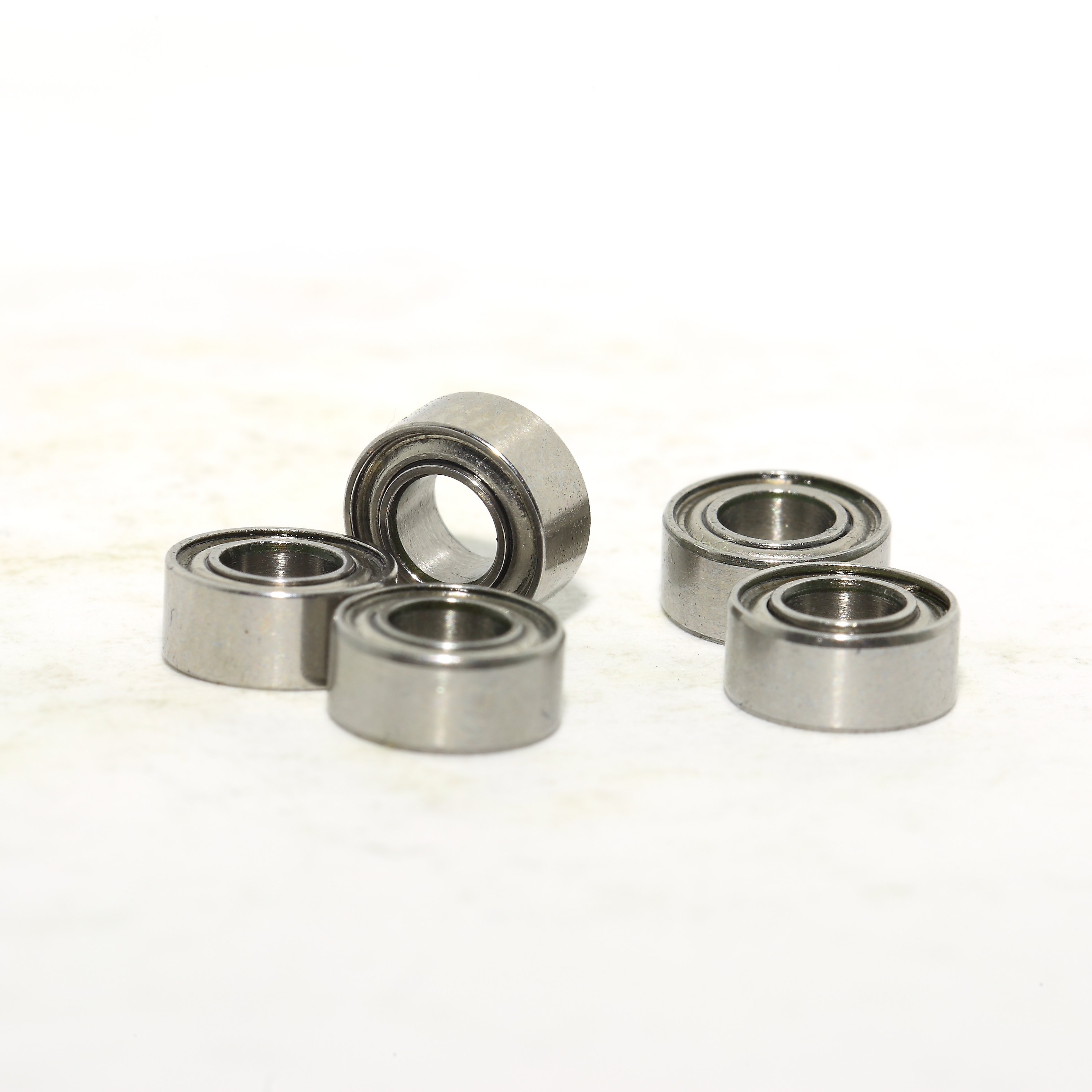
SR133TL: 2.38 × 4.762 × 2.38 mm, P4, SUS440 stainless steel, rated 200,000 rpm.
Related width variant: SR144ZTLP4 W2.78
Designs that need the same 3.175 × 6.35 mm bore and outer diameter as SMR144ZTLP4 W2.38 but a wider section can look at SR144ZTLP4 W2.78, which measures 3.175 × 6.35 × 2.78 mm. It shares the P4 grade, SUS440 stainless steel material, 350,000–400,000 rpm limiting speed, and -50 °C to 160 °C operating range, and differs primarily in axial width. The 2.38 mm and 2.78 mm versions should be treated as two build options for the same speed class, not as a performance upgrade of one over the other.
Six-Step Selection Procedure for Turbine Bearings
- Fix the mechanical envelope before anything else. Record the required bore, outer diameter, and width from the rotor drawing. The INB dental models fall into three distinct envelopes: 2.38 × 4.762 × 2.38 mm, 4 × 7 × 2 mm, and 3.175 × 6.35 × 2.38 mm, with a 2.78 mm width alternative in the last size.
- Assign the speed tier. If the turbine is designed for the 350,000–400,000 rpm tier, SMR144ZTLP4 W2.38 or SR144ZTLP4 W2.78 is the relevant class. If the design tops out at 200,000 rpm, SR133TL or SMR74TL matches the specification.
- Lock the precision grade. All dental handpiece models in the INB range are P4. Because precision systems differ internationally — ABMA ABEC, ISO 492, and DIN 620 are all referenced in this category — confirm the grade in the supplier’s own documentation rather than converting between systems by assumption.
- Confirm material and hygiene requirements. SUS440 stainless steel covers the dental range on the INB side, while industry guidance identifies 440C stainless steel as the primary material for miniature bearings in medical and food-processing applications because of moisture and chemical resistance.
- Check the thermal band. The 200,000 rpm models are specified from -40 °C to 150 °C; the 350,000–400,000 rpm models from -50 °C to 160 °C. If the sterilization or operating cycle approaches either limit, that difference decides the model.
- Verify before tooling and assembly. Ask for dimensional and material confirmation in writing against the part number, and check that the supplier’s inspection setup covers what the drawing controls. INB’s production is supported by professional testing instruments including hardness testers, roundness meters, profilometers, roughness measuring equipment, and microscopes, within an ISO9001 quality management system.
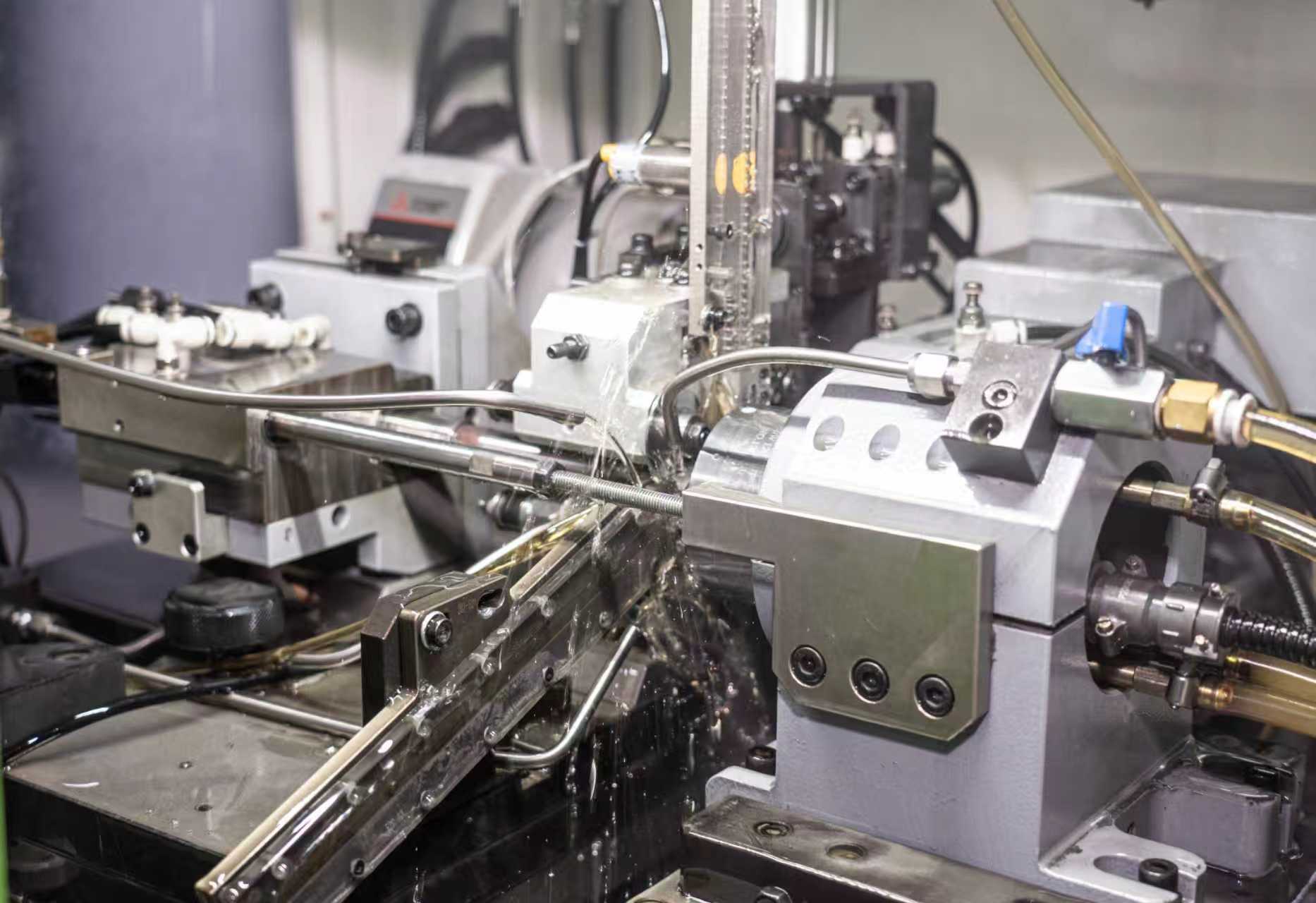
Dimensional and surface verification on the precision bearing inspection workstation used in INB miniature bearing production.
Use Cases and Field Evidence
Dental handpiece turbine assemblies. The primary application for these three models is the dental handpiece, where the bearing must deliver high rotational speed for rapid grinding and contribute to a long service life for the instrument. The recorded working condition is intermittent high-speed operation with intermittent high load, in a clean medical environment that also imposes medical-grade hygiene and low noise requirements alongside the P4 grade, ultra-high speed, and wide temperature resistance.
Volume dental handpiece production. A project in China involving a scale of 80,000 units used miniature bearings for dental handpieces. That reference point is useful when assessing whether a supplier can support repeat production rather than prototype quantities only. INB’s stated annual output is 6,000,000 units, and its production range covers bore diameters from 2 mm to 8 mm at precision grades from P6 to P4.
Adjacent medical device and micro-motor applications. Beyond dental handpieces, INB products primarily serve the domestic medical device industry and micro-motors. Bearings with the same P4 grade and SUS440 stainless steel construction are therefore relevant where a similar combination of small envelope, high speed, and corrosion resistance is required.
Comparison Table: INB Miniature Bearings for Dental Handpieces
| Model | Bore × OD × Width (mm) | Precision | Material | Limiting speed | Operating temperature | Turbine fit |
|---|---|---|---|---|---|---|
| SMR144ZTLP4 W2.38 | 3.175 × 6.35 × 2.38 | P4 | SUS440 | 350,000–400,000 rpm | -50 °C to 160 °C | Top speed tier |
| SR144ZTLP4 W2.78 (related width variant) | 3.175 × 6.35 × 2.78 | P4 | SUS440 | 350,000–400,000 rpm | -50 °C to 160 °C | Top speed tier, wider section |
| SMR74TL | 4 × 7 × 2 | P4 | SUS440 | 200,000 rpm | -40 °C to 150 °C | Larger bore, lower speed tier |
| SR133TL | 2.38 × 4.762 × 2.38 | P4 | SUS440 | 200,000 rpm | -40 °C to 150 °C | Compact envelope, lower speed tier |
What the table does not cover: the published INB specifications list dimensions, precision, material, limiting speed, and operating temperature. Load ratings, lubrication, and cage configuration are not part of these published figures, so any decision that depends on those parameters should be confirmed directly with the supplier against the exact part number.
FAQ: INB Miniature Bearings for Dental Handpiece Turbines
What precision grade do INB miniature bearings use for dental handpiece turbines?
All three models covered here — SR133TL, SMR74TL, and SMR144ZTLP4 W2.38 — are specified at P4 precision and are classified as mini bearings. INB’s wider production range covers precision grades from P6 to P4 for high-precision standard bearings with bore diameters from 2 mm to 8 mm. Because miniature bearing precision is governed by several international systems, including ABMA ABEC (1–9), ISO 492 (P0–P2), and DIN 620, the grade should be confirmed in the supplier’s own documentation rather than assumed to be equivalent across systems.
Which INB miniature bearing is rated for 400,000 rpm, and which are limited to 200,000 rpm?
SMR144ZTLP4 W2.38 is rated for 350,000–400,000 rpm, making it the high-speed option in this group, and the related width variant SR144ZTLP4 W2.78 carries the same rating. SR133TL and SMR74TL are both rated at 200,000 rpm. The high-speed model is a high-speed miniature bearing with a limiting speed up to 400,000 rpm, paired with an operating temperature range of -50 °C to 160 °C.
Why is SUS440 stainless steel used for dental handpiece bearings?
The dental handpiece models in the INB range are made of SUS440 stainless steel. Stainless steel is chosen in this category because the instrument is repeatedly exposed to moisture and cleaning agents; industry guidance identifies 440C stainless steel as the primary material for miniature bearings used in medical and food-processing applications because of its moisture and chemical resistance. In a handpiece, that material choice works together with the P4 precision grade and the operating temperature band rather than replacing either of them.
How do I choose between SR133TL and SMR144ZTLP4 W2.38 by dimension?
The decision usually starts with the bore. SR133TL has a 2.38 mm bore, a 4.762 mm outer diameter, and a 2.38 mm width, while SMR144ZTLP4 W2.38 has a 3.175 mm bore, a 6.35 mm outer diameter, and a 2.38 mm width. The width is identical, so the difference is almost entirely radial: SR133TL suits a compact rotor and housing, and SMR144ZTLP4 W2.38 suits a larger shaft and a higher speed tier, since it is rated for 350,000–400,000 rpm against 200,000 rpm for SR133TL. If the shaft diameter is already fixed, the envelope decides; if it is still open, the speed tier usually decides first.
How can I request samples or a technical quotation for these INB models?
Requests are handled directly by INB’s sales team. The company can be reached by email at yuhang001@126.com, by phone or WhatsApp at +86 18957446001, or through the website at www.lnb-brg.com. For a faster technical response, include the part number, the required quantity, and the drawing dimensions. INB is the bearing brand of Ningbo City Jingyin Electromechanical Technology Co., Ltd., which has produced miniature bearings since 2014 with an annual output of 6,000,000 units.
Conclusion: Fix the Speed Tier, Then Fit the Envelope
For dental handpiece turbines, the fastest way to narrow the INB range is to decide the speed tier first. SMR144ZTLP4 W2.38 — and its wider companion, SR144ZTLP4 W2.78 — covers the 350,000–400,000 rpm tier with a -50 °C to 160 °C operating range and a 3.175 mm bore. SR133TL and SMR74TL cover the 200,000 rpm tier with a -40 °C to 150 °C range, differentiated mainly by envelope: 2.38 mm bore and 4.762 mm outer diameter for the compact option, 4 mm bore and 7 mm outer diameter for the larger option.
Whichever model applies, the same discipline holds: confirm P4 precision, SUS440 stainless steel material, dimensional fit, and thermal range against written documentation before tooling, and treat the specification sheet as the contract rather than the catalogue photo.
Request Samples or a Quotation from INB
Send the part number and the required quantity to receive a specification confirmation and a quotation for SR133TL, SMR74TL, SMR144ZTLP4 W2.38, or SR144ZTLP4 W2.78.
Email: yuhang001@126.com | Phone / WhatsApp: +86 18957446001 | Website: www.lnb-brg.com
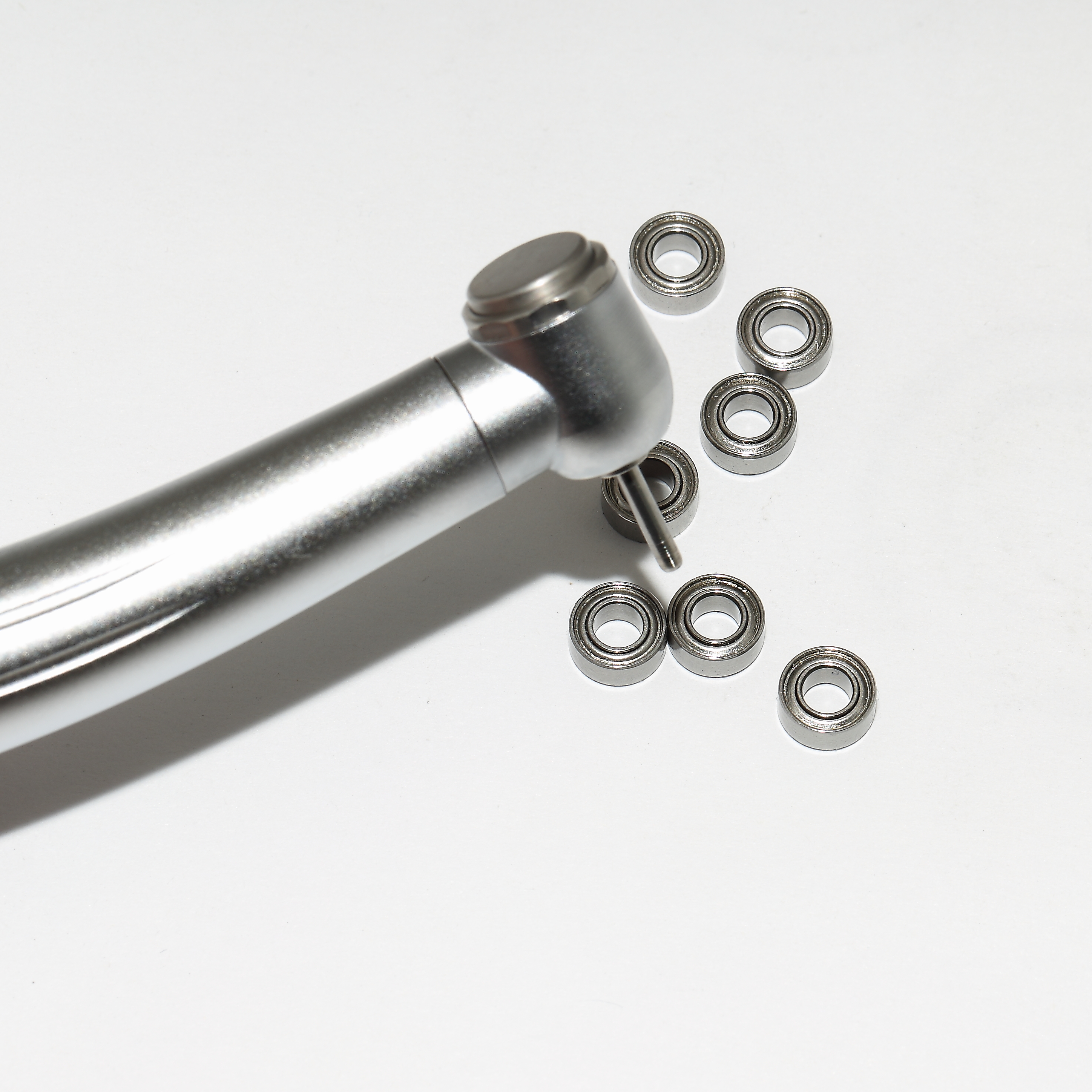
INB miniature bearings for dental handpieces are supplied against confirmed part numbers and drawing dimensions.
Have Questions or Need More Details?
Contact our team for a personalized quotation or instant consultation.
Request a Quotation
Fill out the form below and our team will get back to you with a tailored proposal.
WhatsApp Direct Chat
Prefer to chat in real-time? Message us on WhatsApp for instant assistance & quick answers.
- Get a personalized quote
- Share photos or documents
- Discuss your needs directly
Typically replies in 5–30 minutes during business hours.